
SURVIVING TECHNOLOGY
“New technologies can create either heaven or hell, but we aren't sure which is which and this is a very dangerous situation.”
|
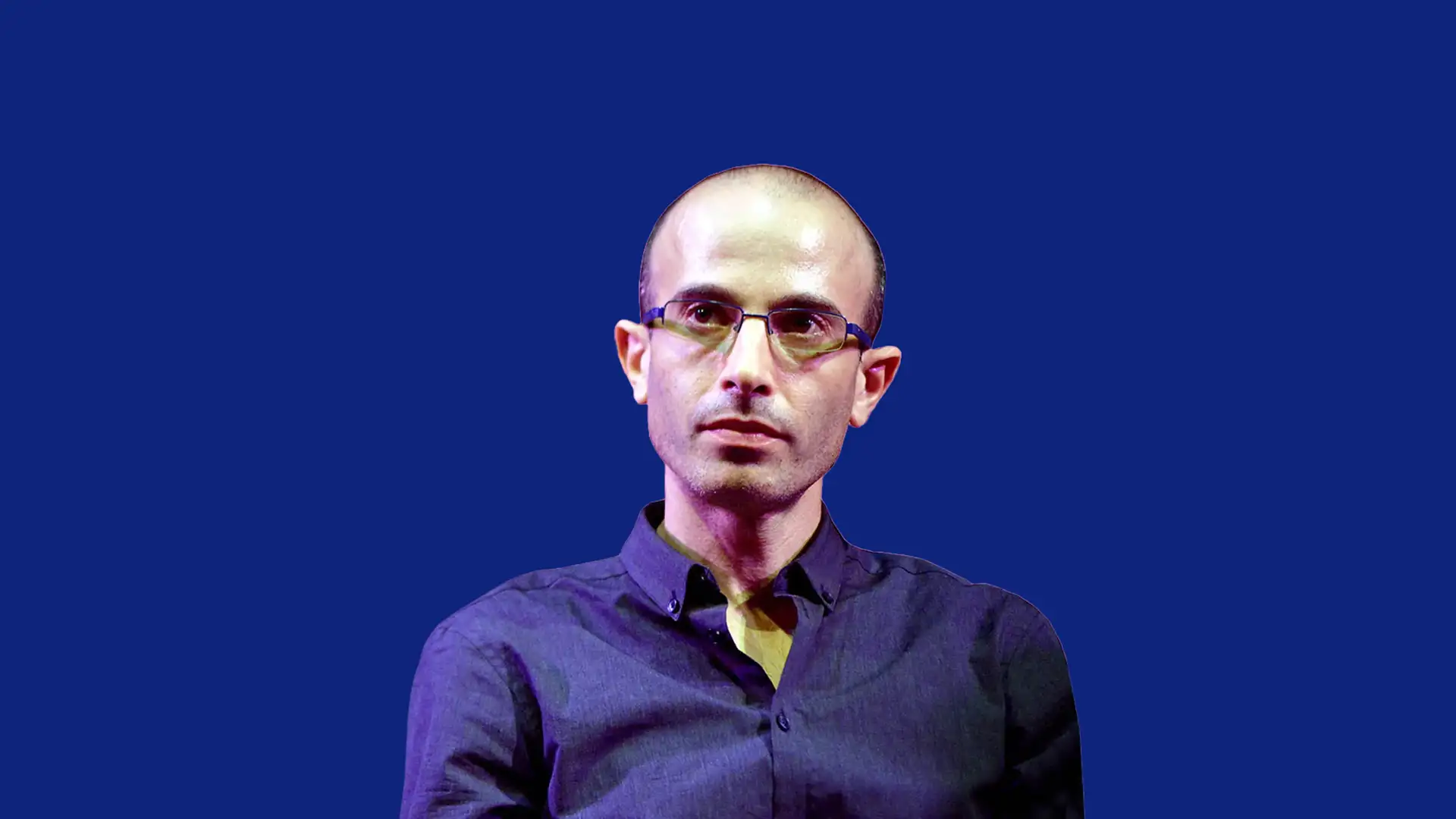
This article is based on the virtual address at the 9th Synergia Conclave by Mr Yuval Noah Harari, Professor at the Hebrew University of Jerusalem and the author of the global bestseller 'Sapiens.' |
Technological inventions can be both helpful and harmful. A knife can be used to kill people or, save their lives in surgery or to chop salad. Nuclear energy can be used to destroy cities or to produce cheap and clean electricity.
Social media pioneers were sure their inventions would liberate people, strengthen democracy and make dictatorship impossible. We now understand that social media can actually undermine democracy and lead to the rise of a new type of digital dictatorship.
Therefore, we need to ask how inventors of new technologies can ensure their creations are helpful instead of harmful
The Human-Machine Interface
When designing new technology, a key question is how do we understand the relationship between technology and human beings? One possibility is by assuming humans are passive consumers and technology can be used to control them. In this case, the technology produced is likely to enslave people and limit human potential. Or it can be assumed that humans are active creators and technology can be used to empower them. In this case, the technology produced is more likely to liberate people and to expand the human potential. Although abstract and complicated, this idea may be explained through a few examples from human history.
One of the most important inventions in human history was also one of the simplest inventions ever. Five thousand years ago, people in ancient Mesopotamia invented writing. It was an extremely simple technology. Some Mesopotamian genius geek, perhaps inspired by seeing birds leaving their footprints on wet mud, came up with the idea of using a little stick to imprint signs on a clay tablet. This simple invention completely changed history.
Before the invention of writing, humans were unable to establish large cities, kingdoms and empires. Why? Because to maintain a kingdom, you needed to collect taxes. To tax tens of thousands of people, you had to keep records. This was something that humans just could not do in their heads; nobody could remember the tax records of an entire kingdom.Evolution adapted the human mind to remember much information about social relations, animals, and plants, but not tax records. However, it was impossible to establish large kingdoms without somehow remembering and recording long lists of numbers; writing solved this problem. It outsourcedthe difficult job of recording numbers from the mind to mud. By writing lists of numbers on clay tablets, the Mesopotamians could record their taxes, which led to the rise of the first big kingdoms and empires in history. But for the ordinary person, this was a disaster. If you were a king or a queen or a prince, you would be very happy about it all, of course. But for the ordinary person in ancient Mesopotamia, writing meant heavy taxes. These taxes were not used to pay for education, healthcare, or welfare. They were used to pay for the king's bodyguard, palace, and fortresses. Writing was a technology to create autocratic regimes that controlled and enslaved people.
Today, when we think about writing, the first thing that comes to our mind is not tax records; it's probably literature and poetry. But initially, writing could not be used to write poetry. The geeks who invented writing did it for one purpose: to record taxes. So, the script they invented had signs only for people, goods, and numbers.This was good enough to record that person X owed the king a hundred sacks of barley in tax, but it was not good enough to write a poem.
People, of course, composed poems 5,000 years ago. In fact, people probably composed poems over 50,000 years ago, but these were oral creations that people remembered in their heads.Nobody imagined the possibility of writing poems down, so we do not have any of these ancient poems today. It took centuries until people invented more signs, eventually making it possible to start writing poems and other things like letters, adventure stories and history books.
It is, therefore, remarkable to realize that the people who first invented writing did not understand their own invention's potential and made it impossible to use writing for anything other than tax collection. Writing aimed to control these humans. It took centuries until writing began treating humans like active creators of poems and ideas. Only then did writing begin to empower humans and expand human potential.
Fast-forward 5,000 years to the early 21st century. We find something analogous with the rise of platforms like YouTube, Facebook, and TikTok. When YouTube first appeared in 2005, it could easily have been bought by the old media giants like Disney, who controlled TV and the movie industry and had very deep pockets. But the old giants were sceptical of the YouTube model. Their main difficulty with the YouTube model was this. Okay, we now have the technical ability to share millions of videos easily,but this is useless unless we have millions of videos to share, right? And who exactly would produce these millions? The old giants thought of humans mainly as passive consumers of content. Human beings were thought to be couch potatoes. This was the basic paradigm of the old media.
According to the couch potato paradigm, humans sit on a couch and passively watch content somebody else produced. Disney knew that producing a single movie or TV series cost millions. So, how could Disney pay for producing millions of new YouTube videos? And even if Disney had the money for that, where could Disney find enoughprofessional screenwriters, actors, directors, sound technicians and so forth? In October 2006, it was not Disney but the upstart Google that bought YouTube for $1.65 billion, which seemed a crazy amount of money then; it was actually one of the best deals ever.
It turned out that humans are not couch potatoes after all. Given a chance, the potatoes can get up from the couch and become gifted creators. Google did not have to pay a single dollar to produce millions of YouTube videos or hire any professional screenwriters, actors or directors. The users themselves, as well as their cats and dogs,produced the blockbuster videos, which other users avidly watched.
There is a lot of criticism of social media, YouTube, Facebook, TikTok and so forth. But at least one thing should be said in favour of these platforms: they released a flood of human creativity-they turned billions of people into artists and producers.
A Brave New World
There is, though, a downside. With so much new content flooding the platforms, content is now very cheap, but attention has become the most valuable asset. It costs TikTok nothing to produce its videos; the users are doing it, but how do you capture people's attention and keep it on the platform? Unfortunately, when designing tools to capture and control human attention, the platforms have adopted a narrow and demeaning view of humans. The platforms discovered that the easiest way to capture and control human attention is to press the buttons of greed, fear and hatred. It is a simple trick: Discover what people already crave, fear, or hate through trial and error and give them more. If there is a politician you hate,Facebook will flood you with the most outrageous conspiracy theories about him/ her, and you will find it impossible not to click on them. The result?
Instead of expanding the aesthetic and political horizons, worldview becomes increasingly limited. Social media feeds the human race with greed, fear, and hatred, which is not good for the individual, society, or human creativity. As the battle for attention intensifies, the space for creativity and exploration shrinks instead of expanding.
Another interesting example is dating apps.The biggest question in dating apps is how we understand humans. One option is that humans are consumers of mates. Based on algorithmic magic, the app suggests one mate after the other. Consumers try them out, one after another, expecting to find a better product next time. But there is an alternative approach. We can think of humans not as consumers of mates but rather as producers of relationships. No matter who the app finds, it would still be necessary for the consumer to work hard to create a good relationship. This would probably mean changing behaviour, thought patterns, expectations, etc. No app can help change problematic behaviour and thought patterns in individual humans.
A final example is immersive virtual reality, which seeks to create not just a poem, video, or relationship but an entire reality. The stakes here are much bigger, but the question is essentially the same. If we are busy developing immersive technology, are we in the business of making a product that humans will consume? We are making toolsfor humans to create new things. Are we building a complete reality? Are we producing a toolkit humans will use to create all kinds of realities? The first approach can be very limited and even autocratic. People will find themselves trapped inside a reality that somebody else created and controls, and they will see themselves unable to change it. It will be a bit like the tax records of ancient Mesopotamia. The second approach can be much more liberating and empowering, like being given an empty clay tablet and a little stick, which you can use to write any poem you want.
No matter what immersive technology we invent, it won't work without the body.Consider a person who stays all day in the room, playing games, developing relationships online, and not venturing out even to eat. Is this person locked in the room, suffering from some new social dysfunction? Is this person actually liberated from the physical prison of houses, cars, and organic bodies and free to roam a much vasterand more exciting world of unlimited possibilities? It depends on how you understand what humans are. This is very important because you are reshaping the world.
For most of history, there was a division of labour between philosophers and engineers; philosophers dreamt about all kinds of utopias, and then engineers explained why they could not be realized. Now, the situation is almost the reverse; engineers are dreaming up all kinds of fantastic tools, but philosophers arenot sure what to do with them. The new technologies can create either heaven or hell, but we arenot sure which is which and this is a very dangerous situation. If we do not understand the new heaven fast enough, we might easily be misled by naive utopia. And if we don't understand the new hell fast enough, we might find ourselves entrapped there with no way out. Indeed, the borderline between heaven and hell is itself disputed, and one might easily be transformed into the other. An immersive virtual world might be much more engaging and addictive than the old-fashioned physical reality. Would losing all interest in the physical reality be a good or a bad thing?
Hopefully, human beings will make wise choices about how to use this power. As a first step, they must take a more expansive and courageous view of the human potential and view humans not as passive consumers who should be controlled but rather as active creators who should be empowered.