
GLOBAL RISKS AND INTELLIGENCE ASSESSMENTS
Innovative technological advances and skills, not excluding artificial intelligence, cannot make up for the human factor in intelligence.
|
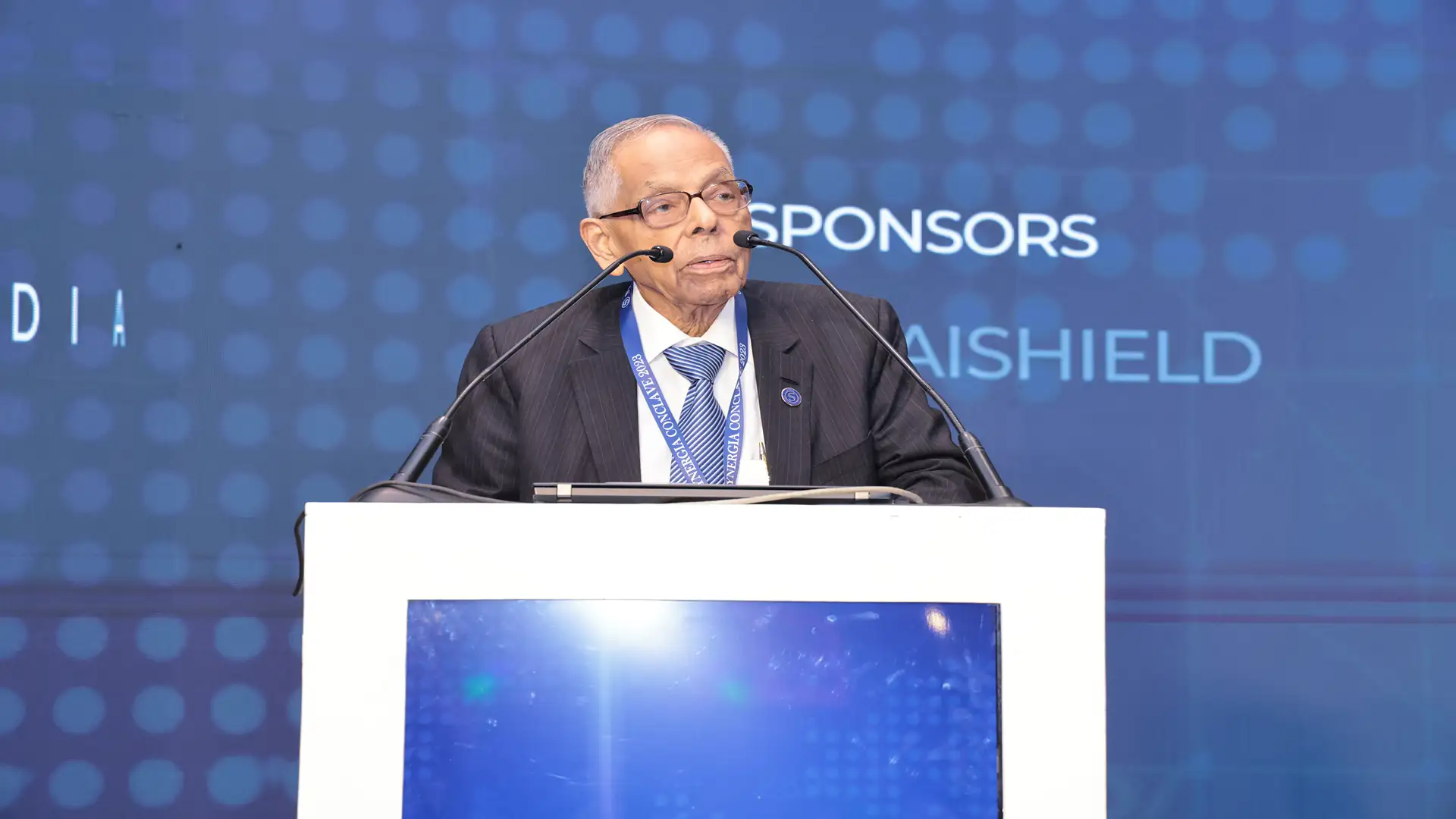
This article is based on the round table curated by Mr. MK Narayanan, former National Security Advisor, India Global Risk and Intelligence Assessment at the 9th Synergia Conclave 2023 |
The world is awash with risks. On the global scale, it could broadly be divided into two categories: Geopolitical risk and digital risk.
The 21st century dawned with an event that shocked not merely the United States but humanity at large.September 11th, 2001, was the first of many incidents that depicted the nature of global risk in the 21st century. Less than a quarter of a century later, the world has again been shocked by the October 7thattack on Israel by Hamas, one which is having a seismic impact on the world. Both eventsrepresent but one facet of global risk today, involving fanaticised groups resorting to terrorism to reinforce their beliefs.
In the realm of geopolitics, the world has become extremely unpredictable today. Russia's war against Ukraine in February 2022 has upended the security situation in Europe. The explosive situation in the Middle East and unfolding events in the Asia-Pacific region again underscore that risk is inherent in the nature of global politics, and nothing can be taken for granted.
Geopolitical Risks
Ukraine Conflict. While the Ukraine conflict in 2022 marked the beginning of this trend, what is disturbing is the prolongation of the conflict. It is clear that if the Ukraine conflict continues to fester, neither Ukraine nor Russia will benefit from it. New technologies and new strategies do not appear effective enough to sort out matters on the battlefield. What it has doneis to raise the risk of one side or the other considering resorting to the ultimate weapon, nuclear– a so-called Oppenheimer moment to win battles at any cost, the resultant devastation notwithstanding. Prolonged wars require a steady hand on the battlefield, which Ukraine conflict does not have. It needs a stable domestic front that is again missing in both Russia and Ukraine. While the appeal of technology may be universal, its application is often doctrine-specific. Failure to appreciate these aspects enhances the level of risk.
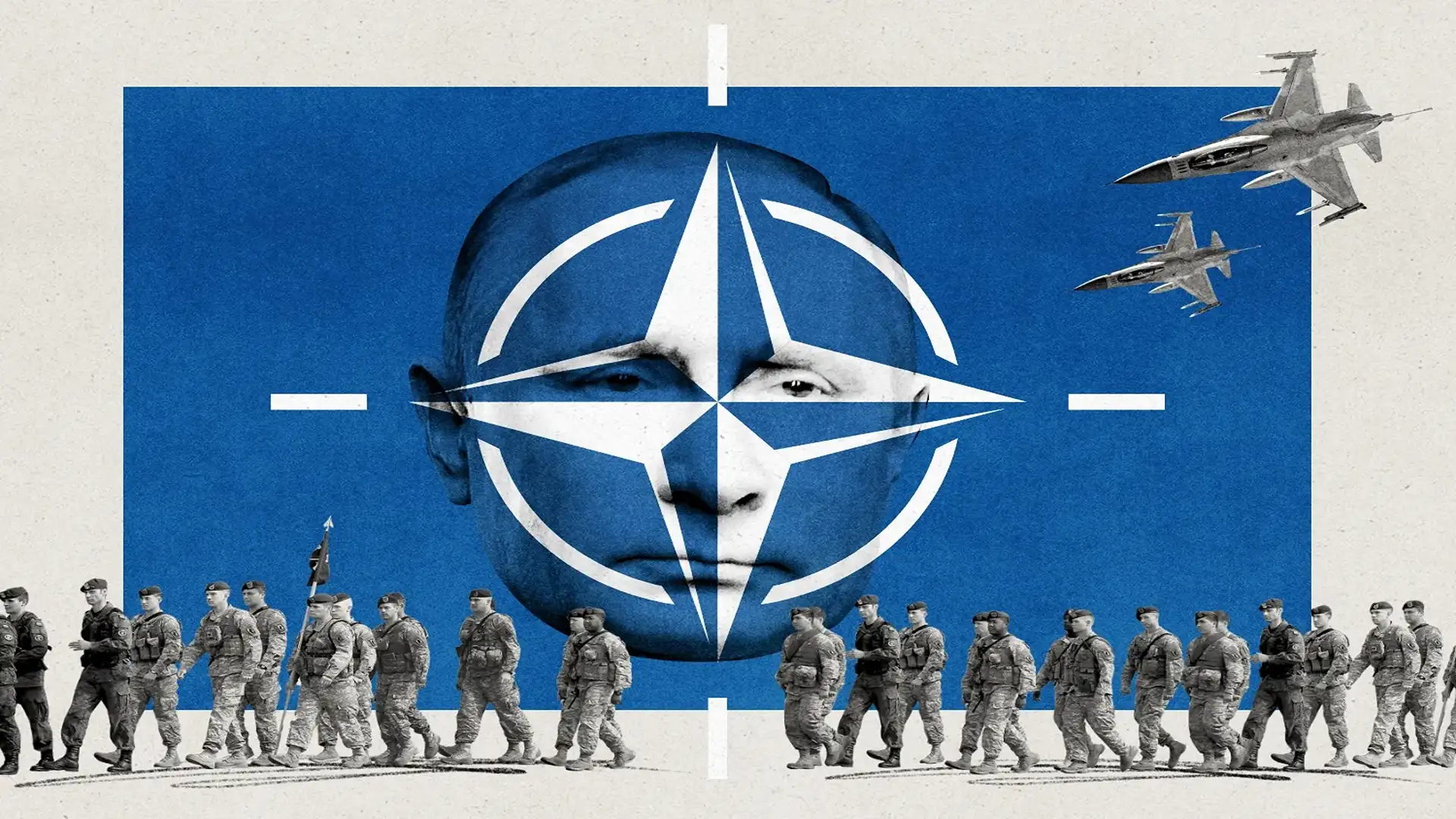
Indo-Pacific. This applies mutatis mutandis to the Indo-Pacific region. The Indo-Pacific is increasingly seen as the primary zone of strategic contestation and competition. Atendency in some quarters to replicate the United Front tactics, U.S.plus NATO in the West, based on the purported success of such tactics to stem Russia's advance in Ukraine, seems to encourage the adoption of similar tactics in the Indo-Pacific region.This would not only enhance the risk but also have disastrous consequences for the world. A gaggle of security arrangements, AUKUS and Quad, for instance, is no substitute for NATO. In Asia, unlike in Europe, there is little evidence of any willingness to enter into a military confrontation with China.Treating the China threat in the way the West has dealt with Russia's attack on Ukraine can be extremely dangerous and risky. China is well prepared for a protracted struggle with the United States and its allies, and the world should not underestimate this. While both the United States and China are intent on weaponising the international institutions in their image,little thought is being given to the import of how it is impacting other countries. The situationis extremely fragile and risky. The world may well be at a tipping point. The situation demands a well-crafted, independent strategy rather than looking for a quick solution. Unfortunately, this is not available.
Israel-Hamas. The Hamas attack on Israel has raised the risk in the Middle East and also geopolitics overall.Israel's reactionis like employing a sledgehammer to swat the Palestinian fly. And apparently, try to redeem a prophecy made many years ago by one of their former prime ministers, Golda Meir. If this persists, it could totally unravel the world order. The savagery demonstrated by both Hamas and the Israeli state only confirms that the international order today is indeed in deep trouble.Quite a few of the terrorist organisations in the region, apart from Hamas and the Palestine Islamic Jihad, are getting greatly encouraged to launch more attacks, thus demolishing all hopes for peace in the Middle East, the Abraham Accords notwithstanding. The level of risk in the Middle East is higher than ever before and can potentially unsettle the world.
Digital Risks
The second risk category involved the technology domain, essentially digital risks, especially artificial intelligence and cyber. In their separate ways, both are equally disruptive. As the digital threat scenario expands exponentially, digital uncertainty morphs into radical uncertainty. As it is, artificial intelligence presents a grave threat.
With the emergence of Generative Artificial Intelligence (GenAI), the situation will become still more critical. There is a real risk that it could alter the very fabric of nation-states, with truth itself becoming a casualty, the deep fake syndrome, for instance. The use of artificial intelligence, which is being talked about so much, is fraught withmany risks. It has to be done with utmost care. Artificial intelligence is capable of being vitiated and is subject to different types of adversarial attacks, such as poisoning, which typically aims to degrade a module's ability to make relevant predictions, backdooring, which involves a malicious trigger input that causes the AI module to misclassify inputs, and evasion. Hence, the a need for caution in thinking that artificial intelligence is the ultimate weapon.
Cyber threats pose an omnipotent security risk. The world is already awash with threats such as ransomware, phishing, and zero-day syndrome. But there is much more to come. Digital trackers logged more than 5.5 trillion cyber-attacks worldwide in 2021; that is 14.5 billion daily attacks, 168,000 per second, and 67 cyber-attacks for every man, woman, and child on earth. Reliable figures for 2022 suggest that the figure could be as much as 11 trillion cyber-attacks in 2022 or even higher.India is reportedly among the top 3 cyber-attacked nations in the world today. Together, AI and cyber are poised to emerge as the biggest danger we face and the most critical element in any future war.
Intelligence Assessments
Intelligence suffers from long-term historical amnesia, compounded further by the fact that it is the only profession without any serious literature and is not conversant with its past. All this is notwithstanding that most intelligence professionalsoften quote the Chinese general Sun Tzu and the Art of War and frequently refer to Kautilya's Arthashastra from India.
In most situations today, intelligence fits well into the "missing dimension" description. The woeful inaccuracy of many intelligence field reports often cloud many an assessment, especially when these reports are camouflaged as most reliable.
The most conspicuous instance of this kind concerns Iraq's weapons of mass destruction under the regime of Saddam Hussein. The attack on Saddam's Iraq by Western forces was based entirely on wrong intelligence and reflects what intelligence professionals typically call groupthink of the intelligence community, both analysts and collectors while interpreting ambiguous evidence as conclusively indicated.
Today's focus is on the massive failure of the Israeli intelligence agencies that allowed the October 7th assault to take place. While Mossad and Shin Bet have a well-deserved reputation, it is apparent that they signally failed if intelligence is synonymous with anticipation. No amount of technology can substitute for carefully analysed source information. Merely being technologically savvy is not enough. It is an analysis of even fragmentary pieces of ground-level intelligence that often turns rough into gold.An analyst’s thought process is crucial in this regard. And good analysts need to and have developed a sixth sense to anticipate events and concerns. Developing a possible range of options to deal with next-generation threats is a basic necessity for every intelligence agency living in difficult neighbourhoods.
How Hamas succeeded in using a combination of rudimentary techniques and tactics willbe a model to follow for other nations fighting a technologically superior nation. It will also become a textbook for all intelligence professionals.Hamas has unwittingly succeeded in establishing that intelligence is possibly the most vital instrument in any conflict. And that requirement for good intelligence is not conditioned by predetermined ideas and thoughts.
The craft of intelligence has undoubtedly evolved, and new methods, methodologies, and technologies are constantly emerging. This has made anticipating events easier but has not removed the need for anticipation, assessment and other arcane skills. Innovative technological advances and skills, not excluding artificial intelligence, in analysing various forms of electronic exhaust cannot make up for the human factor in intelligence. A human source at the right place who can provide advanced information at the right time that an expert analyst can transform into real-time intelligence is still the holy grail of intelligence. All intelligence analysts, therefore, need to heed a quote from the Isha Upanishad, which has a verse that observes, “Into a dark darkness enter those who dwell in ignorance, and into a darker darkness enter those who worship knowledge.”
Groupthink in intelligence can be fatal, as all point to the same conclusion, thus neglecting differing viewpoints. While intelligence agencies like Mossad get depicted as 'action doers' in popular culture, intelligence analysts manning backroom desks do most of the back-breaking work. It calls for a 360-degree thinking process, which is not easy, and there are no kudos. You need the best brains there because you are trying to pick a speck from a whole mass of information, a lot of which could be fake and deliberately planted. In the Hamas case, there is a possibility that Hamas turned around artificial intelligence and fed wrong information through the AI channels. Apparently, Israelis have stopped or lost the art of having human sources amongst the Arabs.
Intelligence agencies are now all conditioned by what is being called as “electronic exhaust.”It requires analysts to have a much deeper understanding of the people or the issue under analysis. Israeli intelligence may have faltered by being contemptuous of Hamas, labelling them as a third-rate organisation, but clearly, there are bright people amongst them like everywhere else. So, great care must be taken in collecting and assessing intelligence. The British went wrong in Iraq with their assessment of Saddam's WMD because there was groupthink on its existence, while three or four people who dissented were overpowered by the groupthink.
.