
A RISING POLE IN WEST ASIA
Saudi Arabia is a lynchpin for stability in West Asia and the World.
The Kingdom of Saudi Arabia (KSA) plays a prominent role in West Asia. Its sizeable influence comprises political, diplomatic, cultural, and economic facets. The two ongoing wars in the vicinity – the Gaza war and the Ukraine war – do not show signs of abating any time soon. In light of this regional uncertainty and conflict, the Saudi Kingdom stands to play an increasingly pivotal role in maintaining peace, as well as political and economic stability.
As two leading powers in their respective regions, India and Saudi Arabia share common concerns and interests and stand to benefit from engaging and cooperating on multiple fronts.
Regional Peace and Political Stability
The geopolitical temper of West Asia is largely set by two of its principal protagonists -KSA and Israel. Therefore, their bilateral relations remain critical to stability. While Saudi-Israel security cooperation has been proceeding for many years, formal diplomatic relations will be a significant development.
A key instance of Saudi Arabian efforts includes the planned normalisation deal with Israel, which has struggled to establish normal ties with its Arab neighbours since its inception in 1948 in erstwhile Palestinian territory. Although the Gaza war has upended the negotiations and put the deal on the back burner, the Saudi Kingdom is likely to resume it at a later stage, given the benefits it stands to gain. These would include important security guarantees from the U.S. and the broader benefit of regional reconciliation by facilitating Israel's integration in the region. The icing on the cake would be Saudi access to Israeli technology and investments.
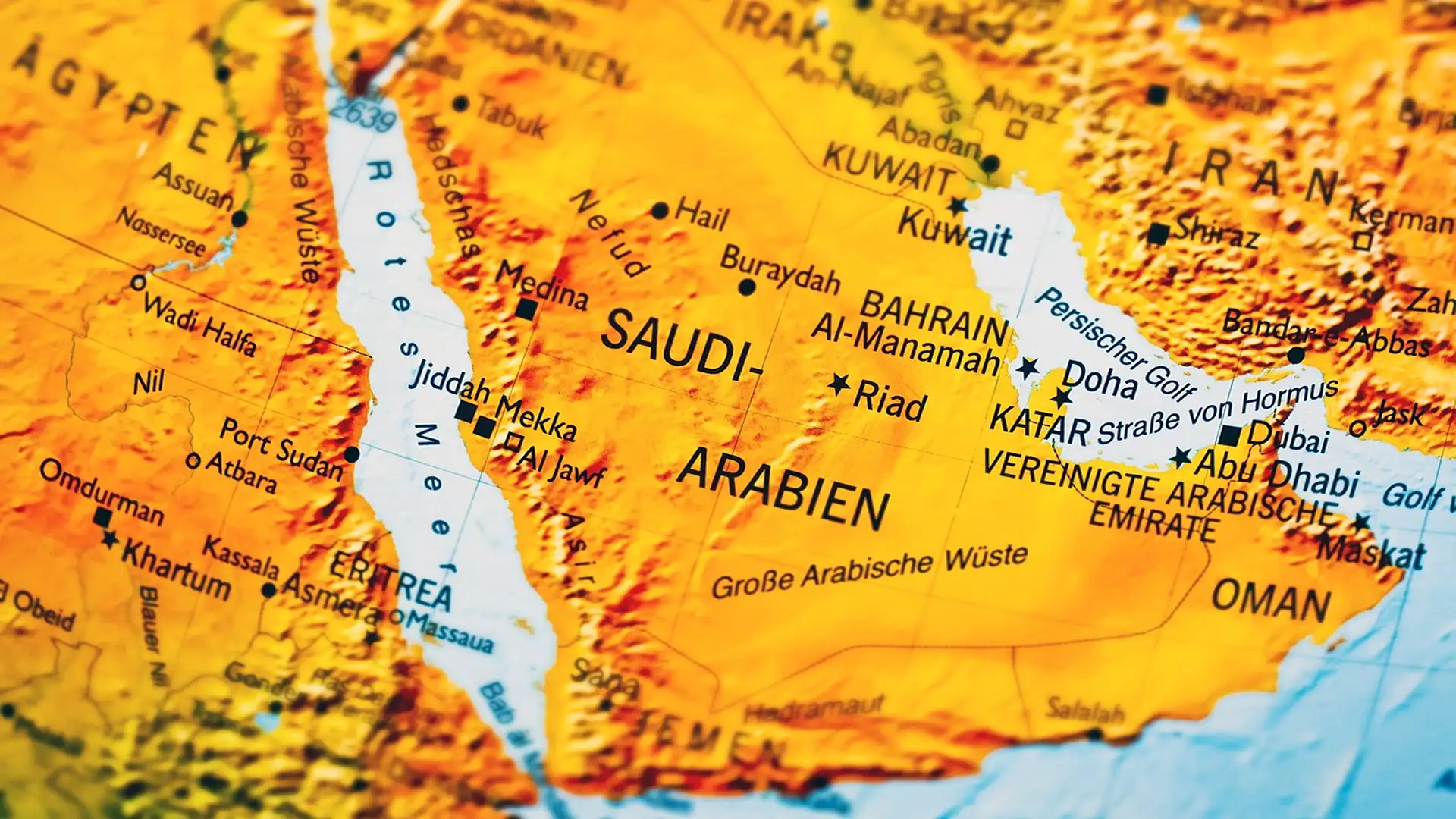
Saudi Arabia is keenly interested in regional reconciliation and peace as it looks to pursue socio-economic reform, diversify its oil-reliant economy, and strengthen security. In the long-running Yemen war, it is negotiating with the Houthis to reach a ceasefire agreement. It founded the Red Sea Council in 2020, comprising all the states bordering the basin. It ended an almost 4-year blockade of Qatar in 2021. It resumed diplomatic relations with war-torn Syria and even with its regional rival Iran after more than seven years of severed ties.
Saudi Arabia offers an oasis of stability in a region that is filled with strife, ethnic conflict, militant outfits, and geopolitical competition. It avoided major upheaval during the wave of political uprisings across the Middle East in 2011, known as the Arab Spring. It made it through a significant fall in global oil prices and reduced state revenue, successfully carried out a royal succession that could have been contentious, and managed a military intervention in neighbouring Yemen without drawing major retaliation.
Its approach to the Gaza war and the Red Sea crisis has been cautious as it strives to avoid escalating the war into a regional war and provoking Tehran, which supports the Palestinians and the Houthis.
Crown Prince Mohammad bin Salman (MBS) has been globally acknowledged as a 'man of transformation' for Saudi Arabia. As the architect of Saudi Vision 2030, MBS wants to diversify his nation economically, socially and culturally. In this, the West, the technologically empowered Israel, and the vast markets of India have a big role to play. For Vision 2030 to fructify, peace in the Middle East and rapprochement with Israel are two prerequisites.
The October 7th Gaza attack seems to be a well-planned move that aims not only to bring Palestine statehood back on the global negotiation table but, more importantly, derail the amalgamation of the oil-powered Middle East economies with the global markers. The usual suspects in this conspiracy are not difficult to identify- they are those who will be left out in the cold if Saudi Vision 2030 achieves its immense potential.
The Kingdom holds religious and cultural significance in the Arab and Islamic world as the custodian of Mecca and Medina and a promoter of cultural connections. In recent years, Crown Prince Mohammed bin Salman has initiated various efforts to promote interfaith dialogue across different religious groups and faiths, such as a first-of-its-kind multi-faith conference in 2022.
Its peace-building efforts are not restricted to the regional level but extend to the global arena. This was witnessed in its mediation and peace-brokering efforts in the Russia-Ukraine war.
The Iran- Saudi Conundrum
No analysis of Saudi Arabia would be complete without an insight into the dynamics of the Saudi-Iran relationship. Some have described it as a managed rivalry while others have termed it an Islamic Cold War.
In the face of Israel’s continuing assault on the Gaza Strip to crush Hamas militarily for good, Riyadh has had to recalibrate its position more than Tehran. In the Islamic Summit, the Iranians called on all Muslim countries to cut off relations with Israel and declare the Jewish state a terrorist entity. However, the Saudis have moderated this position by opposing both these calls while continuing to criticise Israel.
For Iran, Saudi Arabia’s responsibilities towards Islam have never been devout enough. Some Iranian extremists even consider the Saudis to be beyond the pale of Islam itself. They believe that the Saudis have corrupted the true and original Islam. For these hardliners, any compromise with Saudi Arabia is anathema. These people will not rest until the Saudi regime is finally overthrown and replaced with their version.
Saudi Arabia, too, has its issues with Iran. Sunni Muslims are the majority of the population in the Kingdom. However, there is a minority of Shia Muslims in the oil-rich eastern provinces of the Arabian Peninsula. There is a historic sense of disgruntlement amongst these Shia communities.
Iran, on the other hand, has considered itself to be the supporter of oppressed Shia Muslims throughout the world. With such an ideological bent of mind, the Iranian government could never ignore the Arab Shias right across the Persian Gulf. Its propagation of the extreme form of Shia Islamic ideology and its influence on the Islamic world challengesthe Saudi monarchy’sinfluence.
Economic Heft
Saudi Arabia plays an integral role in maintaining economic stability in the region and contributes to its overall development. Not only is it the largest country in the Gulf Cooperation Council (GCC), but it also supports other nations in the region.
As one of the world's largest oil producers, the Saudi nation has a prominent position in the global oil market and economy. This enables it to contribute to limiting volatility in oil markets, as witnessed in 2011 when the Kingdom and other GCC producers significantly increased oil production to restrict oil market disruptions resulting from strife in Libya.
However, the Kingdom's importance is not restricted to oil. Its strong economy makes it a key source of fund inflows for a range of countries: it is a major investor for several Arab neighbours and South Asian countries as well as a source of remittances. Additionally, it is one of the largest providers of official development assistance in the Gulf region.
Interestingly, the oil-rich nation has become a key contributor to global climate transition initiatives. It is building a futuristic city, Neom, that will be powered by green hydrogen, a carbon-free fuel. As the Saudi leadership looks to diversify from a fossil-fuel-dependent economy, green energy is a priority.
Further, its active participation in international financial institutions such as the International Monetary Fund (IMF) and economic decision-making bodies like the Group of 20 (G-20) give it economic prominence on the world stage. This allows it to represent regional concerns on international platforms and present them in key economic and financial decision-making processes.
India and Saudi Arabia – Commonalities
India and Saudi Arabia share common interests and concerns. Both nations are interested in establishing balanced relations without getting ensnared in superpower rivalries. Saudi Arabia is keen to promote regional reconciliation and establish relations with important countries in Eurasia instead of focusing only on the United States. India, too, is keenly interested in promoting global south concerns and playing a leading role in this domain. Both nations look to represent regional and global south concerns at international fora that have been traditionally dominated by Western concerns.
At a domestic level, both countries share certain interests, such as furthering their socio-economic progress, including women's progress, as well as investing in green energy. They also share common concerns, such as terrorism and religious extremism in West Asia. Saudi Arabia faces militant challenges on multiple borders, particularly from Iran-backed militant outfits.
Opportunities for India-Saudi Cooperation
India’s technological expertise in areas like Information Technology (IT), aerospace, and biotechnology allows it to share knowledge and educational resources, skilled professional advisors, and R&D tools with Saudi Arabia. In turn, the Saudi nation can share its technological expertise in different areas like telecommunications, cloud, and cybersecurity, to name a few.
Additionally, there is scope for the two nations to support each other’s technological development through investments such as Saudi Basic Industries Cooperation’s (SABIC) $100 million investment in an innovation centre in Bengaluru and the investment in the Indian health tech company HealthifyMe. In turn, Indian companies such as Tata, Wipro, and Air India have made significant investments in Saudi Arabia. Larsen & Toubro has even secured a deal to implement one of the world’s largest solar projects in Saudi Arabia.
Economic cooperation is another key avenue for India-Saudi ties. Saudi Arabia is one of India's largest foreign direct investors and is a major market for a range of manufactured goods such as automobiles and electrical and mechanical machinery. The Saudi Kingdom is one of India's largest trading partners and a leading oil supplier. Trade between the countries exceeded $52.8 billion in the fiscal year 2022-2023. Leading Indian exports to Saudi Arabia include Organic Chemicals, Rice (Basmati), Motor Vehicles, and Iron and Steel. Leading exports of Saudi Arabia to India include crude petroleum, petroleum products, manufactured fertilisers, and plastic raw materials. However, a gaping trade deficit persists, with India's imports far exceeding its exports to the oil nation. This is largely due to India's high reliance on Saudi oil.
As the Kingdom looks to encourage companies to produce locally, there is scope for Indian companies to set up shop in the Gulf country. Not only could this help build Saudi Arabia's private sector industry, but it could also bring skilled experts to facilitate knowledge sharing while hiring locally. This increased demand for skilled workers could encourage local people to build skills and join the industry, contributing to a key target for the Saudi government – increasing workforce participation, particularly for its large cohort of young people.
Ties between the two countries are strengthened by the large Indian community working in the Kingdom. This diaspora contributes approximately $ 8 billion in annual remittances to their families back home in India. It includes unskilled Indian workers contributing to Saudi Arabia's labour force and skilled workers, including entrepreneurs and individuals involved in different sectors like education and engineering.
Healthcare cooperation in areas like vaccine development and setting up speciality hospitals are key possibilities for private-sector interaction. The joint manufacture of pharmaceuticals is another way to benefit from combined resources and expertise.
Cooperation and agreements between educational institutions could help raise standards, widen exposure, and scale up vocational training in both countries.
Lastly, India and Saudi Arabia stand to benefit from cooperating in global fora as they did during the G-20 hosted by India, which witnessed the launch of the India-Middle East-Europe Economic Corridor (IMEC). The initiative is both economically and strategically significant. It will also further the two countries' efforts to bring their regions to play a more active role on the global stage. From the Indian perspective, the India-Middle East- Europe Corridor is vital to this vision.
Assessment
Saudi Arabia is poised to play a leading role in West Asia. Its efforts to maintain stability and promote reconciliation in the region become all the more important in light of the Gaza War and the Red Sea crisis. The resource-rich Kingdom is not just an anchor of political stability but also contributes to economic development in West Asia.
India and Saudi Arabia share several common interests and concerns at the domestic, regional, and global levels. The two nations stand to benefit from sharing technological know-how and investing in each other’s technological endeavours. Other avenues for cooperation include economic, healthcare, and educational fields.
|
Expert Opinion Ahmed Ali Almaimouni, Director of Research and Studies Center, Rasanah Institute, Riyadh, Saudi Arabia We are the second largest oil producer in the world. Every morning, we wake up and find ourselves looking around us and seeing the potential challenges and threats we face. In the northeast, we face the presence of a heavily armed Iran with nuclear aspirations, while in Iraq, numerous pro-Iranian militants reside along our borders. The situation in Syria remains dire. Five major powers are competing there – Russia, Turkey, Iran, the United States, and Israel. Lebanon lacks an active government, with Hezbollah exerting control over the country. In Palestine, there are continuous, enduring decades of occupation. No hope on the horizon for resolving this issue. Moving a little bit to the West, Sudan grapples with fragmentations and devastating effects, ongoing conflict, and the Houthi militants in Yemen pose a permanent threat to the southern border of Saudi Arabia. |