
THE FUTURE OF THE INDIAN OCEAN: US-CHINA
The San Francisco summit is seen as a lifeline thrown to China by the U.S.
Mr Jayadeva Ranade – Former Additional Secretary, Cabinet Secretariat and ChinaScholar
The most significant power play playing out on the global stage for the last five years is the one between China and the United States of America. It impacts each and every one of us, some more than others, but it certainly impacts everyone.
It all started with Xi Jinping's announcement in 2017 in the 19th Party Congress, a very unusual announcement for a leader to set a timetable for where his country will be by 2049, the 100th year of the founding of the People's Republic of China. Mr Xi declared China would be a major world power with global pioneering influence – a code for China being the country that can create or influence international organizations. This goal has since been oft repeated in a different language, making it clear that China is unhappy with the existing world order and it needs to be changed and made more fair. In this, China has found a willing partner in Russia. The U.S. understood that this was the challenge, and they reacted immediately.
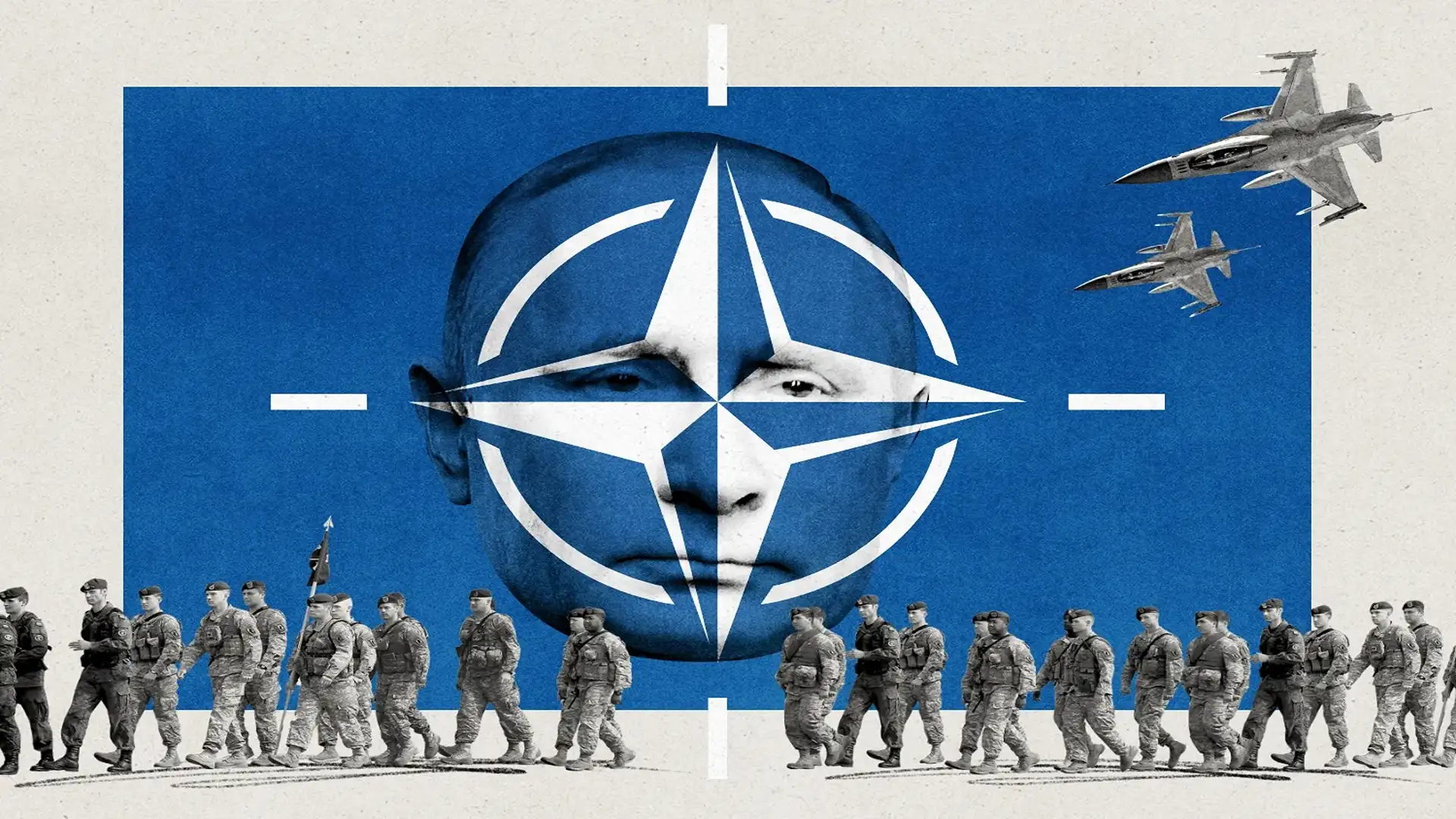
Any idea of the rising tension can be gauged from the deployment of the forces by the United States and others around China. China's military build-up has been with an eye on the United States.
The Prize is the Indo-Pacific
The recent APEC Summit in San Francisco brought a measure of relief for everyone as it was seen as a deliberate effort to pause the rapid deterioration of relations and put off what seems to be inevitable–an open confrontation between the two.
Despite the protocol on display in San Francisco, it was clear that President Xi Jinping had not backed off from his stated ambitions. He went a step further and rather brazenly invited the United States to join his initiatives, namely the Global Development Initiative, the Global Security Initiative, the Global Civilization Initiative, and the Belt and Road Initiative, in case the U.S. felt left out. And the U.S., on its part, did not respond.
The fact is that China's ambitions have not been scaled back. A few days before the summit meeting, there was a show of force by the Chinese against Japan against the Philippines off the St. Thomas shore and around Taiwan. And that has not eased off.
At the summit, the Chinese, in fact, reiterated their goal of reunifying with Taiwan. Chinese diplomats have been saying that China is the only P5 country that has not achieved reunification. So, the intent is very clear. As far as the South China Sea is concerned, which is the immediate neighbourhood of China, there has been uncheckedexpansion of Chinese influence. While no country has blocked them, China has expanded its reach, building military facilities on various islands that they have reclaimed. Each one of the navy captains of their ever-expanding People's Liberation Army Navy has been familiarized with the Indian Ocean region and has gone across into the Atlantic and in the northern Bering Sea, etc. They are now, of course, trying to enter the Arctic.
The San Francisco summit is seen as a lifeline thrown to China by the U.S. The First positive development was that the commerce ministers of both sides resumed talks, and the second was the lifting of sanctions on the Forensics Office of the Ministry of Public Security, which did two things. One, it showed that sanctions imposed by the U.S. were open to negotiation. In other words, if China plays its cards right, it can get sanctions lifted. The second is that the U.S. was willing to compromise because Xi Jinping said he would try to see if the problem could be resolved by talking to his former companies. Now, in a communist state, particularly China, this kind of trying by the president is a very diluted kind of commitment, but apparently, it was enough.
Pressure is on Both Sides
The pause comes when the window for reconciliation is shrinking for both countries.
For China, Xi Jinping is seeing mounting domestic discontent and dissatisfaction against him personally.There are accusations that he has mishandled the relationship with the United States, which has accentuated the economic difficulties not only for the Chinese people but for the Chinese state also. The Chinese provinces are cash-strapped and unable to pay their employees. Salaries have been cut by 30 percent, and bonuses are being withdrawn. The San Francisco Summit has slightly lifted the mood of the Chinese economy, even if all sanctions have not been lifted in the technology sector.
President Xi Jinping is unwavering in his goal for the reunification of Taiwan. He wants to go down in the history books as the first man who, if not having achieved it, at least started the process. If domestic discontent spurred by the economic situation mounts beyond a certain level, then President Xi Jinping may be tempted into some rash action. But the window for him also is shrinking-perhaps two to three years to do something.
Similarly, in the West, the 2024 Presidential elections are looming for President Biden. President Biden also has concerns for the U.S. economy. He had lined up all the heavy honchos of the huge multinational corporations who paid $ 40,000 for the privilege of sitting at the same table. For the United States also the window is shrinking. And there again, I think I would give it another two to three years.
American Interests in Asia
American interest in Asia, a rapidly rising geo-strategic construct, is long-term; AUKUS is a good pointer in that direction. These three nations (U.S., U.K. and Australia) are getting together to try and see that they continue to profit from a rapidly rising Asia.
The Chinese have made at least three offers that have come out in the public domain to the United States, saying you look after the from the Pacific Ocean eastwards, we look after westwards, and if you're worried, we'll share the intelligence with you. The U.S. hasn't accepted it. Chinese, as the Americans know, do not believe in equal partners. They believe in a junior partner, with them being at the top of the heap. And will the Americans, and more importantly, the American public, even if not the American corporates, accept being number two?
India will also be affected, no doubt. But India is not dependent on the U.S. to the extent that whereas we have had Chinese aggression or military adventures against us in Doklam, we stood firm and held them off for 73 days. Again, since April 2020, 70,000 troops are facing each other. We have not backed off, and we don't intend to. In this limited sense of military strength, India will hold its own. But the same cannot be said for either Japan, Vietnam, or Singapore. We could perhaps see a new coalition comprising India, Japan, Vietnam, Singapore, Indonesia, and maybe Australia to stop the Chinese overlordship in this region.
Synergia Comments
In about 18 to 24 months, we expect that the Americans would be self-sufficient in semiconductors, and then largely, their dependence on Taiwan will reduce. If so, what does it mean? Because we already see that, for some reason, the Americans have started this process of wanting to bridge the rift that was there.