
The beautiful ridges and vales of Pir Panjal are once again reverberating with gunfire as terror violence makes a comeback.
By Major General Ajay Sah, SM, VSM (Retd), Synergia Foundation, who has commanded both, a RR Battalion and a RR Sector in intense CT operations.
The drum roll of KIAs (Killed in Action) of the Indian Security Forces has been steadily rising with every passing week, drawing attention to the rising tide of terror in J&K. What has caught the security organs of the state by surprise is that the spike in violence is not in the Valley, the traditional stomping ground of Pakistani terrorists and their local proxies, but in the Jammu region, South of the Pir Panjal Ranges (PPR). Terror was stamped out of the Jammu Region more than a decade ago by the Rashtriya Rifles' established counter-terror grid with close coordination with the Special Operations Group of J&K Police.
While terror strikes had commenced early last year as the Rajouri belt saw sporadic terror incidents, since June this year, the terrorists have been striking with unprecedented impunity against hard targets like Army convoys and patrols.
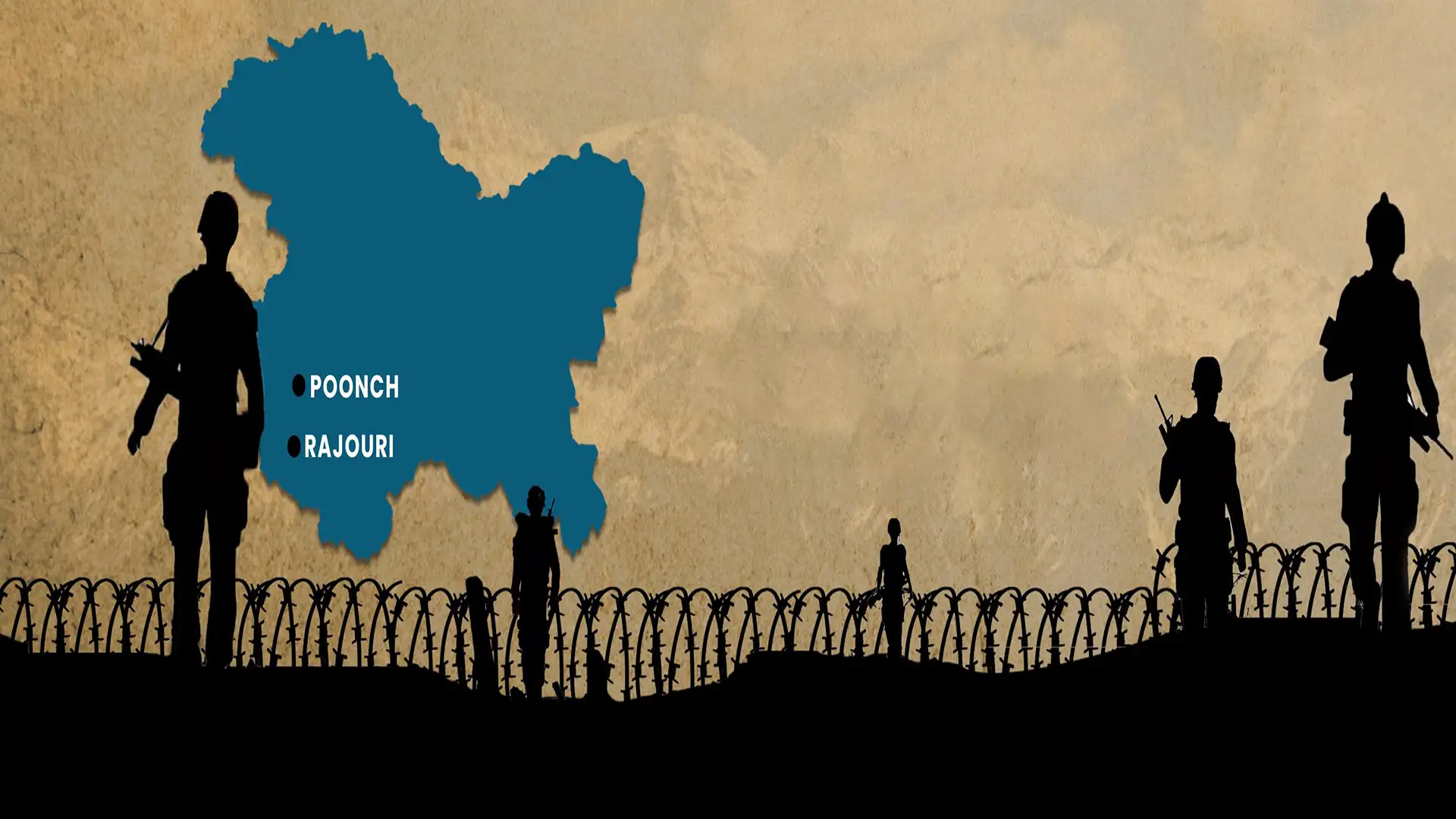
As per Lt Gen HS Panag (Retd) (The Print 8 August 24), approximately 90-100 terrorists, including 55-60 Pakistanis, have infiltrated through the International Border (IB) in Samba and Kathua districts—possibly also through the Pathankot district in Punjab—and the Line of Control (LoC) in Rajouri and Poonch districts. The entire swath of mountainous and forested terrain has been activated, covering Poonch, Rajouri, Samba, Kathua, Ramban, Doda, and Kishtwar.
It is the Geography!
The PPR is the natural barrier separating the Kashmir Valley from the Jammu region. Rajouri and Poonch are the two main districts traditionally most vulnerable to infiltration across the LoC. However, in the current round of terror strikes, we observe that small, elusive bands of terrorists have penetrated deeper into the hinterland, with one strike being carried out on a bus of Amarnath pilgrims close to Katra, considered totally immune to such strikes. It is not very difficult for small groups of hardy fighters to tramp deeper into the interior regions of Jammu once the LoC, with all its obstacle systems, has been successfully breached. The three-tier anti-infiltration obstacle system (AIOS) is not without its Achilles's heel thanks to the lay of the land– broken ground, nalas that cross the LoC and dark and misty conditions that make surveillance even in the daytime a dodgy affair. Pakistan has been diligently working out tactics to outflank the AIOS by cutting tunnels under the obstacle and equipping infiltrating groups with the tools and skills to cut through electrified fences rapidly. Clearly, these efforts are paying off.
PPR is almost a no-go area in winter, but movement becomes much easier starting in June, especially for small parties. Intensively covered by thick forest cover and crisscrossed with ridges that never seem to end, aerial surveillance is scratchy unless thermal imagers can detect the body heat of small groups of infiltrating terrorists. The main PPR watershed is pierced by many passes through which national highways and even lesser-used foottracks pass. If the SF pressure in the Jammu region reaches a crescendo, as is happening now, the terrorists slink into South Kashmir into Kulgam and Shopian areas. This was evidently a practice that the recent terror groups have also adopted, going by the encounters that have recently taken place North of the PPR.
The demography of the region is also a factor. The demographic composition of the area South of Pri Panjal is largely similar to that of POK in terms of culture, language and ethnicity. Poonch has a 90 per cent Muslim population, while Rajouri stands at 60 per cent] (CRS Reports 2019). These similarities deepen the ties between the locals here and those in POK. The cultural similarities and lifestyle habits also mean that it is easier for foreign terrorists to blend in with the local population, making the task of security forces even more difficult.
Counter-terrorism strategies are also more difficult to develop here. This region has comparatively less developed surface transport connectivity than the Kashmir Valley, and reaching incident sites is time-consuming.
The Pakistan Hand
Of course, it would not be out of place to lay much of the blame on India’s Western neighbour for the mischief now being played out. The kind of military hardware that the terrorists are packing, including the much-vaunted U.S. M-24 assault rifles fitted with state-of-the-art thermal scopes and satellite radio communication devices that are immune to interception, can only be sourced from government-controlled arsenals.
At very little cost to itself, the Pakistani deep state can infiltrate a select group of highly trained operatives across the LoC to keep the pot boiling in J&K. The imminent assembly elections in J&K, if they must adhere to the September deadline stipulated by the Hon’ble Supreme Court of India, would be a lucrative period to keep Indian security forces engaged. Also, this is the period of the Amarnath Yatra, which attracts millions of pilgrims to the Kashmir Valley; Kashmiri locals would be very annoyed if the yatra were disrupted in the Valley because it would keep the economy of South Kashmir vitalised. Hence, while pilgrims head in hordes toward Sonmarg in the Valley, there is open season for the terror groups in the region South of the PPR.
More importantly, the Valley is so well protected by the Indian security forces with an efficient intelligence network that foreign fighters would find it hard to survive for more than a few weeks in the Valley; the mountainous region of Jammu, with a much lower troop density, offers a much more advantageous battleground and a longer survivability rate.
Since the abrogation of Article 370 in August 2019, Pakistan has not been able to interfere in any significant manner with the peace and governance of Kashmir. This fact would be extremely galling to the Pakistani Establishment. With domestic conditions in a churn and a major TTP insurgency keeping the Pak Army fully engaged, it had little time for whipping up trouble in J&K. Evidently, the current crop of Pak military leadership is re-evaluating the situation and feels compelled to escalate the temperatures across their Eastern borders without raising the stakes for their own security. The sparsely populated Jammu region has provided an ideal platform for this low-scale but high-publicity gambit; it has definitely got the Indian security establishment up and running!
As per Lt Gen HS Panag (Retd), former GoC in C Norther Command (The Print 8 August 24), the prolonged relative stability of the Jammu region since 2007 and the confrontation in Eastern Ladakh could have led to a dilution of the counter-terrorism grid in the Jammu region. In early 2008, additional forces of nearly two divisions that operated in this region post-Operation Parakaram were gradually withdrawn. Out of 26 Rashtriya Rifles (RR) battalions, four were diverted to the Valley. In 2021, one Counter Insurgency Force HQ and RR Sector with 2/3 battalions were diverted to Eastern Ladakh. No effort was made to fill the void with CAPFs.
When high-end terror inflicted the Jammu Division between 1994 and 2009, additional army formations were inducted post haste and CIForce (Udhampur) and CI Force (Reasi) were raised as part of the RR-fication of the Indian Army's fight against terror. Concurrently, village defence committees (VDCs) were raised, trained and armed with weapons in remote areas that the Army could not dominate 24 x 7, a measure never tried out in the Valley. That the RR succeeded immensely was evident by 2009 when most terror groups, both home-grown and imported, had been wiped out and peace reigned in the region. The force level in the Jammu Region gradually decreased in consonance with the threat levels, with units and formations moving to other more critical threat areas.
Experienced CT operators will tell you that every time troops dismantle the CT grid in an area, the intelligence grid established with so much effort collapses overnight, as does the security forces' integration with the local populace through their "Operation Sadhbhavna" efforts. It takes years to establish an effective and reliable intelligence network. From the ongoing operations being conducted in the rugged Pir Panjal region, it is evident that specific actionable intelligence is lacking.
The Way Ahead
The Indian Army's counter-terror infrastructure is vast and adaptive; corrections are taking place as we speak, and things are on the mend; results will not betoo far away. The Counter-Infiltration deployment and Counter Terror grid are undergoing an overhaul. Additional Army units and formation headquarters are flowing in.
However, the terrain does not lend to flooding the area with many troops; the strategy lies in corralling the terrorist groups into well-defined areas where they can be neutralised in detail by highly trained and equally mobile special forces assisted by local guides. Where possible, drones would be pressed into service if they could detect thermal signatures, but their efficacy would be doubtful in this terrain.
However, nothing would please Pakistani planners more than the redeployment of military resources out of the Kashmir Valley into the Jammu Division. This would only open the floodgates for the revival of terror in the Kashmir Valley. Surely, Indian security planners would be sensitive to this and not shift troops from the well-established CT grid North of the PPR.
|
Lieutenant General Devraj Anbu, PVSM, UYSM, AVSM, YSM, SM, former Vice Chief and GOC in C Northern Command, Indian ArmyExpert Comments
The Jammu Region, which remained free of terrorist incidents for nearly two decades, witnessed a gradual increase in terrorist incidents from 2021 onwards until it peaked in 2024, raising concerns about security establishments in the country. As long as the Deep State in Pakistan (The Military) does not fundamentally change its policy towards India in general and Kashmir in particular, cross-border terrorism as an instrument of state policy will continue to take place in Jammu and Kashmir. Therefore, if any part of the Jammu and Kashmir Union Territory remains free of terrorist incidents, it is only temporary and can be activated when and where the Pak ISI desires. What we are witnessing in the Jammu Region is the manifestation of this. After the standoff with the PLA in Eastern Ladakh in May 2020, the Indian Army redeployed some of its troops from the Jammu Region, creating a void in the counter-terrorist (CT) deployment. It appears that Pakistan, post the abrogation of Article 370 in 2019,had devised a detailed plan to activate areas in the Jammu Region where there are apparent voids in the CT deployment. We are now seeing this plan being unfolded. The traditional modes of infiltration by terrorists across the International Border (IB) and Line of Control (LoC) have been exploited. Alongside, the local support systems in Poonch Region, Udhampur, Reasi, Kathua, Doda and Kashmir have been activated to receive the infiltration modules and guide them towards the area of operation, deeper in the hinterland. The terrain South of Pir Panjal Ranges (PPR) is rugged, densely forested, and sparsely populated, giving a distinct advantage to the terrorists in exploiting and making counter-terrorist operations much more difficult. The terrorists take advantage of the similarities in the ethnicity of the sparse population in the remote region of the Jammu Region and merge with them, making it difficult for Security Forces (SF) to identify them. The recent terrorist incident reveals that they are well trained, adopting advanced tactics, using sophisticated technology and lethal Chinese weapons and those left behind by Western Forces in Afghanistan. In addition, the encrypted Chinese radio sets have given them an added advantage in their coordination and avoiding contact with the SFs. They do not seem to be in a hurry to execute the action; instead, they deliberate in identifying the targets and planning and executing them successfully. All this would not be possible without local support and guidance. Counter-terror operations can only be successful with a good network of human intelligence, the ability to keep the suspected areas under surveillance, and the ability to deny any means of secure communications to coordinate and execute terrorist actions. Isolated habitation in the hinterland and higher reaches of PPR and taking the local community on board in the effective counter-terrorist operation can only yield some tangible success. All these would involve technology infusion and additional troop deployment. |
|
VIEW FROM THE GROUND LEVEL Colonel Akhil Sah (Retd), former Commanding Officer of Rashtriya Rifles battalion with extensive experience in CT operations South of Pir Panjal Ranges The terrain South of the PPR lends itself to small unit actions by well-trained, highly motivated teams of guerillas living off the land and striking swiftly before fading away. It is mountainous with dense primary forests with an average elevation of 5000 to 6000 feet. As you trek up the narrow mountain trails, you enter beautifully thick forests of sweet-smelling Deodar and Pine. However, most of the lower reaches of these ridges have been shorn of tree cover over the years due to illegal logging by locals. Nestled amidst the upper reaches are lush green meadows, the traditional summer grazing grounds of sheep from the J&K region and tended to by nomadic Gujjar tribes. As you proceed from Doda towards the Kishtwar region, which lies under the shadow of the main PPR, the terrain gets more rugged, and hardly any road communication exists. To increase terrain friction for infantry foot columns, the mountains are interspersed with deep khuds, valleys and seasonal water courses prone to flash floods and swift currents during the monsoons and after winter melt in higher reaches. The population centres are few, scattered, and have a low population- Doda Towan, Ramban, Bhaderwah, Kishtwar, Gundoh, Premnagar, etc. Compared to the Kashmir Valley, the road network too is limited-Doda-Ramban, Doda-Kishtwar and Doda-Bhaderwah. Most villages are, however, located away from main highways and are connected by mule tracks or barely jeepable kutcha roads. At least this was the status in the late 1990s and early 2000s, and there must have been some improvement since then. While it may be doctrinally prudent to move cross country, practically, it is well-nigh impossible to do so for extended distances; most troop columns stick to these mule tracks and jungle trails, switching to cross country move only selectively and where tactically unavoidable. The dense forest coverage, ruggedness of the terrain, a host of natural hideouts with difficult and restricted approaches and locals of similar ethnicity as across the LoC to provide sustenance and guidance shift the advantage in the terrorists' favour, who hold the initiative, forcing security forces into a reactive mode. Local support, however scanty and scattered, is an important force multiplier for the terrorists. Overground spotters maintain constant surveillance on the few motorable roads and the open lower stretches of the ridgelines from dominating higher reaches, quickly passing the warning to any group lurking in the area. Large columns of troops heading on a mission are impossible to conceal. Our experience was that when we operated in battalion or brigade-sized columns, we hit only thin air. Only when our small teams covertly operated in the higher reaches could they track down the resident group and, if lucky, corner and liquidate them. Those who have walked for hours along the narrow jungle-covered mountain tracks trying to outflank a small and evasive band of terrorists lurking in the higher reaches understand what it takes to sight a terrorist in these rugged areas, let alone trap and neutralise one. Unless the information is spot on and the terrorists are tracked to their lairs after duly cutting off their escape routes, most encounters result in a sharp burst of automatic fire as the sentry lets go a warning burst. The group flees to fight another day, notching up another missed opportunity for the hard-pressed security forces. Actionable intelligence was hard to come up with due to the sparseness of the population; in small hilly hamlets, locals were petrified of the terrorists and could not be persuaded to provide any worthwhile information. In sum, it is an ideal operating ground for small, mobile, fanatic and physically hardened teams of guerillas. |