
TECHNOLOGY FUTURE
Seven domains will be relevant- artificial intelligence, mobile communication (6G), blockchain, quantum, metaverse, synthetic biology and aerospace.
Dr K Radhakrishnan
Any attempt to foretell the technology future would be based on an aggregation of key technology drivers and plausible trajectories, even though it is a tricky matter to do currently, such projections for technology.
What is the big picture? Essentially, technology is advancing exponentially. If you look from the first industrial revolution, which was mechanization, then electrification, automation, and digitization, all these are over now – we are in the fifth Industrial Revolution since 2020.Our predecessors had a half-life of 50 years for the skills, but today, a survey of the World Economic Forum says that it is five years or even less for certain types of skills.
Emerging Technological Domains
Seven domains will be relevant- artificial intelligence, mobile communication (6G), blockchain, quantum, metaverse, synthetic biology and aerospace. And all these are interconnected and each one develops along with the other, hence the rapidity of the development for the future.
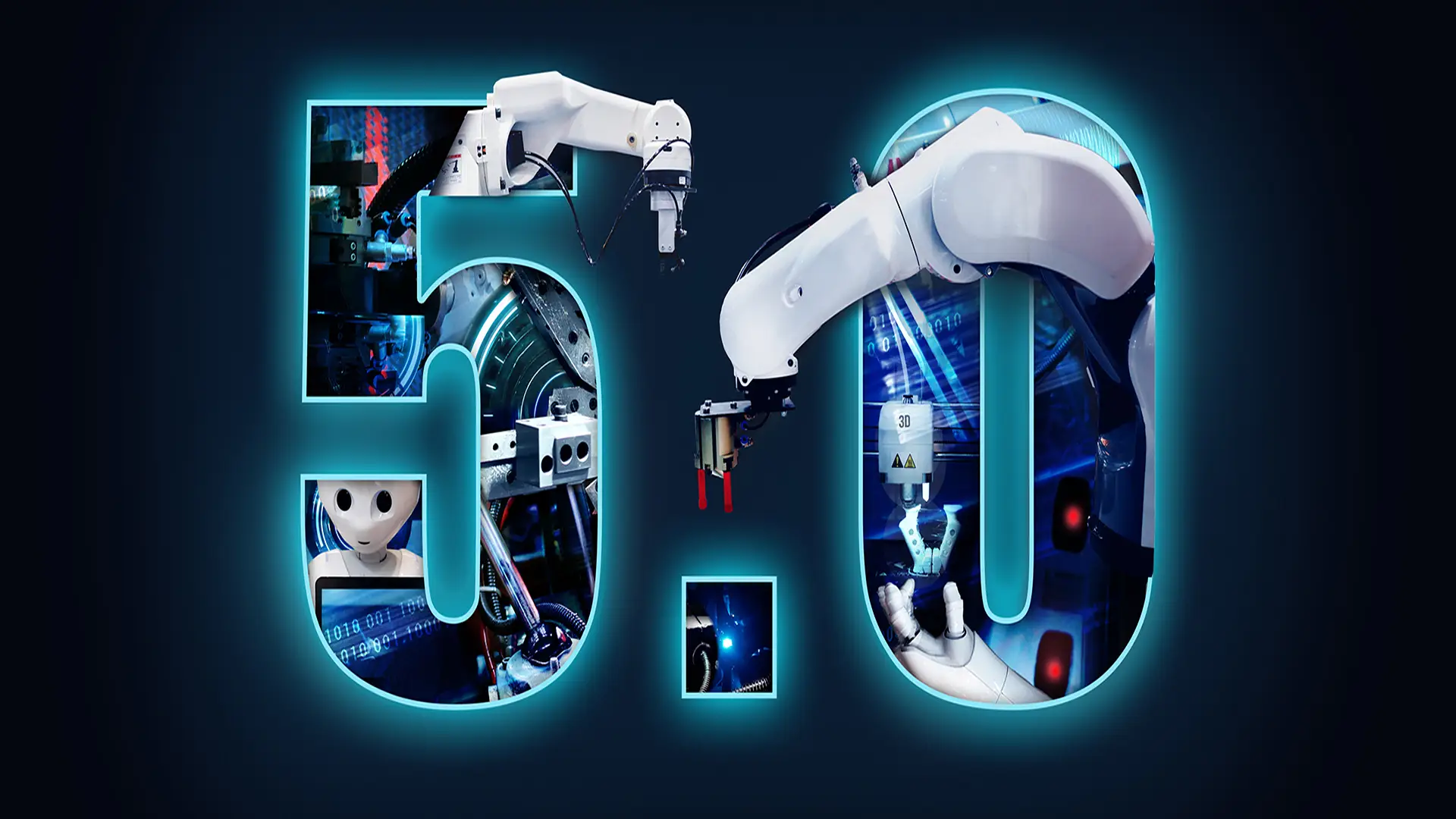
In the last decade, there was a movement from Industrial Revolution 4.0 to 5.0; we might see two more in the next ten years. It's also imperative to reinvent. Otherwise, we will not become relevant. And, more importantly, proactively regulate for a secure world.
Recently, Amazon has been laying off a major group handling Alexa, and they will focus more on what is called generative AI.AI today has moved from artificial narrow intelligence to artificial general intelligence and is on its way to super intelligence- machine learning to machine intelligence to machine consciousness. By 2040, these machines will be able to compete and compare with the best 25 per cent of humans in the world.AI permeates every aspect of daily life: finance, healthcare, logistics etc. Data security regulations are all important to protect users' data, to counter the growing inequality, to strengthen software standards and to provide a fair, equitable expansion across the society.
India has made inroads into a select group called 3GPPP (The 3rd Generation Partnership Project is an umbrella term for several standards organizations that develop protocols for mobile telecommunications). It is a group that makes decisions, and India got into that group through 5Gi standards that are more relevant for developing countries like India.A similar situation will be reached with blockchains, private blockchains,, consortium blockchains, enterprise blockchains,, assetset tokenization, smart contrac,ts, etc. When we talk of neighbourhood diplomacy through technology, we should keep in mind that 6G is going to unite three worlds: the physical world, the digital world, and the human world.
We are also looking at Web 3.0 with the principles of decentralization, trustlessness, semantic web, and interoperability. And this will create a disruption in how we do e-commerce today.
IoT is known by everyone today, but it is evolving, especially if you look at healthcare for aged people. Four years ago, I was in a guest house interacting with a doctor who was in the hospital. The monitors were elsewhere, but I was monitored for a week and certified okay. Soon, this is going to be the practice.
And when we talk about AI and IoT, we will again see edge computing and Generative AI coming into the picture. Blockchain, associated with cryptocurrency, will be the key enabler for the future digital economy. And one thing that is going to happen is the enterprise blockchains. When in the 1980s, the Indian government supported satellite communication on a national level while the corporates already had their satellite networks.
Quantum computing is another major area that will make many changes in the next two decades. It is expected that quantum computers will complement classic computers and they will solve complex problems. Cloud access to quantum computers and the scaling up will make fault-tolerant quantum computing commonplace. Quantum-safe cryptography is a major area for future developments. The convergence of AI and ML is, of course, accelerating material things. But neuromorphic or brain-inspired computing is going to be important in robotics.
In space, should we send probes on long space odysseys? Can we do that with space robotics? We are looking at cognitive capability, whether it can be built into the robot like this, and then if you can send a robot instead of a human being, life is far, far better.
2D materials, the graphene transistor –will be another game changer. A tectonic shift is the software 2.0 writing itself and sustainable computing. While virtual reality for training has become commonplace, augmented reality has come into the picture.
Two major ideas are developing. One is in the health sector, and the other is in the industry sector.
In therapeutic activity, the interface technologies to augment social and emotional connections through ultrasonic waves and non-invasive neuro technologies are gaining traction. There is a need for this kind of technology in academic institutions. Minor surgeries have been conducted on the orbiting International Space Station based on instructions radioed from Earth by surgical specialists. Now, this can be done remotely. Medical research is witnessing an increasing use of synthetic biology. In the designer phases viruses and spatial omics are being engineered. Spatial omics technologies rely on other approaches. They may use nonmicroscopic methods such as mass spectrometry (MS) to detect analytes, perform staining and dye removal cycles to achieve the required complexity or harness the power of high-throughput DNA sequencing and barcoding.
In aerospace, a circular economy could transform business models. The circular economy could support sustainable practices on the lunar surface, including resource utilization, waste reduction, and equipment recycling. That means servicing satellite systems or refuelling satellites in the earth–moon orbits. There are also plans for space manufacturing on the Moon or Mars, and asteroid mining is already being contemplated. Space tourism is now emerging.
Game-changing technology is capable of global disruption, decentralization, and democratization of data. One can expect a plethora of use cases powered by AI/ML operations. These could be based on data flowing through fast and intelligent networks running on significant energy-efficient computation capacity with applications extending beyond Earth to space.