
TAIWAN ELECTIONS: TAKING ACOUNT
An emboldened Lai Ching-te asserts Taiwanese sovereignty but remains short of claiming a formal declaration of independence.
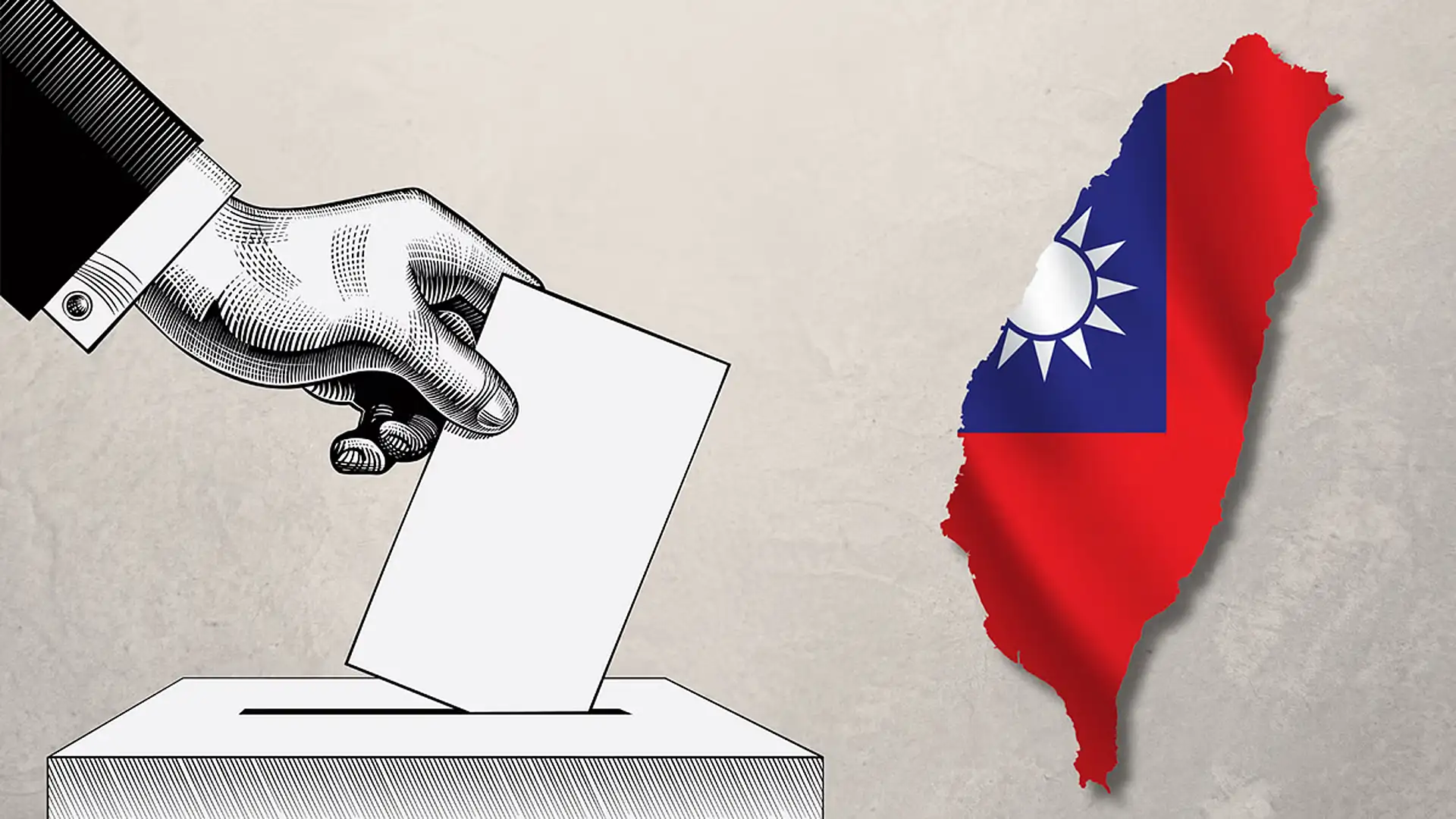
The Taiwanese presidential election was held on January 13, 2024, as part of the general elections. The election results were largely in line with public opinion polls, which consistently showed Lai Ching-te leading his opponents.
Currently vice president, Lai ultimately won the election with just over 40 per cent of the vote. The Kuomintang (KMT) candidate Hou Yu-yi placed second with 33.5 percent, and Taiwan People’s Party (TPP) candidate Ko Wen-je received 26.5 percent of the vote. The Democratic Progressive Party (DPP) presidential candidate won, but the party lost its majority in the legislature. The TPP's popularity among young people was clear, with Ko's 4 million votes coming mainly from Tsai's. The election was held amid significant pressure from Beijing, and Taiwan continues to stand out in Asia as a vibrant, prosperous, and stable democracy.
Cross-Strait Relations and National Defence
Xi Jinping has asserted his power in China, having secured an unprecedented third term as General Secretary of the Chinese Communist Party, the most powerful position in China. The 2022 Russian invasion of Ukraine also prompted fears of an escalation between Mainland China and Taiwan. The CIA is on record warning not to take lightly Chinese potential for a cross-channel invasion. In April 2022, after then-President Tsai Ing-wen visited the U.S. and met House Speaker Kevin McCarthy, the Chinese military responded with military exercises near Taiwan. Lai has asserted Taiwanese sovereignty but said a formal declaration of independence would be unnecessary. He also said he would be willing to work with the Chinese government, but only if they renounce any intentions to use force against Taiwan. In November 2023, Lai argued that closer economic ties with like-minded countries could maintain Taiwan's sovereignty while preventing conflict escalation.
The DPP favoured a continuation of the status quo of cross-strait relations, coupled with strengthening ties with the U.S. Lai did not rule out dialogue with China but described Taiwanese sovereignty as 'a fact’.
Apparently, there were attempts by China to influence the Polls as Taiwan arrested hundreds of people under the Anti-Infiltration Act, some of them having received money from China. China allegedly paid Taiwanese soldiers to make surrender videos. Taiwanese intelligence reported that China coordinated a disinformation campaign on social media to influence the election, and these efforts were meant to drive a wedge between Taiwan and the U.S., portraying the latter as unreliable regarding the defence of Taiwan. Most sources of disinformation were credited to Taiwanese groups favourable to China.
International Reaction
China said that regardless of the election result, the basic fact that there is only one China in the world and Taiwan is part of China will not change. In response, Taiwan urged Beijing to fully respect the election results and Taiwan's public opinion. The PRC objected to Japan, the U.S., Singapore and the Philippines congratulating Lai, warning them against interfering in China's internal affairs. During election day, Taiwan's Defence Ministry detected eight Chinese military aircraft and six naval vessels. On 14 January, four Chinese military vessels and a high-altitude balloon were detected around Taiwan. Taiwan alleged that China encouraged Nauru to shift diplomatic recognition from Taiwan to China, coerced ASEAN countries to echo the fictitious narrative of the so-called 'one China principle and instigated statements made by the Solomon Islands, the Maldives, and Bangladesh which disparaged Taiwan's sovereignty status.
U. S. President Joe Biden reiterated that the U.S. does not support Taiwanese independence. The U.S. officially acknowledges the PRC's claim to Taiwan but remains a staunch supporter of the status quo: a self-governed, fully democratic society with its own economy, currency, military, and elected officials. President Biden has also said the U.S. would come to the defence of Taiwan if attacked, seemingly abandoning the U.S.'s long-maintained "strategic ambiguity" on Taiwan, and has stepped up military exercises with allies across the Indo-Pacific.
Russia said that it would continue to recognize Taiwan as an integral part of China, and any attempt by any country to use the election to pressure China is counterproductive and should be condemned by the international community.
The European Union statement said it welcomed Taiwan's presidential election, expressed concern about growing tensions in the Taiwan Strait and opposes any unilateral attempt to change the status- quo.
PRC Dilemma over Taiwan
China expected Lai's victory and prepared contingencies for political, economic and military options to deal with Lai if the PRC felt his actions were provocative. China is likely to scale up military air and maritime activity near/within Taiwan's ADIZ and continue with grey zone warfare tactics to pressure Taiwan. The possibility that Beijing could use significant military force against Taiwan in 2024 if the PRC views Lai as crossing a critical redline cannot be ruled out.
China recognizes that Lai did not win over 50 percent of the presidential vote and the DPP did not maintain a majority in the Legislative Yuan. This provides Beijing with breathing space and allows China to continue to argue that peaceful unification is still possible and Lai does not represent the will of the Taiwanese people.
China faces significant economic headwinds domestically, and a military option against Taiwan could weigh on foreign investment and cause multinational companies operating in China to reduce their activities and footprint.
Beijing has actively sought to stabilize U.S.-China relations, military operation against Taiwan could undermine the U.S.-China bilateral ties.
Xi Jinping is aware that the PLA suffers from internal problems. The purging of senior PLA leaders and focus on rooting out problems within China's military will likely cause Xi to think twice about using significant military force.
Implications of Polls
The 2024 Taiwanese presidential election had several implications for Taiwan's domestic politics. The election resulted in the Democratic Progressive Party (DPP) winning an unprecedented third consecutive term, reflecting the preference for the status quo and continuity of national policies. Additionally, the election marked the first time since 2004 that no single party commanded a majority in the Legislative Yuan, with legislative power being split among three political parties: the DPP, the Kuomintang (KMT), and the Taiwan People's Party (TPP). The rise of the TPP demonstrated its potential as a significant political force, although its long-term viability remains in question.
The election also highlighted the need for the incoming president to navigate the new power dynamics in the post-2024 elections political landscape. The hung parliament will make governance more challenging for the DPP, testing the new president’s political skills.
The election results have led to significant shifts in Taiwan’s politics, with critical implications for the country's future governance and policy direction. The election outcome will chart the trajectory of Taiwan's relations with China over the coming years, as Lai Ching-te has steered the island toward democracy and away from China. This will require Beijing to reconsider its approach to cross-strait ties, as Lai's victory will impact the management of heightened tensions with China. The election results will have significant implications for Taiwan's domestic politics, as the incoming president must navigate an increasingly complex relationship with Beijing and the new power dynamics in the post-2024 elections political landscape.
Xi Jinping has taken a hard line on cross-strait relations; thus, the implications for the U.S.-China-Taiwan triangle in 2024 and beyond is a matter of concern, as the U.S. has a significant interest in maintaining peace and stability in the Taiwan Strait as also expanding geo-strategic interest in Indo– Pacific while preventing Chinese further influence in the region.
Indian Interest in Taiwan
Taiwan holds strategic relevance to India due to several factors. India and Taiwan share strategic interests in the Indo-Pacific region. The economic interest in preserving peace and stability in the Taiwan strait is evident from the bilateral trade between India and Taiwan, estimated to be worth over $7 billion. Taiwanese firms have also invested over $2.3 billion in India. The dependence of Indian industries on IT, Semiconductors and electronics is huge. The disruptions in supply chains will obviously adversely impact the Indian economy. The trade flowing through the Taiwan Strait will only add to the risk to the Indian economy.
India and Taiwan have growing cooperation in science and technology, with over 80 joint projects carried out before the pandemic and almost 3,000 Indians now studying in Taiwan. Taiwan also provides a window into the People’s Republic of China (PRC) for India, which is significant given the worsening of India-China relations in the last decade.
Prognosis
China has long described reunification with Taiwan as a goal. However, Beijing knows that using military force would likely result in the developed world inflicting negative economic consequences in response. China is much more integrated with the global economy, compared with Russia before attacking Ukraine. The threat of sanctions from the rest of the world could cause significant damage to China's economy. The election outcome may not hold much significance for Taiwan's immediate future. Taiwanese, for the time being, are in favour of the status quo, rather than a shift to either independence or reunification. The real challenge is to preserve Taiwan's technological gains and economic development in the face of the dynamic geo-political flux of the region.
Key Issues
Accommodating the PRC no longer resonates in Taiwan, with local identity urges prominent now.
Youth fear Hong Kong-like crackdown by the PRC and the bleak future for them if they unified with China.
Lai Ching-te prefers the continuation of the status- quo and is mindful of the need to tread cautiously with the PRC while strengthening ties with the U.S.
Xi Jinping is averse to enormous economic sanctions resulting from any military action against Taiwan, despite a likely rise in tensions.
KMT still holds hopes for the PRC; Xi Jinping would rather wait for KMT gains to be further consolidated over the years.
Taiwan is a status quo in U.S.-China relations, both focussing on their own economic growth and geo-strategic interests.
|
|||||||||||||||||||||||||||||
|
Registered |
19,548,531 |
||||||||||||||||||||||||||||
|
Turnout |
71.86% |
||||||||||||||||||||||||||||
|
|||||||||||||||||||||||||||||