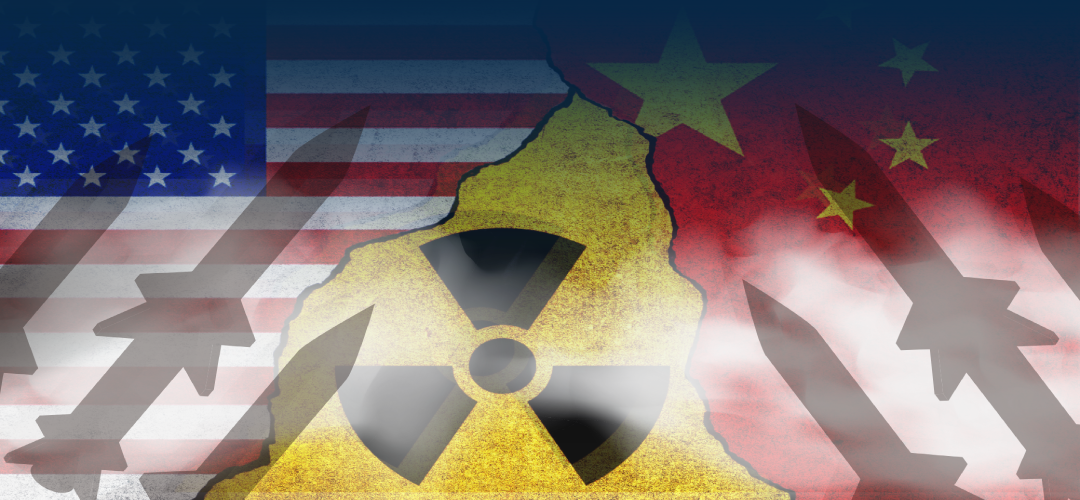

In the current tense geopolitical climate, nuclear tete-a-tete between the U.S. and China shows a path towards stabilisation.
The resumption of semi-official nuclear arms talks between the United States and China in March marks the first such engagement in five years. Though not formalised, these discussions represent a significant step toward managing and mitigating the escalating tensions between these two nuclear-armed powers. The talks involved former officials and academics who, while not directly setting policy, possess the authority to reflect their respective governments’ positions.
This renewed dialogue comes amid a backdrop of heightened geopolitical tensions and global challenges, such as climate change, which further underscore the importance of such discussions.
Background
Historically, formal engagement on nuclear issues between the U.S. and China last occurred in 2018. However, the Trump administration’s decision to pull funding in 2019 led to a hiatus in these critical dialogues. The global COVID-19 pandemic further stalled international diplomacy, including nuclear and broader security discussions. Despite these setbacks, semi-official discussions on broader security and energy issues resumed, culminating in the recent Shanghai meeting, which focused explicitly on nuclear weapons and posture.
Relations between the U.S. and China have been strained over numerous issues, including Taiwan, human rights, Hong Kong, security, technology, and China’s overbearing support to Russia, enabling it to prolong the war in Ukraine.
Within this context, the resumption of nuclear arms talks offers a nuanced perspective on the interplay between nuclear arms control and geopolitical strategies. As it is, the symbolic Doomsday Clock stands at 90 seconds to midnight, the closest humanity has ever been to global catastrophe, and urgency was never more needed!
Reportedly, the Chinese have given assurance to the American interlocutors not to resort to nuclear threats over Taiwan, unlike Mr Putin, who has been rattling the proverbial ‘nuclear sabre’ since Day One. Additionally, Chinese delegates conveyed their confidence in prevailing in a conventional conflict over Taiwan without resorting to nuclear weapons. These assurances are crucial in reducing the immediate risk of nuclear escalation in one of the most contentious areas of U.S.-China relations, even if they send a clear message to Taiwan that the PLA has reached that conventional capability of cross-strait amphibian operation that many still doubt.
Nuclear powers, especially the bigger ones, are continuously improving their strategic arsenal in sophistication and power. As per data put out by the Pentagon, the Chinese nuclear arsenal saw a spike of an astounding 20 per cent between 2021 and 2023; by 2030, this could rise to 1000 warheads. China’s robust nuclear triad-land-based missiles, submarine-launched ballistic missiles, and strategic bombers give it the confidence to be able to absorb any first strike and then retaliate massively. Its no-first-use policy (like India’s) may grow out of this capacity.
Analysis
Historically, China has declared a policy of minimal deterrence aimed at possessing only enough nuclear weapons to deter adversaries without seeking parity or superiority over the U.S. However, concerns remain about the ambiguity of China’s no-first-use policy, particularly in scenarios involving Taiwan’s allies.
The U.S. has expressed frustration over China’s lack of responsiveness to proposals for reducing nuclear risks and increasing transparency. This has given rise to mutual suspicion and contributed to rising tensions, especially when relations are heading South due to Taiwan, the high-tech rivalry and China’s alleged duplicity over Ukraine. These challenges underscore the complexity of U.S.-China nuclear relations and the need for continued dialogue.
Regular dialogue can contribute to strategic stability, reducing the risk of miscalculations that could lead to nuclear escalation. These talks can also serve as a confidence-building measure, fostering trust and paving the way for more comprehensive arms control agreements. Moreover, both nations can set an example for other nuclear powers by demonstrating a commitment to dialogue and cooperation.
Looking ahead, more discussions are planned for 2025, indicating a mutual interest in maintaining dialogue despite frustrations. The U.S. must reassess its relationship with China, focusing on cooperation over competition to address shared threats like climate change and nuclear proliferation. Both nations should work toward greater transparency in their nuclear policies to build trust and reduce the risk of miscalculation. Expanding these dialogues to include other nuclear powers can foster a broader framework for global nuclear arms control, a step that is much required in the Indian subcontinent.
The resumption of nuclear arms talks between the United States underscores the importance of strategic communication and mutual assurances in preventing nuclear escalation. However, the complexities of their relations, compounded by domestic and global challenges, highlight the need for continued and nuanced diplomacy. Both nations can work towards a more secure and sustainable future by prioritising cooperation over competition, potentially turning back the symbolic Doomsday Clock.
Assessment
- By fostering greater openness, both nations can build trust and reduce the risk of miscalculation. Promoting multilateral engagement is also essential; expanding these dialogues to include other nuclear powers can help create a comprehensive framework for global nuclear arms control.
- For global stakeholders, supporting Track Two dialogues is vital. These semi-official discussions can facilitate continuous communication, even when formal diplomatic channels are stalled. Encouraging and backing these dialogues helps maintain an open line of communication and mitigates misunderstandings that could escalate tensions.
- Continued dialogue and a focus on cooperation can help address the profound challenges posed by nuclear proliferation, fostering a safer and more resilient world.