
SOCIAL MEDIA: A PARADOX
Has social media turned out to be a paradoxical tool reflecting the problems it was meant to address?
Millennials are currently the most prominent consumer group. Known for their dynamic lifestyle, they are a challenging target for marketers of all shades. Although their interests are diverse and extravagant, they are cautious about marketing communications directed at them. Unlike previous generations, millennials regularly use digital platforms to search for, evaluate, and decide on products and services. Consequently, new techniques like storytelling have emerged to attract them to these platforms.
The Internet, arguably one of humanity's greatest inventions since sliced bread, has created a virtual world that stands as a significant achievement. Social media has undergone a profound transformation since its inception. Originally designed as entertainment and social interaction platforms, these digital spaces have evolved into powerful tools for gathering and disseminating intelligence and information. This evolution has been driven by advancements in technology, changes in user behaviour, and the increasing role of social media in daily life.
Echo chambers and filter bubbles are powerful metaphors that capture the widespread public concern about social media use. The specific worry is that social media algorithms and the tendency to interact with like-minded individuals limit users' exposure to diverse viewpoints and promote the adoption of more extreme ideological positions. However, empirical evidence on how social media influences information consumption remains inconclusive.
The Rise of Giants
Social media platforms began as simple tools for connecting people and facilitating communication. Over time, they have developed into sophisticated ecosystems that shape how we interact, consume information, and conduct business.
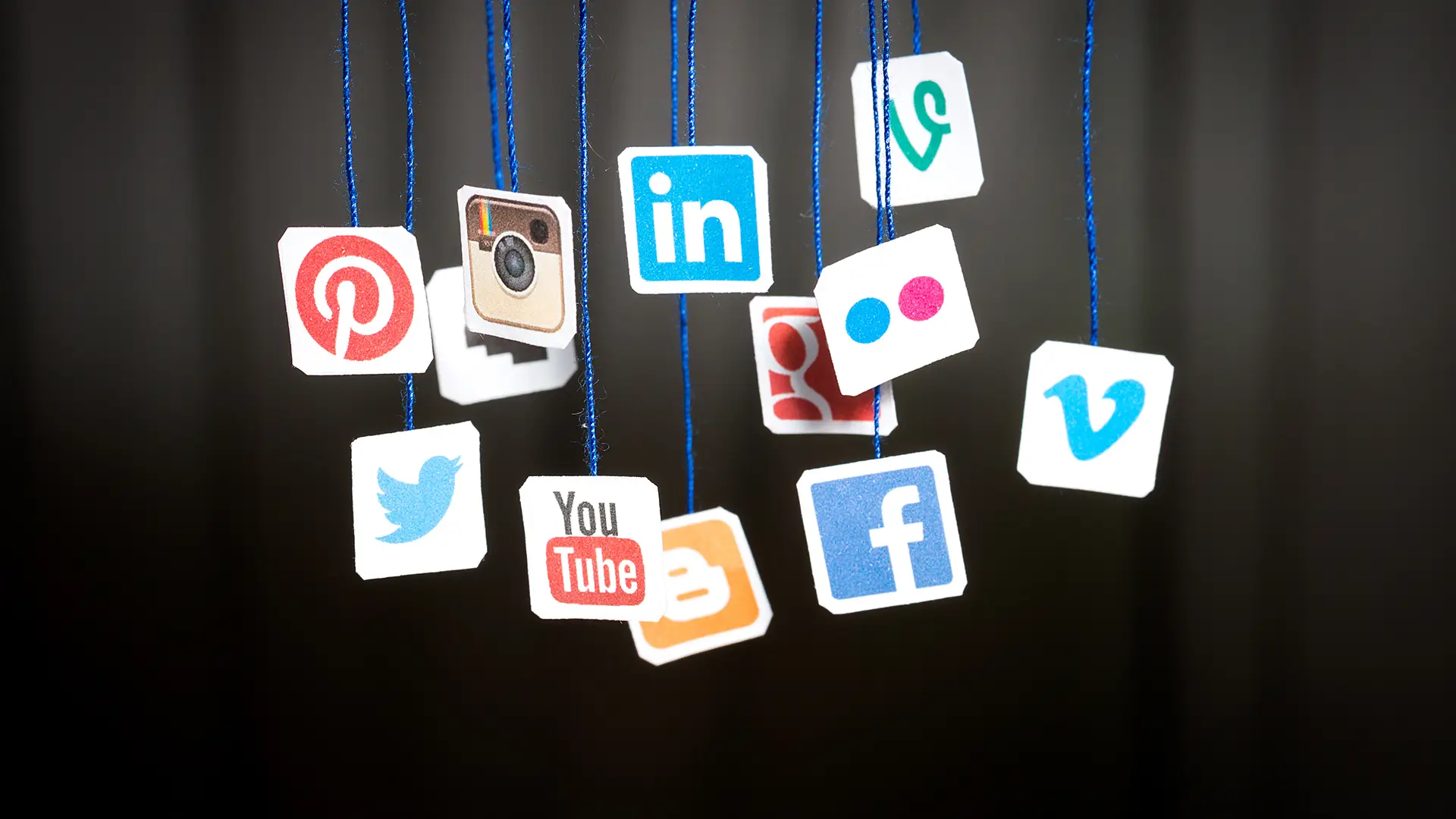
Social media are defined as "a group of internet-based applications that build on the ideological and technological foundations of Web 2.0, allowing the creation and exchange of user-generated content." They can be categorised into collaborative projects (e.g., Wikipedia), microblogs/blogs (e.g., Twitter), content communities (e.g., YouTube), social networks (e.g., Facebook), virtual game worlds (e.g., World of Warcraft), and virtual social worlds (e.g., Second Life). Undoubtedly, social media have begun to play a significant role across various sectors, from business to education and public administration to politics.
Facebook, launched in 2004, revolutionised social networking with its user-friendly interface and diverse features, rapidly becoming the dominant platform. It evolved from a basic networking site into a comprehensive hub for content sharing, media consumption, and advertising. Similarly, YouTube, founded in 2005, transformed video sharing and consumption, becoming the world's second-largest search engine.
Contrary to popular belief, Facebook did not pioneer social networking sites. That distinction belongs to LinkedIn, founded in 2002 as a primary platform for job seekers and employers. Today, LinkedIn boasts nearly 700 million active monthly users worldwide and continues to serve as a vital networking site for professionals and corporate businesses.
As social media continued to evolve, new platforms emerged, each offering distinct features and functionalities. Twitter pioneered real-time microblogging, Instagram leveraged visual content, and LinkedIn solidified its position as the premier professional networking site. The subsequent emergence of platforms like Snapchat and TikTok further expanded the social media landscape, with Snapchat focusing on ephemeral content and TikTok specialising in short-form videos. This diversification has enriched the social media ecosystem, providing users a broader range of options to suit their diverse needs and preferences.
Changing Tones & Tenors
About a decade ago, social media was believed to empower citizens, particularly consumers. Information could be quickly disseminated on platforms like Twitter, Facebook, and others. These platforms offered a more direct and participatory experience of democracy. For instance, during the Arab Spring—a series of anti-government protests, uprisings, and armed rebellions against oppressive regimes across North Africa and the Middle East in late 2010—social media was crucial in facilitating communication and interaction among protest participants.
However, in just ten years, social media—now enhanced by artificial intelligence and big data—transitioned from being a facilitator of democracy to posing a significant threat to it, as highlighted by the Cambridge Analytica scandal involving Facebook. The scandal revealed the potential of these tools to undermine democratic processes. Cambridge Analytica, a political consultancy, used data from millions of Facebook users to allegedly influence and manipulate public opinion in significant events such as the 2016 U.S. presidential election and the 2018 Brexit referendum. This incident sparked widespread outrage and a public debate about ethical standards for social media companies, data protection, and the right to privacy.
Social media is increasingly being used to disseminate targeted misinformation, or so-called fake news, to manipulate entire groups of people. Rapid advancements in artificial intelligence and the digital sphere in general are expected to amplify this trend. In the future, misinformation will not be limited to text alone. Everyone will be able to create videos where they can insert their own words into someone else’s speech, making it appear as if the latter said things they never actually did. Such deepfakes already exist, akin to Photoshop for audio and video content. Virtually anyone could create videos where people seem to say things they never actually uttered.
Web Intelligence
The widespread adoption of social media has had a profound influence on multiple facets of society. It has transformed how information is shared and consumed, with user-generated content allowing individuals to create and distribute news and viewpoints in real time. This democratisation of information has empowered people, amplified the voices of marginalised communities and facilitated social change and activism. The transformation of social media from entertainment platforms to hubs of digital intelligence has profound implications for society.
Web-source intelligence (WEBINT) or Open-Source Intelligence (OSINT) are two terms that are increasingly being used by individuals and state and non-state entities to gather intelligence. This is done by using 'Web Crawlers' and indexing systems to harvest any piece of information stored on publicly available servers in any language. In fact, expert hackers can also access information from the best-secured servers!
The information can be utilised in varied ways. An attacker can profile the potential target to narrow the search area for possible vulnerabilities or use the intelligence procured to build threat models and develop attack plans without actively engaging the target. We know very well that targeted cyber-attacks, like conventional kinetic attacks, have military and strategic value and begin with reconnaissance, i.e., passively collecting intelligence without alerting the target. Gathering OSINT about its vulnerabilities from public domains would help strategise its own defences.
Challenges and Hurdles
While the evolution of social media has exponentially enhanced access to information and democratised content creation, it also presents several challenges.
Misinformation and Fake News
:
The ease with which misinformation can spread on these platforms, often at the speed of light, has led to concerns about the accuracy and reliability of the information being shared. This has significant implications for individuals seeking to make informed decisions, as they often face a sea of conflicting information and must rely on their critical thinking skills to discern truth from falsehood. Social media algorithms play a significant role in the spread of misinformation. These algorithms prioritise content most likely to engage users, often based on their past
behaviour
and preferences. This can lead to the amplification of misinformation, as algorithms may prioritise sensational or provocative content, even if it is inaccurate or misleading.
Filter Bubbles and Echo Chambers
:
These concepts refer to how algorithms and personalisation techniques can create a self-reinforcing cycle of information exposure, where users are consistently presented with content that aligns with their existing beliefs and perspectives
. This phenomenon has profound implications for how we perceive the world and interact with diverse viewpoints, potentially limiting our exposure to opposing ideas and fostering a lack of understanding and empathy.
Privacy Concerns
:
As we share on social media, an increasing amount of data is gathered about us. Privacy issues emerge as our personal information is harvested for tailored advertising and potentially for political influence. Data breaches have highlighted the susceptibility of our personal data on these platforms, prompting ethical considerations regarding data management practices.
Threatening Democracy
:
In just a few years, the initial promise of the Internet and the social media revolution to create a more transparent, democratic, and informed world has deteriorated into an online environment where distinguishing truth from falsehood is challenging. The
alleged
Russian interference in the 2016 U
.
S
.
presidential election is
the most cited
example.
Apparently,
Russia manipulated voter outcomes through fake news and misinformation on social media in several other elections, including those in Austria, Belarus, Bulgaria, France, Germany, and Italy. Regarding Brexit, data scientists from the universities of Berkeley and Swansea found that over 156,000 Russian Twitter accounts
were used to disrupt the vote. In the last two days of the referendum alone, more than 45,000 tweets from these accounts were posted.
Conclusion
Social media's metamorphosis from simple entertainment platforms to hubs of digital intelligence is a complex and multifaceted phenomenon. To navigate the challenges posed by this evolution, we must adopt a comprehensive approach that involves technological innovation, regulatory frameworks, and ethical considerations.
As information systems extend beyond organisational boundaries to integrate into the broader societal context, it becomes crucial for strategic information systems research to explore the competitive environment of dynamic social systems. Research on these communities should expand to investigate the interaction between extrinsic and intrinsic rewards, particularly regarding their capacity to nurture and sustain users' intrinsic motivations. From an organisational standpoint, research on social media should move beyond the traditional dyadic perspective of the relationship between an online community and a firm and instead focus on reimagining online users as an interconnected ecosystem of stakeholders.
The future of social media intelligence promises deeper insights, real-time analytics, enhanced personalisation, and predictive capabilities. However, it will also require careful consideration of ethical and privacy issues. As businesses, governments, and organisations continue to harness the power of social media intelligence with leading-edge technology, it will play a crucial role in shaping strategies, improving customer experiences, and making informed decisions.
The Way Forward
Promotion of Media Literacy and Critical Thinking
: To combat the spread of misinformation and the effects of echo chambers, there should be a concerted effort to promote media literacy and critical thinking skills among social media users. Educational initiatives can empower individuals to discern credible information from falsehoods and engage more constructively with diverse viewpoints.
Development of Advanced AI Solutions for Content Moderation
: Leveraging AI for content moderation can help manage the vast amount of information on social media platforms. AI systems should be designed to identify and mitigate the spread of harmful content while ensuring transparency and accountability in their operations. Continuous advancements in AI technology can enhance the effectiveness of these systems and contribute to a safer digital environment.
Implementation of Robust Regulatory Frameworks
: Comprehensive regulatory frameworks that govern the use of social media platforms are urgently needed. These frameworks should address data privacy, misinformation, and ethical standards for AI applications. Policymakers must collaborate with technology companies and stakeholders to create regulations that protect users without stifling innovation.