
RISING FROM THE ASHES
Can the inevitable rise of the JVP in Sri Lanka be stemmed?
By Dr Punsara Amarasinge,
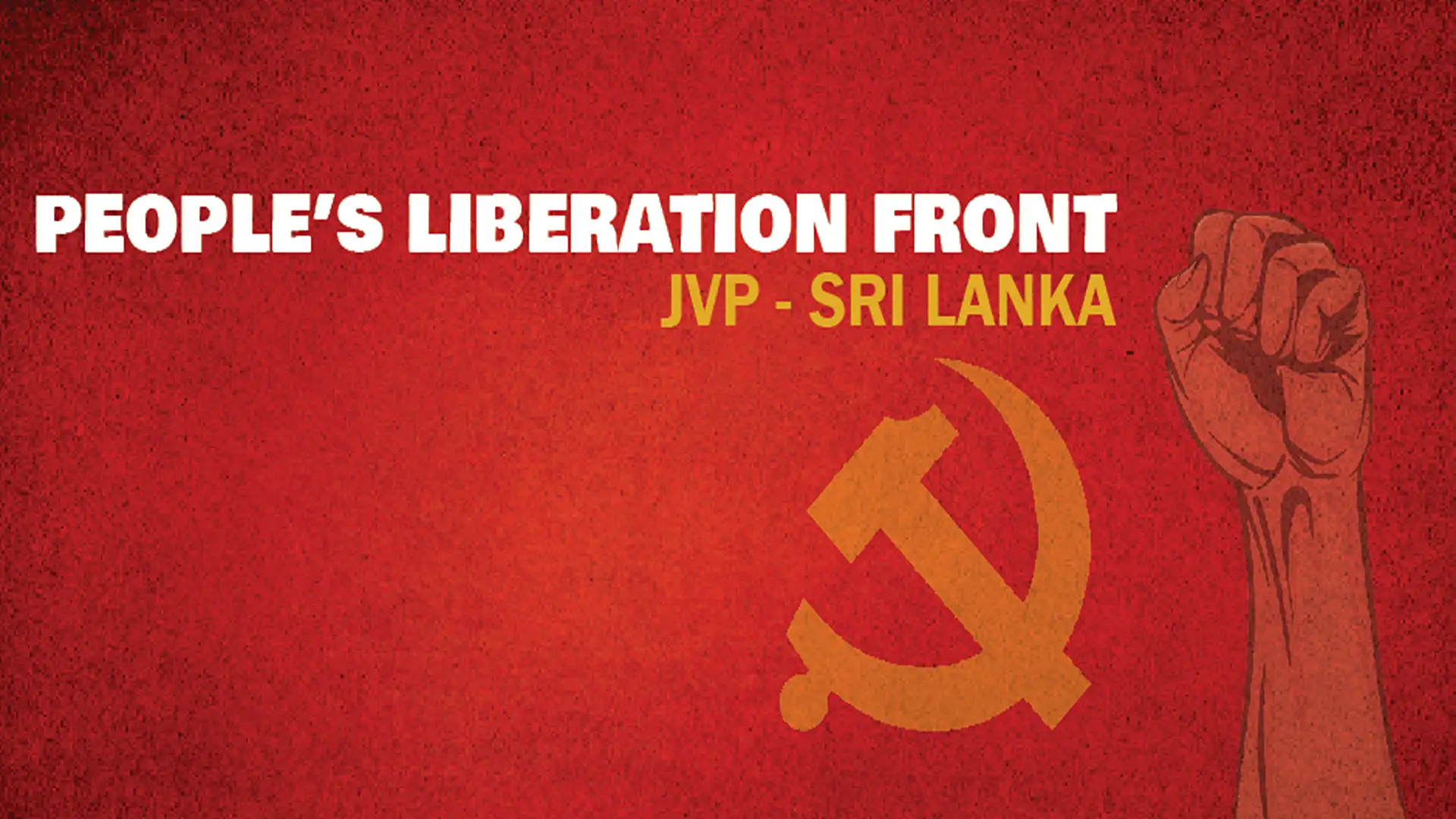
Having comprehensively defeated the LTTE, Sri Lanka now has the worrying prospect of facing a resurgent Janatha Vimukthi Peramuna, better known as the JVP.
Of communist origin, JVP came to prominence in the 1970s with its anti-American protests against the Vietnam War, earning it the nickname the "Che Guevara clique" by the Sri Lankan government and international media. In 1971, the JVP initiated an open revolt against Prime Minister Sirimavo Bandaranaike's government. The government was caught by surprise but, within a few weeks, brought things under control; thousands are reported to have died, and over 20,000 were arrested. The JVP was banned as a political party.
In the 1980s, as Colombo fought the LTTE, there was a shift in the ideology and goals of the JVP. It claimed to represent the oppressed of all communities. Later, it began to identify itself as a nationalist organization.
By 1991, the JVP continued to exist as a pressure group before it was relaunched and allowed to participate in electoral politics. In the most recent parliamentary elections held in April this year, JVP was a part of the United People's Freedom Alliance.
The indomitable spirit shown by Janatha Vimukthi Peramuna since its inception, even after the total eclipse of its initial political leadership, is remarkable. Unlike many of the leftist political parties swayed and assimilated into the mainstream spectrum of party politics in Sri Lanka, JVP survived and flourished.
JVP stands as a catalyst factor in the coming presidential election of Sri Lanka. Embittered by the cascade of failures attributed to the major political parties, essentially the nepotism of the Rajapaksa regime until the ousting of Gotabaya in 2022, the people seem to have developed trust towards JVP's charismatic leader, Mr Anura Kumara Dissanayake.
The India Angle
JVP’s antagonistic stances against Indiaplayed a vital role in the early years of JVP’s formation.JVP’s founder, Rohana Wijweera, advocated for boycotting Indian products. The Indian anathema of JVP during both the insurrections that it organized was cemented on the doctrinal basis, in which Wijeweera saw India as a bullying state that tried to undermine the national interests of the island in its post-colonial state building.
Veteran journalist Victor Ivan, one of the early cadres of JVP, who later turned to be an apostate, recalls how JVP abhorred Indian cinema, music and all the cultural items related to India that highlighted the superiority of Indian culture. JVP's antagonism to India is often imbued with its rapport with China. Maoist ideology from China buttressed the party apparatus of JVP in its early encounter with Mrs Sirimavo Bandaranaike's government. In the lost revolution that JVP launched in 1971, which turned out to be an unmitigated disaster, JVP leaders realized that they could not cling to power as India supported Mrs. Bandaranaike’s government to crush the guerrillas. JVP’s anti-Indian rhetoric reached the next level in the turbulent 1980s when JR Jayewardene’s government signed the Indo-Lanka peace accords, which irked JVP to organize the masses against the Indian Peace Keeping Force.
More than 35 years after the change of the polemics against Indian expansionism, the current JVP faces the old foe in its path to secure the state's power. The meeting between JVP leader Mr Anura Kumara Dissanayake and Indian foreign minister Dr Jaishankar is emblematic of the changing trends from both fronts. Ironically, the current Indian foreign minister, Dr S. Jaishankar, was stationed in Colombo as the political secretary at the Indian High Commission in the 1980s when JVP propagated its anti-Indian slogans and RAW (Research and Analysis Wing) had placed a mole within JVP to set up a back channel of communication with Indian officials. The Deputy High Commissioner at the time, Nirupam Sen, had encouraged such a liaison with the JVP and other southern leftist entities.
India remains an important consideration in Sri Lanka politics. JVP's future dealing with India would eventually decide the finality of Anura Kumara Dissnayake’s political existence.
India's biggest worry about JVP lies in its tilt towards China in a context where Chinese presence in the island nation has reached a point of no return. Despite the constant diatribe of JVP in the mainstream vernacular media against Chinese investments in Sri Lanka under the Rajapaksa administration, JVP has not genuinely been hostile towards China. JVP's affinity with the Chinese Communist Party has been a stringent one dating back to its revival after the brutal suppression. Its former leader, Somawansa Amarasinghe, leveraged ties with the Chinese Communist Party, increasing its financial capabilities in the early 2000s. Under the present leadership of Anura Kumara Dissanayake, JVP augmented closer links with the Chinese Communist Party regardless of its ostensible criticism of China's BRI.
The Military Connection
The current military apparatus of Sri Lanka is another considerable factor that affects JVP's quest for power. JVP confronted the military twice in 1971 and the 1987-89 period, in which JVP saw the military as an oppressive tool of the government. It was the machinery of the Sri Lankan military that played a dominant role in the brutal suppression of JVP in both the insurrections thus saving the total collapse of governments in power.
Nearly 40 years after the end of the fiasco, today's JVP stands at a more stable juncture as a popular choice among the people. However, its popularity in the top leadership of the Sri Lankan military remains questionable as the top-ranking officers in the tri forces of Sri Lanka represent a different set of ethos antithetical to the politics of JVP. Military coups have gained no significant value in the political lexicon of the island except for the attempted military coup in 1962.