
RIAC
India Seeks Arctic Partnerships with Like-Minded Nations
In recent years, Russia has perceived India as one of its key partners in the Arctic. In turn, India is taking an active interest in the region. The country’s goals and objectives are outlined in the official Arctic Policy, with practical steps in the Arctic underway in line with the Document. What areas are of key interest to India? How does India see the model of governance in the Arctic? What is the vision for interaction with Russia? What is the role of the academic community in fostering relations between Russia and India on Arctic issues?
Dr. Natalia Viakhireva, RIAC program manager, discussed these and other issues with Lt Gen G A V Reddy, Strategic Advisor, Synergia Foundation (India) and Maj. Gen. Ajay Sah, Chief Information Officer, Synergia Foundation (India).
India published its Arctic Strategy in 2022. The year of 2022 happened to become a turning point for international cooperation in the Arctic.

The Future of the Arctic Council. Working Paper
What are the core interests that India has and pursues in the Arctic? Do you see any changes in the vision of India’s policy in the region since 2022 amid changes in the Arctic?
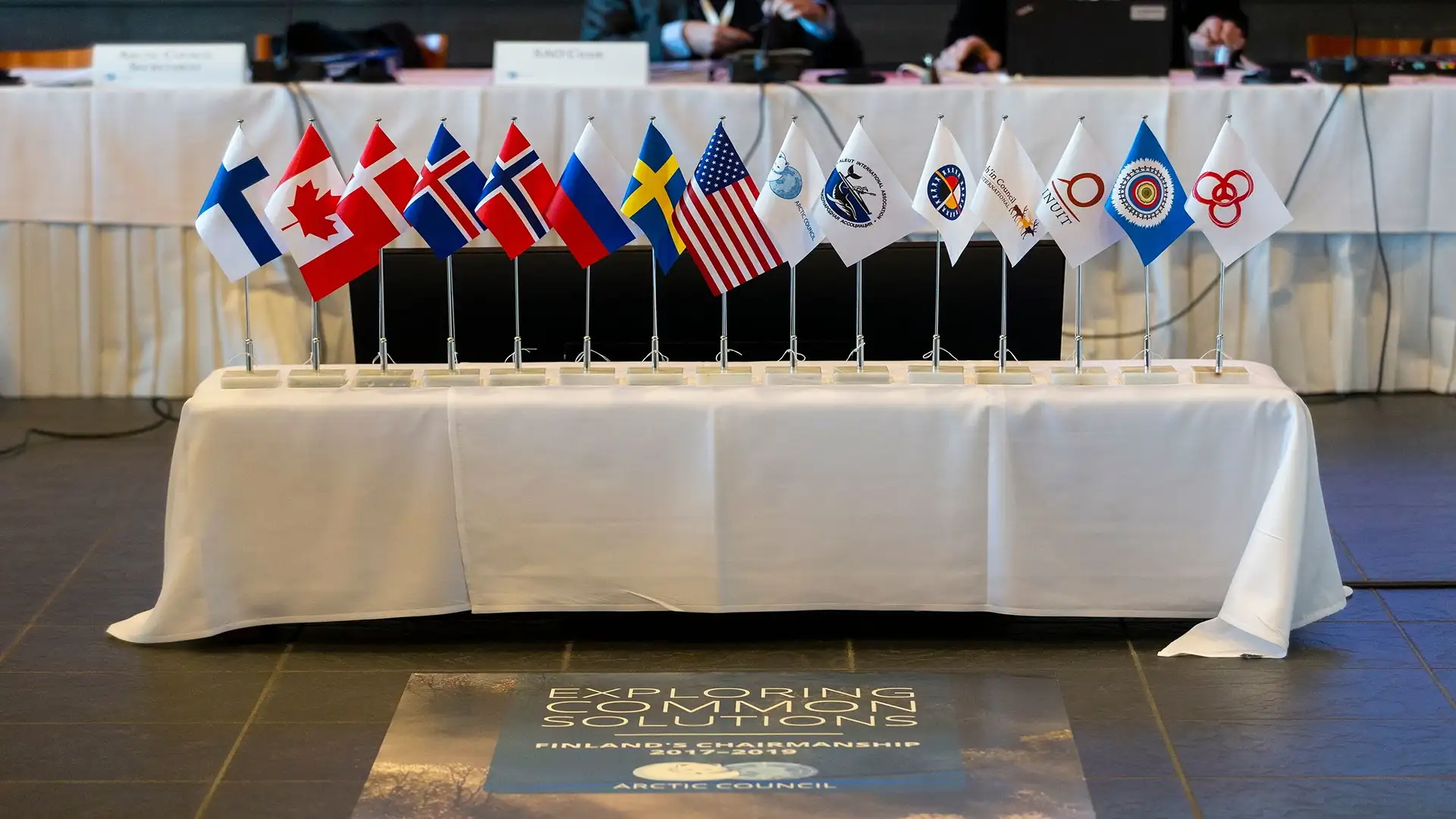
Maj Gen Ajay Sah: Among the various opportunities that India sees, in respect to Russia, the Arctic is at the top of the agenda. It is right at the top, since Russia is amongst the largest stakeholders of the Arctic’s resources. Unlike Antarctic, which has been accepted a part of the “global commons”, people do not accept the Arctic as such. Every country that is part of the Arctic “club”, the Artic Council, says that they have sovereign national stake in terms of ground which they own. Canada is one of the biggest claimers, but Scandinavian countries, Greenland, Russia, the U.S. are on the list as well. India feels that China, without having any physical claim in the Arctic, is trying to play a greater role. There is the Arctic Council, where India and China are observer states. So, we want to play a greater role in the Arctic because it beautifully links the international community. One of the developments that Russia is pushing for today is to build roads in Siberia to the Arctic. India also wants to play a role in the economic development and discuss ideas. We want to be part of Russia’s route in the Arctic. Once it opens, which the climate is ensuring, the Northern Sea Route will be open for a larger part of the year. India is very keen on that, but it does not want to claim land. Unlike Antarctic, which is part of the global commons, every country with a physical presence in the Arctic will be the first to claim the Arctic’s resources. Somebody from Asia—Japan, India, even China—may not be able to exploit the resources directly. I don’t think any Arctic countries will permit it. So, if there are early partnerships in exploiting the Arctic resources, we want to be involved. It is like the Sakhalin oil fields that we invested in. If we become a participant in the development of the Arctic at an early stage, then we strengthen to benefit nationally. And what better partner can we have than Russia?
Lt Gen G A V Reddy: I would state that there have been some specific domains outlined as Priority areas in the New policy of India for Arctic region.But India’s Arctic Vision of building partnership for sustainable development of region remains unchanged. India has a vision to contribute to the region by sharing expertise in digital economy, infrastructure development and human development. Having talked about Indian core interests, India is only an observernow and certainly we can partner with like-minded country, let’s say, Russia, where we can be contributing more to the entire region. TheIndian vison will not change, being a core interest.

Bipandeep Sharma:
A Suspended Arctic Council: New Hope with Norway’s Chairmanship
India has been an observer in the Arctic Council since 2013. Though the Council hasn’t been functioning in full scale since 2022. Are there concerns in India about the status and role of the Arctic Council and India’s role in it? How the governance structure in the Arctic is seen from India? Should the Arctic Council be preserved, or any alternative structure could and should be created?
G A V Reddy: As regards to the status of India in Arctic Council, even being an observer now, India iscontributingsubstantially by sharing the expertise in many domains of common interest. However,the Indian concerns are largely related to the rapid global warming/ environment protection and climate changes. The other major concern is about increased commercialization of arctic region as well as the enhanced geo-political tensions which is building up due to competition in exploiting the vast resources. But the main concern of India is related to the need for inclusiveness of arctic council representing the global south and their interests in the region. The arctic council definitely needs to be preserved, albeit duly reformed to make it inclusive and effective organisation. There is no need to create any other alternate structure to focus on core issues of arctic.
So, maybe responsible nations would like to preserve the Arctic, but it is only possible when they address the adverse climate impact on priority. It is beyond one nation or certain select group of nations to preserve the Arctic region. It must be a combined effort because of the adverse impact of climate for all of us. Then beyond that, if a responsible nation wants to contribute to the global common good, should think of preserving the Arctic, not just exploit the Arctic.
So, it is less about the importance of the Arctic Council, and more about the final goal and Arctic vision for India?
G A V Reddy: Yes, the vision and aim/goals are particularly important. We don’t have to concentrate only commercialization of the Arctic today and then face far-reaching, serious implications for the entire region.

Luiza Brodt:
Increased Asian engagement in the Arctic and Russia-India cooperation in the region
Ajay Sah: See, there is strong opposition to giving space to countries which are not residents of the Arctic. That is why India has not been able to make any progress. The Artic Council is always committed to Arctic countries. Currently, India may not always be able to make an impact on the Arctic Council. Like you have mentioned, in the last 2-3 years, there have been a lot of conflicting issues about the Arctic, like the militarization of the Arctic, airbases showing up in the Arctic, the West accusing Russia of carrying out large-scale military exercises and troop deployments, and then Canada and the U.S. saying they will reactivate their air fleets. The Arctic is becoming, again, a geopolitical hot point. That is because of the contestation there today, countries in Europe will have their interests reflected in the Arctic. After the end of the Cold War, for 20–25 years, no one spoke of the Arctic. There were hopes that the Arctic would be developed. That is how India and China were encouraged to send in parties to explore the Arctic. India has a semi-permanent presence in the Arctic and many research stations. But actually, there is so much more to the Arctic; not only because of the fish, because once the ice melts, there are many other riches other than fish. Another thing is the critical elements, rare earth minerals. It may have them in the largest amount in the world. Largest amount of these rare earth minerals, which are basic metals for your smart phones, batteries, TV’s. It is no longer fossil fuels, which of course, may be there and will be exploited in the Arctic. Now, it’s the rare elements, critical minerals. So, if India is to be in the top three or four technology states, India has to source them. Because countries already sitting in the Arctic Council will not have a democratic distribution of the resources. The first claim will be from countries that are already part of the Arctic, who have confirmed, legitimate stake, and lie within the Arctic circle. Of course, Russia has a huge part in it, and we would like a part in it. This has not started today; it has been going on for some time. Even Russian officials say this would be really good. I could not analyze why there would be a change in the policy.
Russia diversifies cooperation in the Arctic and perceives India as one of the key partners in several fields and projects. What are priority areas for India in the cooperation with Russia in the Arctic?
G A V Reddy: Indian priorities in arctic region areprimarily six-fold–Scientific research and environment protection, economic development of the region, enhancing connectivity andtransport, achieve inclusiveness of the council and finally, human development. The question is, what can India do to supplement Russia’s efforts in the Arctic zone? Russia muststate what is expected of India. That is the first question Indians would ask. We have identified, as you rightly brought up, several domains where we can be partners with Russia. One is connectivity, the North-South corridor. It has a strategic importance and relevance for India in trade and energy partnership.It is an option—creating new alternate axis rather than exclusively relying on existing but vulnerable corridor

Tobby Simon:
The Internet Is Easy. What You Need Is Fundamental Science
Second partnership priority with Russia is about mineral resources and precious metals, the vast resources that lie in this region. The requirement is to map it, identify it and then figure out how to extract/mine it. This requires a lot of specialized technology, skilled manpower and India has got adequate expertise in this domain. So, India can step up to identify andextractminerals and precious metals. This could be utilized by both Russiaand India, or whoever else needs. That is where India can assist Russian arctic focused efforts.
Then, in the Arctic, Russia is investing to create infrastructure, non-military infrastructure. That is where India can step in; to help Russia with building infrastructure projects in the region, which serves to improve the region’s human development. So,all these are peaceful projects that have nothing to do with militarizing the region and on the other hand will help local habitat.
The fourth important aspect is that Russia desperately needs highlyskilled, semi-skilled and unskilled manpower. And India has an abundance of all categories of the manpower needed by Russia. You will appreciate being the most populous country in the world. India will be more than happy to share this kind of human resource, as required by Russia.
What are India’s other partners? Is Russia the main one, or are there other partners in certain areas?
G A V Reddy: We are looking to partner with only like-minded nations like Russia. Obviously, India is not keen to partner with China. Because of the long-standing, excellent bilateral relations that we enjoy with Russia, India feels that it is worth investing in the Arctic region with Russia, a trusted partner for India. The bond enjoyed between India and Russia is unparalleled when it comes to the relations India has with any other nation. So, in this context, India would like to partner with Russia. When it comes to the Arctic region or the development of the Arctic region.

Russia — India Relations in Broader Geopolitical Context. RIAC an Synergia Foundation Report
In your opinion, what think think-tanks and experts in Russia and India can do together to promote Arctic cooperation?
G A V Reddy: Talking about India, I should admit, the attention being paid to the Arctic region, per se, is peripheral and inadequate by the Think Tanks. Synergia, is trying to work on multiple aspects: – Deep research and analysis of the arctic region’s potential, to be shared with all policy makers and stakeholders. What is the Arctic region relevance? What is the potential in the coming years? Synergia is spreading awareness of the strategic importance, explain why India will have to play a greater role in the Arctic region. This is what think tanks are expected to do. Synergia is already doing this; Synergia articles in INSIGHTS magazine has articles that has highlighted issues which many stakeholders would like to be aware of. So, we are already a step ahead in spreading awareness about this. The next step for a think tank is going beyond this initial spreading awareness foster dialogue, to address issues that are common Arctic concerns of the nations.
Does Synergia collaborate with any Russian think tanks or Russian universities on the issue, or not yet?
G A V Reddy: The fact that we are both talking, representing Synergia and RIAC, I think, is a good start. This should serve as a catalyst in the coming months to have more informed interaction between Synergia and RIAC on this vast canvas in which we can come up with various options to enhance our cooperate in thearctic region. Many opportunities await both Indian and Russiato forge a strong arctic regionstrategy.
xxxxxxxxxx