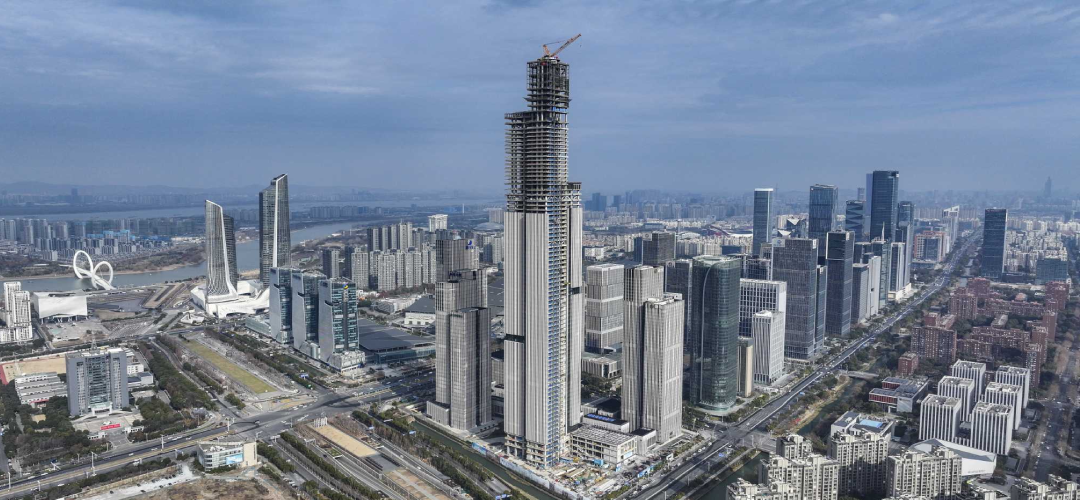

China has announced its strongest-ever moves to recover its struggling property sector.
China has announced “historic” measures to rescue its flailing property sector. As a part of this new slew of rescue measures, the Chinese central bank has enabled 1 trillion yuan of extra funding and eased mortgage regulations. Investors hope the initiative begins a decisive government effort to resolve the property market crisis through drastic intervention.
The property sector is connected to public interest and wider economic development, forming a critical organ of China’s economy. The recent moves are the strongest policies to date to uplift the sinking sector.
Background
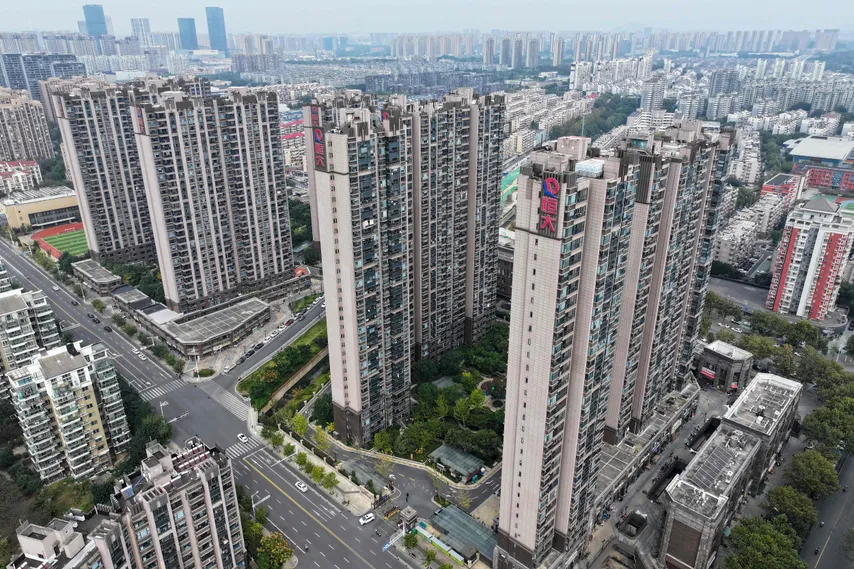
At its height, the property sector comprised almost one-third of China’s economic activity. Since its sharp downturn began in 2021, a series of behemoth developers have defaulted, leaving idle construction sites in their wake. For decades, property had been the preferred savings choice for Chinese people, but the crisis has now caused scores of householders to lose faith in this and sparked alarm about the falling value of their assets.
Successful developers like Evergrande embodied China’s thriving real estate sector, but overexpansion left the property giant financially overburdened, and it defaulted on a massive $300 billion debt.
China’s property market is at the centre of its slowing economy as it grapples with falling demand. 2020 government restrictions on lending to property developers sought to discourage the property bubble. However, it triggered a wave of defaults that left the housing market in shambles and crippled major developers. It reverberated to other developers as well as house owners with their prized assets now of uncertain value.
In the new move, the state announced 300 billion yuan in loans to finance state purchases of unsold homes. The new measures include getting local governments across the country to buy unsold homes from suffering developers and easing regulations on property purchases.
Analysis
This would be a useful measure considering that China’s local municipal authorities are struggling with fiscal deficits due to rising social spending, particularly due to an ageing population, but also in the wake of pandemic spending. The announcement has raised investor expectations and hiked Chinese stock values. However, local government debt could still pose a hurdle to this scheme.
Rapidly declining property sales and investment could have induced the “heavy-weight” measures. The measures also include allowing banks to set their mortgage rates and reducing first-time home buyers’ minimum down payment requirement. It also suggested that local governments acquire commercial homes and build them into affordable social housing.
However, a downside is that the measures could further narrow the interest margins of Chinese state lenders, and it is uncertain how effective they will be in reviving demand and bringing about a structural turnaround. The government purchase programme may not be able to encourage private sector demand even if it does manage to clear inventory and increase cash flow to developers to help them weather the financial crisis.
Additionally, 70 per cent of Chinese household wealth is tied up in the struggling real estate sector. This tightens household spending: People are not spending on food and beverages, retail, or tourism, putting major services under pressure. This low consumer demand, in turn, affects manufacturing and output.
Assessment
- The new round of determined rescue measures could help the Chinese real estate sector get back on its feet. However, in addition to easing home-buying restrictions and encouraging state spending on housing, the government will have to find a way to revive private sector demand for the economy.
- Its efforts so far to rescue drowning property giants that were the pillars of the sector do not seem to have fructified, as witnessed in the case of Evergrande, which collapsed despite efforts to reach a deal with creditors to restructure its debt. Beijing will now have to focus on structural measures rather than bailing out individual property entities.
- The real estate slump is one of the most critical problems with China’s slowing economy, spilling over to the rest of the economy. It is unlikely that China will be able to remedy its falling economic growth without addressing the slump. Debt-based public spending on infrastructure and property has caused a build-up of debt.