
RESCUING FROM THE DEPTHS
Can India leverage its rapidly growing deep sea rescue capacity as an Instrument of Diplomacy in the Bay of Bengal?
By Rear Admiral Monty Khanna (Retd)
The Bay of Bengal has an area of roughly 2.17 million square kilometres. It has five littoral countries: Sri Lanka, India, Bangladesh, Myanmar, Thailand and Indonesia. Its physical characteristics are unique. Large river systems from the Himalayas, primarily the Ganges and the Brahmaputra, discharge into the northern part of the Bay through the Sundarbans delta. As these waters are rich in nutrients, they provide a good ecosystem for fisheries. The Andaman and Nicobar group of islands and the Cocos Islands to their immediate north are key features of the Bay.
The Bay has a rich history going back several millennia. Through these waters, seafarers from the Chola empire travelled to different parts of Southeast Asia, interminglingreligion and culturein Cambodia, Thailand and Indonesia. The Europeans subsequently used it to establish their colonies on the Indian subcontinent. Consequent to all the nations of the region having gained their independence by the middle of the last century, the political geography of the Bay has been stable, with the exception ofthe liberation of East Pakistan and the subsequent formation of Bangladesh in 1971.
Maritime Stability
Maritime boundaries between all the nations have been delimited and mutually recognised by countries through formal agreements. Where disputes have risen regarding overlapping Exclusive Economic Zones, these have been taken up for arbitration through established UNCLOS mechanisms: an Arbitral Tribunal in the case of India and Bangladesh and the International Tribunal on Laws of the Sea (ITLOS) in the case of Bangladesh and Myanmar. Rulings given by these bodies have been responsibly complied with, thereby setting an example for other regions of the world to emulate.
While some differences and disputes between nations do persist, the Rohingya issue between Bangladesh and Myanmar is one such example;deft diplomacy and mature handling of the situation have ensured that these have not evolved into full-fledged conflicts.
While geopolitically, the region remains relatively stable, from a maritime security point of view, numerous challenges persist. Some of the reasons for this stem from the political instability within Myanmar, challenges related to governance due to the nature of the terrain in the Indo-Gangetic delta and outlying islands, inadequate capacities of maritime security forces, as well as economic hardships faced by the coastal populace, amongst others. This has resulted in a propensity to resort to illegal practices ranging from unregulated fishing to human trafficking and gun running.
While raising capacities to improve governance, attempts have also been made to leverage collective security using bilateral, mini–lateral and multilateral constructs. These include organisations such as the Indian Ocean Naval Symposium (IONS), the Indian Ocean Regional Association (IORA), the Bay of Bengal Initiative for Multi-Sectoral Technical and Economic Cooperation (BIMSTEC), and the Colombo Security Conclave (CSC).
Expanding Submarine Forces
Regionally, nations have substantially increased investment in their respective navies. While the accretion of assets has been across multiple types of vessels, the most notable has been the spurt in submarine acquisitions. Except for Sri Lanka, all the Bay of Bengal countries have acquired submarines in the last five years or are in the process of doing so.
India is currently evaluating two different classes of conventional submarines from vendors that responded to the RFP under the Project 75 (I) programme. Bangladesh commissioned two refurbished Ming Class submarines acquired from China in March 2017. Myanmar commissioned one Kilo Class submarine acquired from India in December 2020 and another refurbished Ming Class submarine from China in December 2021.
Thailand’s acquisition of a brand-new Yuan Class submarine from China had been under the clouds due to issues with export clearances of the German MTU 396 diesel engines that China has been manufacturing under license. As per the latest reports, the Royal Thai Navy has recently agreed to purchase thisassetwith the Chinese-designed and built CHD 620 engine. While the submarine may be initially based at Sattahip Naval Base in the Gulf of Thailand, given the area's shallow waters, it is likely that the vessel may subsequently be relocated to a suitable location in the Andaman Sea.
On 28thMarch 2024, Indonesia concluded a contract with Naval Group, France, to manufacture two Scorpene Evolved full Lithium-ion Battery (LiB) submarines. These vessels will be built by the PT–PAL shipyard in Indonesia under a Transfer of Technology (ToT) agreement.
Thus, the Bay of Bengal is set to have a discernible spurt in the number of submarine operators and, consequently, in the number of submarines operating in its fold.
Risks of Submarine Operations
Due to the stealthy nature of their operations and ability to inflict asymmetric damage, submarines tend to have a disproportionate impact on the prevailing balance of power. Their induction could, therefore, lead to heightened maritime security concerns and erosion of trust. This could be detrimental to the relatively benign geo-political character of the Bay of Bengal. One of the means to counter this effect is to find avenues for coordination and cooperation in ensuring the safe operations of these platforms.
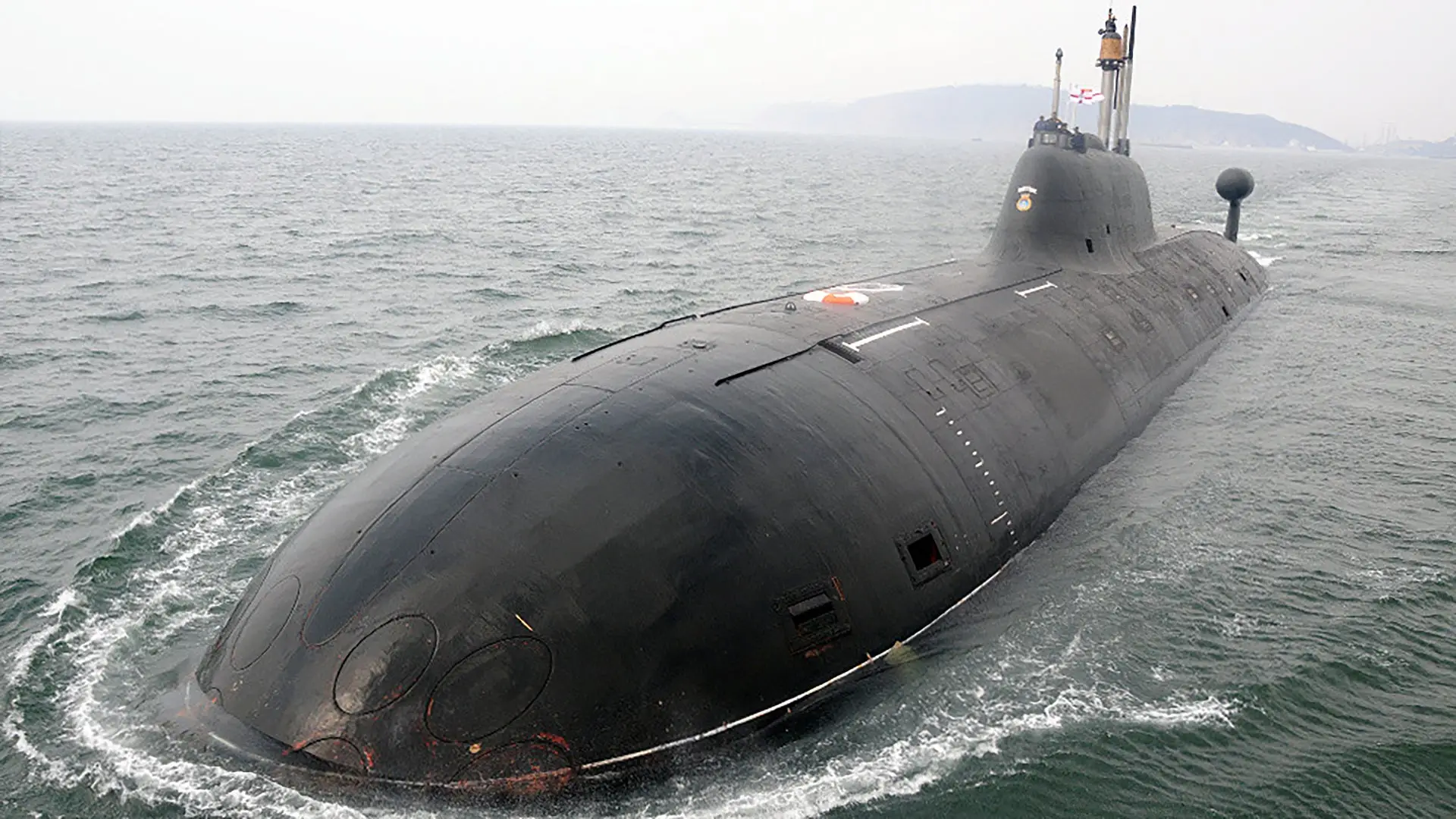
While submarines have become much safer to operate over the years, the possibility of an accident cannot be ruled out. Fatal accidentssuch as the loss of the Argentinian submarine ARA San Juan on 15thNovember 2017 and the Indonesian submarine KRI Nanggala on 21stApril 2021 are testimony to the inherent dangers associated with submarine operations. Accidents on board a submarine typically result in the ingress of a substantial amount of water, causing it to lose its positive buoyancy and sink. If the water's depth in the incident area is less than the crushing depth of its hull, the vessel could come to rest relatively intact on the sea bottom. Insofar as the rescue of survivors is concerned, it now becomes a race against time as the carbon dioxide percentage gradually begins to climb. There could also be a buildup of other harmful gases associated with electrolyte spillage from the large lead acid battery bank. A slow but persistent drop in oxygen levels accompanies all this. Time-late, i.e., the time between the occurrence of the accident and the attempt for rescue, now becomes a critical determinant of the effort's success.
Several factors come into play in the determination of time-late. The first is the time that elapses between the occurrence of the accident and the shore authorities becoming aware of it. This will primarily depend on whether the submarine has been able to transmit a distress message at the time of occurrence. In the event of an accident having occurred when submerged, thereby precluding the transmission of a distress signal, submarines are equipped with distress buoys, which are released either manually or automatically and are programmed to transmit once they reach the surface, alerting authorities ashore. This, too, is not foolproof, as there are occasions when release is thwarted due to possible structural damage or other obstructions. In such an event, the first indication of an accident is normally when a submarine fails to make a scheduled transmission, indicating that it is continuing with safe operations. This puts considerable strain on the rescue effort as the position of the submarine is now uncertain, and localisation is time-consuming.
The rescue effort usually comes in the form of a Deep-Sea Rescue Vessel (DSRV) configured to mate with the rescue hatch of the submarine and evacuate personnel from within. It is accompanied by one or more unmanned Remotely Operated Vessels (ROVs) for communication, visual inspection, etc. The heavy package requires a support ship to ferry it to the site and its continued operations. While it may also be transportable by air, given the size and weight of the equipment, it would need several sorties byheavy–lift, wide–bodied transport aircraft to do so. Further, once airlifted to an airport in the vicinity of the accident site, the equipment has to be moved on trucksto a suitable harbour and subsequentlyinstalled on an availableCraft–Of–Opportunity (COOP) that has sufficient deck space to accommodate the A-Frame, containers, DSRV, ROVs and associated equipment – no mean feat!
The alternative is using a pre–designated vessel at the permanent location of the rescue kit,which can be rapidly tasked to embark the equipment and sail to the designated area. While this may be logistically easier, the time penalty associated with the vessel's passage to the accident site will need to be considered.
The point being made by these lengthy explanations is that when it comes to submarine rescue, there is no escaping the tyranny of geography.
Indian Submarine Rescue Capability
India’s submarine rescue capabilities received a tremendous boost with the acquisition of two state–of–the–art DSRVs built by James Fisher, U.K. The first of these was inducted in 2018, and the second in 2019. They can conduct rescue operations up to a depth of 650m, which is more than the crushing depth of most conventional submarines. Mother ships for these systems have also been identified and are kept ready on each coast for immediate deployment.
The sustained availability of such a capability on the East Coast of India minimises time-late for a rescue attempt to materialise for a submarine disaster in the Bay of Bengal. This capability thus has the potential to be a ‘collective good’ for all submarine operators in the area. While undoubtedly, in the event of an accident, our capacities will be mobilised and brought to bear, a certain amount of prior preparation will make this entire process smoother. This typically involves a detailed examination and certification of the rescue hatch and other associated arrangements to ensure a high probability of successful mating of the DSRV with the submarine in distress. Such certificationmay have to be repeated periodically to ensure that the requisite upkeep standards are met.
The Way Forward
No capability can be deemed fully operational without a full-fledged exercise involving physically transferring personnel between a bottomed submarine and the DSRV.To facilitate this, a multilateral submarine rescue arrangement is proposed for all the submarine operators amongst the littoral nations of the Bay of Bengal. This could be formalised by the collaborative drafting and acceptance of a Memorandum of Understanding (MoU), which spells out the broad parameters of cooperation, including the periodic certification of mating arrangements, training, and the conduct of exercises.
A multilateral submarine rescue exercise would involve the participation of submarines from one or more countries in the region. The submarine will be required to bottom on the seabed and act as a disabled vessel. The DSRV mothership would then enter the area, establish communication, and deploy an unmanned ROV to examine the submarine and record parametersto brief the DSRV crew. The DSRV will be launched and piloted to the submarine to mate with its rescue hatch. Once a watertight seal has been established, the hatch is opened, and personnel from the submarine are physically transferred to the DSRV. On completion, the hatch is shut, and the DSRV detaches to return to the mother ship.
Given limitations on the availability of submarines and other operational constraints, it may be difficult for all the operators in the Bay of Bengal to participate in the exercise along with a submarine. They could, however, send key personnel from the submarine community to be observers.Such exercises will go a long way in increasing the morale of the submarine crew, who are confident that should an untoward incident occur that causes the boat to sink, the probability of a successful rescue attempt would be high.
Conclusion
Formalising a submarine rescue arrangement between the Bay of Bengal submarine operators would mitigate the trust deficit associated with the rapidly growing induction of these stealthy platforms. Further, intermingling the submarine crew and supervisory staff through the conduct of exercises will assist in building a sense of bonhomie and camaraderie amongst the crew. Submarine rescue diplomacy thus has the potential to play a significant role in ensuring the tranquillity that has been traditionally associated with the Bay of Bengal persists.