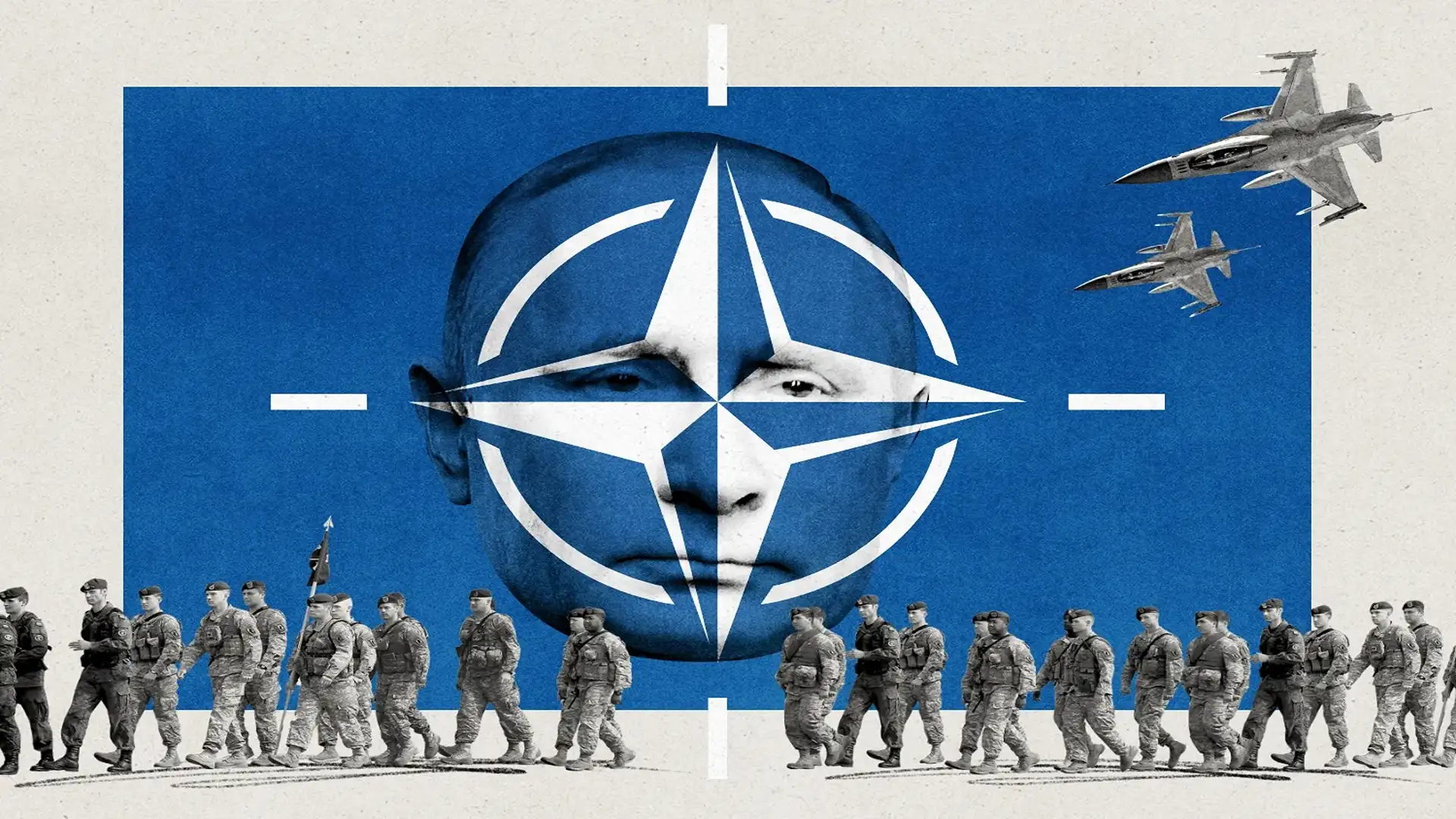

Conflicts in all their avatars have become even more pervasive globally, making the domestic defence industry a critical element of national power.
At present, conflicts are everywhere, and their future is bleak. There is the war in Ukraine, now in its third year, the Gaza war and the US-China tensions. Each conflict has polarised the world along different axes and created unexpected responses. Then, there are ongoing trade wars in the guise of national security exceptions. There is a technology divide; the U.S. and China are involved in something akin to a technology Cold War. Let us also not forget the rising contestations over energy transition and climate justice, energy security, and water security, which can become a major flashpoint for conflicts in the near future.
Globalisation seems fragmented beyond recall when the secretary general of NATO tells the global industry that, today,“freedom is more important than free trade, and principles are more important than profits.” That creates boundary conditions around globalisation that nobody expected in the post-Cold War era.
Therefore, in present times, there is no need for a crystal ball to predict conflicts; they are not Black Swans but are actually Grey Rhinos (a highly probable, high-impact event that is obvious and visible, yet often ignored for various reasons until it's too late).
Collapse of Liberal World Order
Along with the lack of international order, we should also add multilateralism; multilateralismis on its final deathbed. United Nations and its assorted organisations, including the powerful Security Council, have been literally rendered useless. It would be hard to recollect when the UNSC has taken any meaningful decision on peace and security in the world! The UNSC recently passed a resolution demanding a ceasefire in Gaza. Look at what happened- nothing! The World Trade Organisation (WTO) dispute settlement mechanism has, for all purposes, collapsed; we are witnessing the collapse of similar international institutions. All this has come about because we as a global community have failed to recognise the realities of the post-Cold War situation and have not adjusted the international order accordingly.
With the end of the Cold War, the straitjacket of the division between the two blocks was removed, allowing countries to interact freely. Globalisation technologies, particularly the ICT revolution, eased the movement of goods, ideas, money, and technologies worldwide. This enabled small and medium countries to leapfrog development stages and acquire a certain amount of economic freedom, military strength and regional influence. It instilled in countries the belief thatif there are rules in this world order, we should also participate in the rulemaking, which should meet our national interests, aspirations and ambitions. So, besides the so-called great powers, a host of middle powers are competing to promote their own ambitions.
It is an ‘atomised world’ at the moment, leading to conflicts and the inability of established international institutions to deal with these conflicts. Of course, most nations will swear allegiance to a rules-based international order. But they interpret the rules of this international order as per their whims-they abide by rules that they want to abide by and ignore those they find uncomfortable to abide by. In the bargain, history has become a malleable substance; individual nations are shaping history per their interpretations and objectives. This is clearly illustrated in the narratives that justify the war in Ukraine and Gaza by the contestations. The 'liberal international order' has become a hollow term; virtually every country, moving from the right to the left, has elements of liberality in their political and economic structure. And so there is no point pointing fingers at others saying that you are more or less democratic– I am more democratic than you. The whole concept of democracy versus authoritarianism is a fake dichotomy today because that is not what is driving countries. What drives countries is their national interest, aspirations, and ambitions.
Impact of Technology
Technology and warfare have an intimate connection going way back into the history of warfare. Today, the dimensions of warfare are ever-expanding; wars are not fought just on land, sea, and air but also in the cyber domain and will be increasingly fought in the space domain. Therefore, nations need to integrate their technological and military capacities in all these domains.
Technologies are rapidly evolving, especially those that pertain to the military field—autonomous weapons, quantum information technologies, which are revolutionising stealth technology, etc. We need to integrate these technologies intelligently into our country.
From the policymaking domain perspective, it is critical to facilitate the integration of technologies. First and foremost, there must be a comprehensive and rigorous review of the weapons and technologies being acquired and developed by potential adversaries so that India is in a position to respond to them.
While the acquired / indigenously developed technologies must meet our battlefield requirements, a mix of indigenisation would also be imperative. Of course, there will be 'technology gaps' that may be plugged through imports while concurrently launching and funding cutting-edge research for technology leadership. India cannot become a great power without developing a robust defence industry, and you cannot have a robust defence industry without a robust defence export policy.
Where Does India Fit?
India has done very well in the post-Cold War period because it has taken advantage of globalisation, its historical experiences, geography and strategic location, demography, economy, and democracy. While there may have been some challenges, they also offered opportunities that were taken advantage of. Napoleon once said, "To understand a country's foreign policy, you have to understand its geography.” That holds true not only for foreign policy but also for national security policy and its economics.
Geography goes beyond physical location- it also encapsulates historical and civilisational inheritances. Few Indians understand that our location and our perspective of the world shape our geopolitics. Too often, we are willing to borrow concepts and templates from the West, but these concepts and views are about how the West looks at us rather than how we view them. This is something Indians must internalise in their research, articulation and political policymaking. India has two distinct dimensions to its neighbourhood– a continental heartland and the region to our north, including Central Asia, the Caspian up to the Black Sea region. India’s confrontation with China is actually on the continental heartland.
We tend to ignore the importance of peninsular India. Its importance in policymaking has only crept up in the last couple of decades. India’s maritime neighbourhood determines its Indo-Pacific initiatives, emphasising the Indian Ocean, trade, and energy supplies. This is a very important piece of maritime real estate, providing several strategic opportunities. Therefore, India’s strategies must encompass both the continental and maritime neighbourhood, which are important for Indian policymaking.
Like other middle powers, India also leverages all these advantages to maximise its role in rulemaking and power and protect against rules that negatively impact its interests. At the same time, we need to recognise that other powers are also trying to do the same to undermine our interests through a similar matrix of levers through covert and overt sanctions. The U.S. Countering America’s Adversaries Through Sanctions Act (CAATSA) is a good example. While the U.S. House of Representatives passed a legislative amendment exempting India from economic sanctions under the Countering America's Adversaries Through Sanctions Act (CAATSA) for purchasing the S-400 missile defence system from Russia in 2018, this privilege can be withdrawn anytime. Recently, the U.S. State Department has again threatened sanctions if India goes ahead with its deal to operate the Chabahar port in Iran.
The media plays an important role in putting pressure on rival nations. During the build-up to the Indian parliamentary elections, the Western media was flooded with a litany of items about the undermining of democracy in India, authoritarianism, and human rights violations.It would be pertinent to note that while India may have developed an excellent network of relationships with the Western powers, it cannot totally ward off the lingering suspicion/ fear that while they like a strong India, they may not like a very strong India–not another China to challenge them.’
Therefore, there will be multiple impulses in international relations; the countries with which you have excellent relations and those with which you are advancing your interests in certain areas would concurrently be not so friendly to you in other areas. This is a dichotomy that one lives with; there are no blacks and whites in geopolitics anymore-only, multiple shades of grey. Therefore, we cannot talk about a congruence of interests with any country. India needs to keep this in mind when dealing with the United States, Russia, China, and other countries of the world. And this is the reality of geopolitics in the post-Cold War world.
Developing a Defence Industry
However, before India can become a substantial defence producer and exporter, it has to deal with various cross currents, including meaningful participation by the private sectorin defence, R&D, and manufacturing. We have not progressed at the pace at which we ought to progress. While the DRDO has majorly contributed to our defence capabilities, there is a conflict of interest in DRDO being a technology developer and a validator of technologies created. Public sectorunits do not allow a level playing field between the private and public sectors.
Therefore, there is a need for policy intervention with a holistic approach. A national defence strategy will provide the overarching framework from which will flow a national security strategy. The resources and goals must be matched, and the gaps in technology must be suitably plugged as per the hierarchy of a national security strategy and a national defence strategy.
India has a national security strategy, but many consider it diffused and excessively under wraps. We need to articulate publicly a strategy that encompasses the entire national security establishment and the general public.
In their national security strategy, it is interesting to note that Americans have developed the powerful idea of integrated deterrence, which means combining military levers, economic levers, diplomacy, foreign assistance, and intelligence. The objective is to make clear to the adversary the red lines of national security that shall not be allowed to be crossed.
The engagement between academia, the research community, technology developers, and the armed forces must be elevated and taken to the next level, sometimes called civil-military fusion. Both the U.S. and the Chinese have achieved this to a great extent. There is no reason why India should hold back. Admittedly, there are some structural and systemic issues, but these can be overcome. Peninsular India provides a huge opportunity in this direction. This landmass is adjacent to a maritime region and holds the cream of industry, academia and research. In fact, it is a good laboratory for developing the kind of civil-military fusion that India needs.