
PAKISTAN: PDM 2.0 PROSPECTS
The coalition may have to make tough economic and foreign policy decisions even while its standing is in question.
By Synergia Research Team
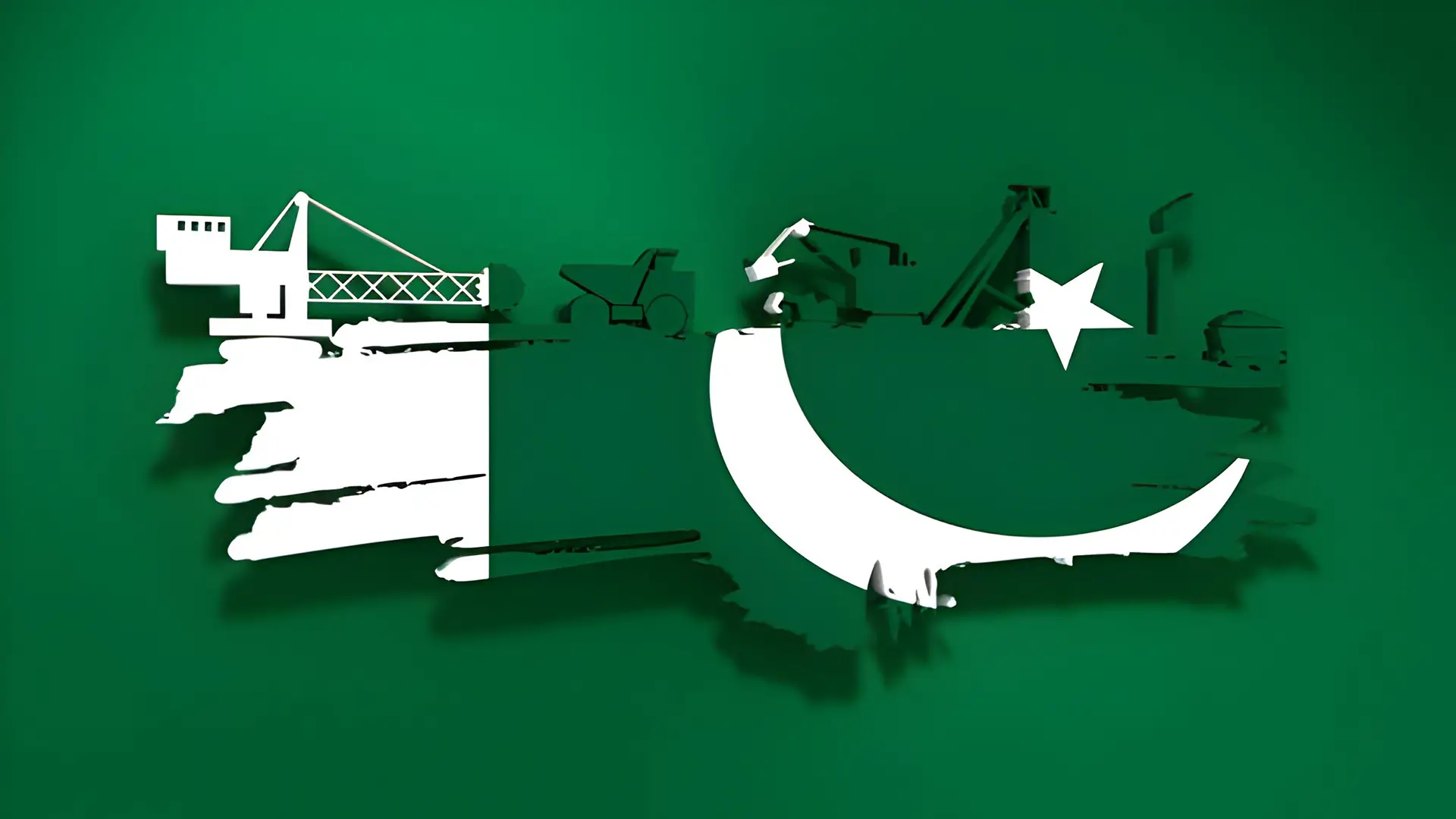
The Pakistan Democratic Movement (PDM), an alliance of more than a dozen parties, ousted Imran Khan in 2022 to form the Government. A similar coalition, referred to as PDM 2.0, was recently formed to sidestep Mr Khan's party and form a government in Pakistan.
Yet not only are its legitimacy and longevity in question, but it also faces sizable challenges on the economic, security, and foreign policy fronts.
Elections a Soap Drama
In a surprise result, jailed former Prime Minister Imran Khan’s party won the most seats in Pakistan’s parliamentary elections earlier this year. Mr Khan’s Pakistan Tehreek-e-Insaf (P.T.I.) gained more seats than the military-backed Pakistan Muslim League-Nawaz (P.M.L.N.) led by the three-time former prime minister, Nawaz Sharif.
The surprise PTI victory upturned the military's expectation of an easy win. Not only was it preceded by generals jailing Mr. Khan and candidates allied with his party, but it also came amidst accusations that the incumbent military-backed Government had engaged in rigging.
However, the tables soon turned: since the PTI fell short of a majority, the Pakistan People’s Party (PPP) reached a power-sharing consensus with the PML-N to stitch together a coalition government.
Mr. Khan, a populist leader, was ousted from power in 2022 through a no-confidence vote, convicted for multiple crimes, and banned from contesting the elections. The previous PMLN-led coalition or PDM that replaced him was unpopular and came under flak for being unable to address the economic crisis and record-high inflation.
In PDM 2.0, Shahbaz Sharif, brother of Nawaz Sharif, was appointed prime minister of Pakistan. His Government faces a stagnant economy grappling with double-digit inflation and steep debt.
Will the Government last?
Despite its military backing, the Government is already on a shaky footing, given Imran Khan's popularity and allegations of election irregularities. However, political longevity aside, the new Government has urgent economic issues on its plate.
Mr Imran Khan has refused to be cowed down. In fact, the surprisingly good performance of his dismantled party, the
PTI has encouraged him to wage a movement to "recover the peoples' mandate that was stolen from him." They intend to take recourse not only to legal actions but also gradually ratchet up public pressure through social media-generated street protests, a skill at which the PTI excels. The country can expect more political turmoil in the coming months, especially as Pakistan goes for a fresh deal with the IMF and is compelled to enforce its directives at the cost of the common man’s economic health, already under severe duress.
There has been considerable clamour internationally on the fairness of elections in Pakistan. Expatriate Pakistanis in the U.S. and Europe have been spearheading the cause of Mr Imran Khan and have succeeded in getting considerable traction. This has caused a dilemma for Army Chief General Munir, who calibrates the ebb and flow of political activities in the country from his GHQ in Rawalpindi. It will be a hard sell to attract investments from discerning foreign investors if the most popular political leader remains incarcerated on charges that may not stand proper legal scrutiny in any independent court of law. Also, a total lack of political consensus between the opposition and the ruling dispensation will impede the economic agenda’s rollout.
Economy is the Key
Pakistan is in a poly crisis with its volatile economy, in the midst of a multi-year crisis, topping the list. As per the Economist, Pakistan’s GDP shrank slightly in 2023 amid high debt, a balance-of-payments crisis and inflation that peaked at nearly 40 per cent before falling back to its current rate of 23 per cent. With wildly fluctuating foreign reserves, Pakistan is burdened with an external debt of $ 30 billion.
During the 18 months of PDM 01, Mr Sharif managed to avoid default by the skin of his teeth when, after much haggling, the IMF released a $3bn stand-by emergency loan. With the robust backing of the Army Chief, the military-appointed caretaker government that followed cracked down on illegal foreign market trade, smuggling and black marketing of commodities to deliver a primary fiscal surplus. However, what was not so openly spoken of was that this was at the cost of imports (which affected manufacturing), and there was little or no progress in deeper reforms like privatising resource guzzling state enterprises and the shrinking tax base. Clearly, it has been left to the current dispensation to deal with these hot potatoes.
Pakistan has no option but to knock at the doors of the IMF for its 25th bailout, a task for which Mr Sharif has selected the Wharton educated Muhammad Aurangzeb, the suave CEO of Habib Bank. There is little doubt that the IMF package will come through, albeit with more arm twisting, as the international community is aware of the consequences if a nuclear armed nation is allowed to fail.
The Army-steered Special Investment Facilitation Council had been desperately trying to muster investments from Gulf nations. While the Army's ability to convince Gulf investors to put their money into Pakistan's faltering economy has generated much optimism, dollar flow has yet to flow. However, during a recent visit to Saudi Arabia, the Crown Prince assured the prime minister of an early $6 billion investment.
It is worth pointing out that external remittances, Pakistan's largest source of foreign reserves, are falling. Pakistanis in Saudi Arabia and the United Arab Emirates (UAE) are the top remitters, but they have held back in the face of political uncertainty, a fraught election, and economic fragility.
Security
It is suffice to say the picture on the internal security front looks extremely grim. The recent killing of Chinese workers, the frequent attacks on security forces and CPEC assets and the faceoff with the Taliban regime in Kabul have thrown questions on the ability of state security organs to protect the investments of foreign businesses. This has to be tackled as a priority before even staunch friends like China and the Gulf nations risk their billions.
In the West, Pakistan grapples with tense borders with Taliban-led Afghanistan. The outlawed Tehreek-e-Taliban Pakistan (TTP), which Pakistan accuses of numerous militant attacks on its soil, continues to hide out in Afghanistan. A recalcitrant Taliban regime refuses to rein in the TTP. The situation has got worse as Pakistan has repatriated nearly half a million Afghans back to their country and is gearing up to despatch the remaining one million or so in the coming few months. Most Pakistani security analysts are of the view that the much-vaunted 'strategic depth' philosophy for Afghanistan advocated by the Pakistan military for decades lies in tatters.
Geopolitical Landscape
On the diplomatic front, the PDM 2.0 has to manage tense ties with neighbours and mend fraying relations with its longtime ally, the United States (US). Pakistan's close ties with China amidst significant U.S.-China tensions and U.S.-India strategic ties have contributed to this. Pakistan's influential military leaders, who have hitherto steered its foreign policy, have expressed an interest to patch up with the U.S. However, Mr Sharif will have to avoid getting mired in Mr Khan’s campaigning allegation that the opposition (and the Army) colluded with the U.S. to oust him.
While China, a major ally, has substantially invested in Pakistan through the China-Pakistan Economic Corridor (CPEC), the corridor’s viability is uncertain as it faces hurdles like security risks and delays. The recent IED attack killing five Chinese nationals created serious rifts between the two “Iron Brothers’ and the prime minister had to rush to the Chinese Embassy to cool tempers. The new Government will have to address Chinese concerns to sustain the project as China becomes increasingly reluctant and cautious with its financial overtures.
Closer home, ties with India strained further under Mr Khan's Government. Despite pressure from top military leaders who have opposed normalising ties with India, Nawaz Sharif has historically been more conciliatory towards India and appeared to enjoy a measure of rapport with Mr Modi in his last tenure. It remains to be seen whether his brother, Mr Sharif, will follow suit. However, the new Government has indicated intentions to reopen trade with India, which was suspended in 2019.
The Daily Dawn of 24 January opines that in its relations with India, the incoming Government is expected to focus on diplomatic engagement, prioritising economic stability over political tensions. The Government is likely to open doors for regional trade and investment with India. This may involve backchannel diplomacy and dialogue at various levels, aiming to address critical issues like the Kashmir dispute while avoiding escalatory actions. Abu Dhabi and Riyadh are advocating for a paradigm shift in South Asian politics. They are encouraging Pakistan to explore avenues for normalisation with India, urging a move away from military standoffs and a step back from conflict in general. This is to be expected from investors with Big Bucks investments lined up to safeguard their funds.
Assessment
The new Government will have to take economically and diplomatically uncomfortable measures to steer Pakistan through troubled waters.
If China, the only reliable lifeline remaining, follows the route of Western investors and turns away from the unstable Pakistani regime due to recurrent security lapses, a dark economic abyss will confront the Pakistani
economy.
Economically, fiscal discipline and other stringent reforms may be the only way to secure another lease of IMF funding and keep the economy afloat.
Of course, the common person on the street will suffer, but this has been the case in most nations of the Global South.
Diplomatically, overtures like repairing ties with the U
.
S
.
and reopening trade ties with India may be key steps in PDM 2.0’s foreign policy action.
However, will India, now in the driving seat, respond
positively, or
will it allow nuclear-armed Pakistan to slide into economic ruination? This is a decision that New Delhi may have to take sooner rather than later.
Expert Comments
|
Senator Mushahid Hussain Sayed Critical Challenges. In my view, the three critical challenges for the new Government are in the domains of politics, internal security and foreign affairs. As far as the economy goes, given our accord with the IMF, it will be guided towards stabilisation and, hopefully, revival together with support from IMF and our friends like China, Saudi Arabia, UAE plus USA and EU, a process on which we are already embarked. In politics, especially after the flawed elections, there's a need for a healing touch: releasing all political prisoners and bidding goodbye to the politics of vendetta, vengeance and victimisation. In internal security, crafting an effective counter-terror strategy, given the recurring terror attacks in Pakistan’s provinces bordering Afghanistan & Iran. And there's a need for a Regional Reset in relations with our neighbours. Political Landscape. Today, Imran Khan is Pakistan's most popular politician, and his Party, although officially denied its trademark symbol of the Cricket Bat in the February polls, received 37 per cent of the popular vote, with PML-N getting 23 per cent and PPP 13 per cent. In any likely election, PTI will return to power. In Pakistan, politicians are often debarred, exiled or imprisoned, but their political future is not determined by administrative or judicial diktat but by popular will. Pakistan is undergoing three transitions simultaneously: ( a) with 65% of Pakistanis under 35, a youthful leadership, new generation, is already taking over 2 of the three major parties (Bilawal in PPP, 36, & Maryam Nawaz, 49, in PML-N); (b) the two major parties that dominated the national political landscape for the last 30 plus years have been overtaken, for the first time, by Imran Khan's PTI; (c) traditional politics of clans, candidates & constituencies have been overtaken by popular mobilisation based on issues disseminated via IT/Social Media platforms, a more modern, creative expression of Pakistani-style populism in which youth, women, the 'silent' middle class & the Diaspora are key pillars! Prospects for Indo-Pak Relations. I expect forward movement after the Indian elections, especially on low hanging fruit like Cricket, Culture, & Commerce, plus the resumption of Ambassadorial level relations, which will provide an enabling environment for a better Pakistan-India rapport. Post-polls, Mr Modi would want to follow the Vajpayee path towards Pakistan for several reasons: because of India being a loner or standing out alone on SAARC, fear of a China-Pakistan gang-up, pressure from the U.S. to 'behave' better with Pakistan, and no longer guided by domestic political considerations of weakening his Hindutva base. |
|
Ambassador Abdul Basit was ambassador to Germany from 2012 to 2014 and high Commissioner to India from 2014 to 2017. It seems the government's top priority is to clinch another IMF "bailout", which should help inject some stability into the economic system. However, it remains to be seen if IMF conditionalities would be politically sustainable. In parallel, the Government is also working to get more and swift investments from China and Gulf countries. Pakistan is unfortunately caught in a proverbial vicious economic circle, and to address massive economic challenges, it needs a stable and predictable political environment. Unfortunately, I don't see any well-defined economic strategy. The weak coalition government will continue to experiment on different fronts. I think there is a possibility of restoring full diplomatic relations and bilateral trade once the new Government is in place in New Delhi. |