
OMAN: REMAINING REGIONALLY RELEVANT
Oman has managed to retain its regional relevance through an adaptive foreign policy.
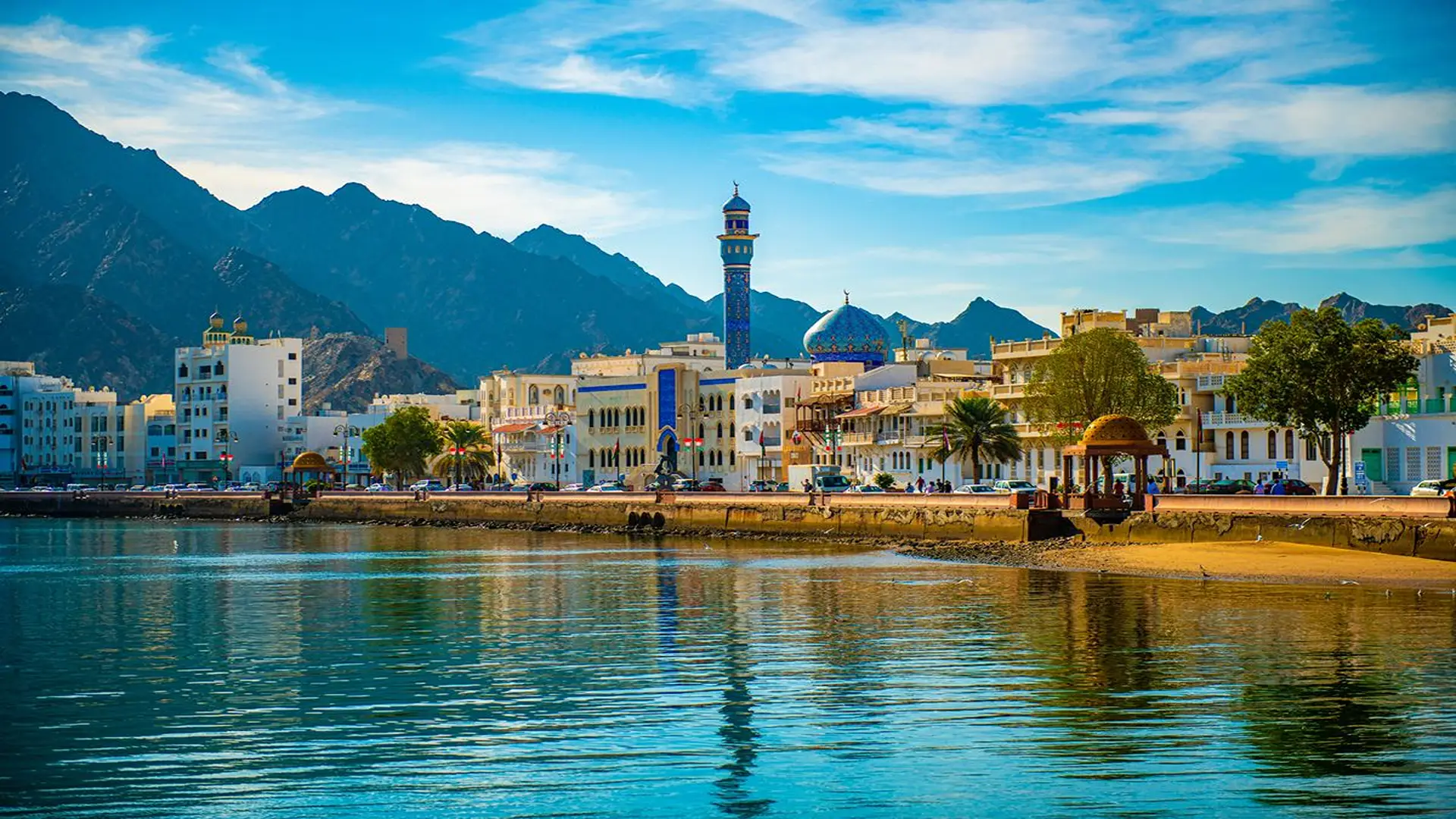
Oman is the oldest independent Arab state, located in the southeast corner of the Arabian Peninsula. From wielding an influential empire to managing modern-day regional tensions, it has navigated the polarities between its powerful neighbours by maintaining an independent foreign policy.
It borders the United Arab Emirates (UAE), Saudi Arabia, and Yemen. It flanks the Arabian Sea in the south and east and the Gulf of Oman in the northeast. Strategically located at the mouth of the Persian Gulf, it shares maritime borders with Pakistan and Iran.
Political History of Oman
Oman was a sultanate known as Muscat and Oman until as recently as 1970. From the 17th century onwards, the Omani sultanate empire competed with the Portuguese and British empires for influence in the Gulf region and the Indian Ocean. By the 19th century, Oman was perhaps the most influential power in the region – its empire extended across the Strait of Hormuz to Iran and Pakistan and along the East African coast to Zanzibar, which it controlled. It has strong ties with Britain, which date back to the late 19th century.
A key turning point in its modern history was when Sultan Qaboos deposed his father in 1970 and set the country on a path of modernisation, abolishing slavery, which had once formed a major part of its trade. It is worth noting that it was not a smooth ride in terms of territorial integrity. The Dhofar Rebellion from 1965-75 featured pro-Soviet secessionist groups against government troops. Oman's Western ally, Britain, played an important role in supporting its operations during this Cold War turmoil, and the rebellion was finally put down with the assistance of Britain, Iran, Jordan, and Pakistan.
In 2011, the nation witnessed its share of the pro-democracy Arab Spring uprisings with a rare outbreak of political protest, which Sultan Qaboos managed by suppressing demonstrations and promising more jobs. However, he established that political power encompassing both executive and legislative functions would remain his prerogative. The present-day leader, Haitham bin Tariq Al Said, succeeded to the throne when his cousin, Sultan Qaboos, passed away in 2020.
Resources and Strengths
Oman's oil reserves were uncovered in 1964, and production began soon after. Revenues from petroleum facilitated its significant development over the last 30 years. Its economy continues to rely heavily on oil exports with a continuously expanding per capita GDP. Additionally, tourism is the fastest-growing sector of the economy. Agriculture and industry combined account for less than 1% of the country's exports. Its main natural resources are fuel resources (petroleum and natural gas), mineral resources, and fish.
Compared to its neighbours, Oman does not have vast oil resources. Further, the country's complex geology makes exploring and producing oil expensive. This means that it will have to adapt to a post-oil economy sooner than other Gulf country states with higher reserves, such as Qatar and the UAE.
However, as Oman grapples with inflation and volatile oil prices, the Sultanate under Sultan Haitham has prioritised Vision 2040, aiming for a diversified and resilient economy. This mainly seeks to reduce dependence on oil and gas revenue and focus on opportunities for growth, such as the significant potential of the tourism and hospitality sector.
Oman is building upon its strategic location to develop its logistics and transport sector. With its deep-water ports, extensive road network, and proximity to key trade routes, the country is well-positioned to become a regional trade centre. For instance, the Port of Salalah is the largest port in Oman and the largest seaport in the Arabian Peninsula, strategically located on the Arabian Sea.
Another approach that the Gulf Sultanate is relying on is investment funds like the Oman-UAE Tech Fund, which aims to support technology startups and encourage innovation, and the Oman Future Fund, which will invest in key sectors like tourism, logistics, manufacturing, and technology to create new jobs and boost the country's oil exports.
Oman’s Regional Role
The late sultan Qaboos diverged from the country’s hitherto isolationist approach and adopted a neutral foreign policy, opening Oman to the rest of the world and spearheading its transformation into a key regional player. He strengthened the country’s ties with other Gulf monarchies and formed the Gulf Cooperation Council (GCC) in 1981. Oman maintained ties with Qatar and Iran even during a spat in 2016 where it came under pressure from Saudi Arabia and the UAE for its ties with these regional outliers.
Amid the long-running Saudi-Iran rivalry, Oman has sought to manage this insecure environment by maintaining cordial ties with rival factions and favouring negotiation over conflict where possible. This has enabled it to play a stabilising role in the region.
The UAE remains a crucial trading partner for Oman and has been a leading Arab destination for Oman exports and a source of Omani imports. The UAE and Saudi crown princes have formed a powerful alliance that exerts its influence across the Middle East and beyond. The Saudi-Emirati bloc and Oman differ on several foreign policy considerations, such as the war in Yemen, ties with Iran, and the blockade of Qatar, which has now come to a close. Oman abstained from joining the Saudi and Emirati-led coalition in Yemen in 2015 and instead endeavoured to mediate in the conflict. Unlike the Saudis and Emiratis, Oman maintains a working relationship with Iran, like Qatar, which also refuses to be strong-armed into aligning with Saudi and UAE foreign policy. In fact, during the blockade of tiny Qatar, which was considered contrarian amongst its larger neighbours, Oman significantly increased its engagement and trade with Doha.
Despite their economic ties, Omani-Emirati ties face political friction, with Oman on edge regarding suspected Emirati interference in its internal affairs. In 2018, Oman arrested members of a spy ring backed by Abu Dhabi. Another bone of contention is Oman's Musandam Peninsula. This exclave juts out into the strategic Strait of Hormuz and borders the UAE amidst a history of territorial disputes between the two neighbours.
Rather like Qatar, due to Oman's relatively independent and neutral foreign policy, it has been able to don the role of mediator in the region, as witnessed in its major role in the Iran nuclear deal, where it offered a back-channel between Washington and Tehran. This also enables it to help actors like the U.S. and European Union engage with the Middle East. It has also played an intermediary in U.S.-Iran negotiations over captives. Additionally, Oman has been involved in Arab-Israeli negotiations. It more recently has been able to play a key role in the Gaza and Red Sea crisis due to its close ties with Iran and carefully built network with the Houthis. Oman refused to join the US-led maritime security operation against the Houthis but worked to de-escalate tensions.
India and Oman
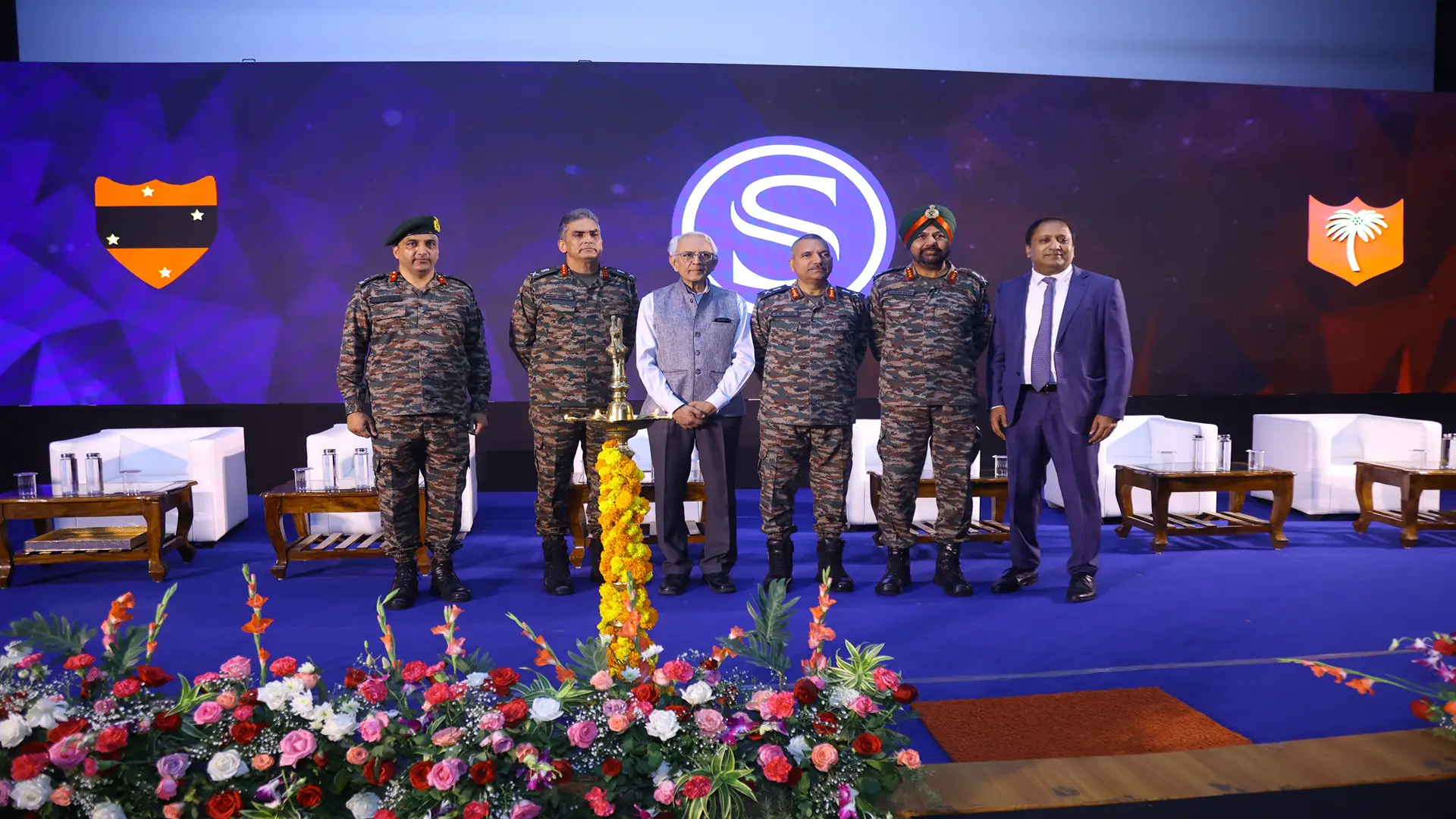
In fact, to counter the regional threat posed by the Houthis while distancing itself from the U.S. counteroperation, Oman has strengthened cooperation with outside powers that can still project power in the region, like India. In December 2023, Sultan Haitham bin Tariq Albusaidi visited New Delhi. This paved the way for the stronger involvement of the Indian Navy in the waters around the Arabian Peninsula.
Pursuant to the deal, Oman set aside a zone in the port of Duqm as a logistic base for Indian naval operations. This boosts India's logistical capacities at a critical point in time – the Indian Navy recently started its largest deployment of naval assets to the Gulf of Aden and western Arabian Sea. The objective of the operation is to prevent pirates from exploiting the Red Sea crisis while assisting commercial vessels affected by the Houthis attacks. Yet, the Indian navy is careful not to enter the Red Sea, which would associate it with the U.S.-led coalition and risk provoking the Houthis. In this way, India and Oman have something in common – they both prefer to prioritise their independent foreign policy and avoid provoking or incurring hostility where possible.
India and Oman are set to wrap up a trade agreement as New Delhi looks to improve its ties in the Middle East, where escalating geopolitical tensions have jeopardised crucial shipping routes. The deal would help India win a strategic ally and gain access to critical trade routes in the volatile region. Annual Oman-India trade is less than $13 billion.
Tighter ties with the Gulf country would provide India with a gateway to the narrow Strait of Hormuz, a major transit point for global oil shipments between Oman and Iran. With limited progress on a deal with the GCC, India has shifted its focus towards deals with individual GCC states like Oman and the UAE. As per the deal, Oman will waive duties on Indian exports across sectors like agriculture, gems, automobiles, and textiles. In turn, India will reduce tariffs on certain petrochemicals, aluminium, and copper imported from Oman.
Assessment
Having maintained ties across the spectrum and with a time-tested preference for mediation, Oman plays a key role in the region as tensions threaten to spark a larger regional war.
Oman-India cooperation can help the two nations navigate regional challenges. As Oman looks for outside support amidst regional polarities, India looks to strengthen its presence in the Middle East to preserve access to critical trade routes.