
INDIA: GOING CIRCULAR
The Circular Economyholds great promise for India despite the lack of traction globally.
By Suchitra
The Circular Economy (CE) has come of age largely due to the synergy it provides between environmental sustainability and economic growth in uncertain times. This is hardly surprising as CE addresses critical global challenges—climate change, biodiversity loss, waste, and pollution.Transitioning to a CE can potentially increase global economic output by an additional US$4.5 trillion by 2030.
However, while the concept is compelling, the market dynamics required to drive substantial transformation remain muted at best.
Failing to Take Off
"The Circular Economy is gaining popularity, but falling short on action" is a finding from the 2024 Circularity Gap Report, a joint effort by Deloitte and the Circle Economy Foundation. The Report also revealed that global material consumption over the past six years has nearly equalled the total consumption during the entire 20th century (almost 500 billion tons), a rather dismal observation on how we are not, in fact leading up to the CE. The Report reveals that although discussions and debates around circularity have nearly tripled over the past five years, this increased focus has not reduced the use of virgin materials.The CEwas anticipated to reduce emissions by 40 per cent, create approximately 2 million jobs, and grow into a market valued at US$2–3 billion in the coming years.
The Circularity Gap Report 2024 states that most materials entering the economy are primarily newly extracted, with the share of secondary or recycled materials consistently declining since the Report's inception in 2018. The Report highlights three key areas where reforms could substantially accelerate progress toward a CE: policy, finance, and employment.Key recommendations include adopting policies and frameworks that incentivize circular practices and penalize detrimental ones, adjusting fiscal policies to ensure prices reflect the true social and environmental costs of products and services, funding circular solutions to replace traditional linear models, and investing in workforce development to support a fair transition. Additionally, the Report emphasizes transformative circular solutions within the food system, the built environment, and manufactured goods.
|
“To ensure the transition to a CE is just and fair, circular solutions must be designed with the world’s most vulnerable populations in mind, then these solutions will reduce inequalities across workforces and increase job opportunities worldwide.” Ivonne Bojoh, CEO of Circle Economy Foundation |
Of course, there have been some notable success stories. The Netherlands has set a goal to achieve a full CE by 2050. The Dutch P4G platform (Partnering for Green Growth and the Global Goals 2030) represents a multi-nation, multi-corporate partnership to accelerate market-based collaborations to establish sustainable and resilient economies, with a central focus on circular models.
The India Story
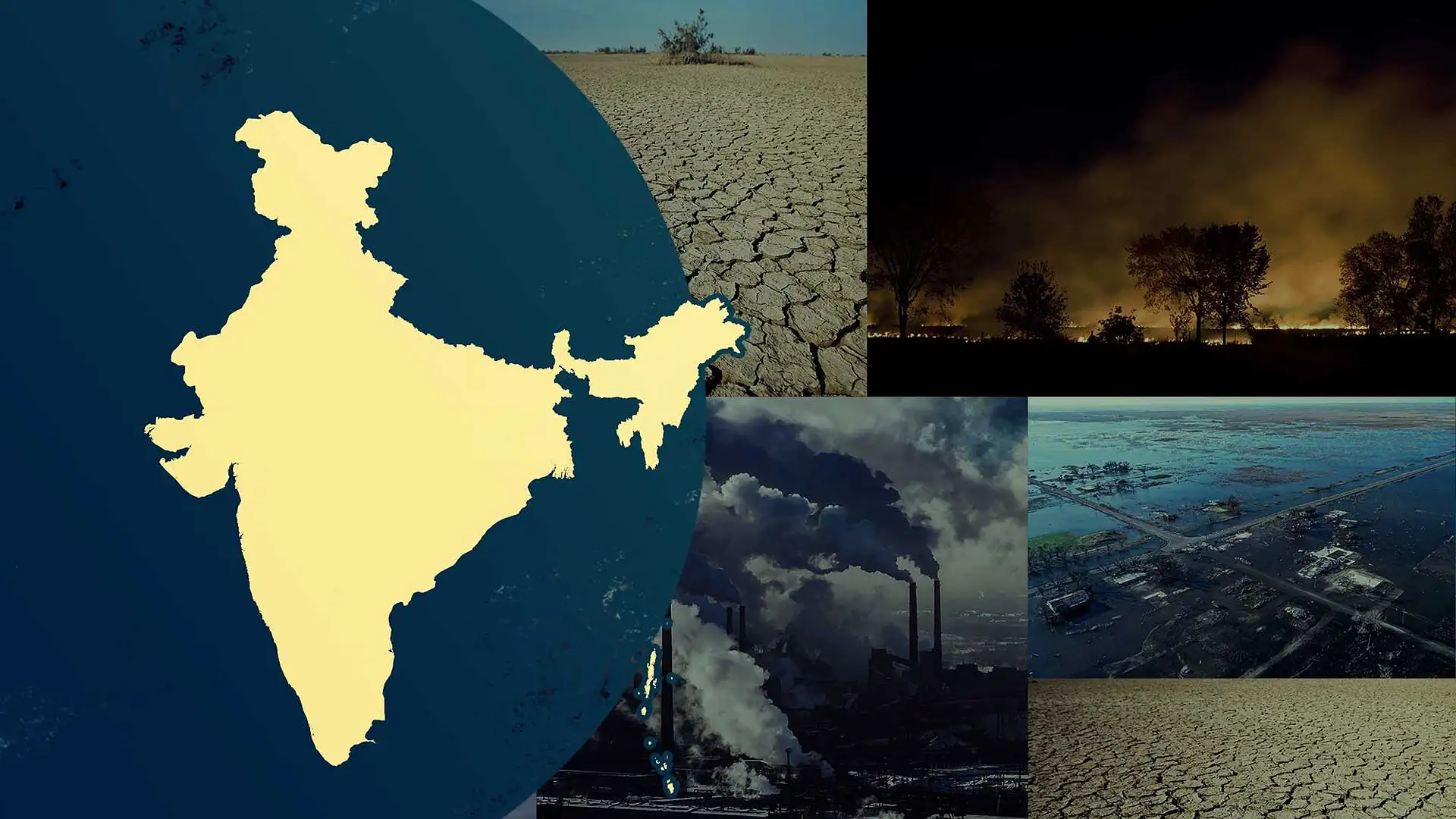
India's rapid economic growth and urbanization have created significant challenges, including resource depletion, environmental degradation, and increased waste generation. To address these pressing issues, a transition to a CE is essential.
NITI Aayog is critical in advancing the country's transition to a CE, with the Government of India identifying 11 key areas to guide this transformation. Various inter-ministerial and multi-stakeholder committees facilitate the shift from a linear to a CE.
India's draft National Resource Policy (NREP) of 2019, grounded in principles of collaboration, seeks to reduce the consumption of essential virgin resources to sustainable levels through enhanced resource efficiency while promoting circular approaches to create greater value. In addition to reducing environmental impacts, circularity would also support "Aatmanirbhar Bharat" (self-reliant India) by decreasing reliance on imported critical commodities and raw materials. Studies forecast that a CE-led growth model could yield an annual economic benefit of US$218 billion (approximately ₹14 lakh crore) by 2030, rising to US$624 billion (approximately ₹40 lakh crore) by 2050.
The Indian government has proactively advanced this transition by establishing the CE Cell within NITI Aayog to implement sector-specific action plans and policies such as the Swachh Bharat Mission, Jal Jeevan Mission, and Vehicle Scrapping Policy. Unlike traditional recycling, the CE seeks to redesign products for durability, support reuse and remanufacturing, and implement closed-loop systems to minimize waste and resource extraction.
CE in India focuses on key sectors—water, metals, and textiles—due to their significant environmental impact, resource intensity, and potential for improvement through CE practices.
The CE calls for a shift from a linear "take-make-waste" model to a multi-life cycle, circular value chains within business models, and the integration of design thinking for more efficient and prudent resource use. Currently, about 377 million citizens reside in urban areas, generating 55 million tonnes of municipal solid waste (MSW) annually, a figure projected to rise to 125 million tonnes per year by 2031. Despite the critical importance of a circular approach, awareness within the industry remains uneven, presenting a substantial barrier to widespread adoption in India.
However, establishing a CE in India would necessitate the creation of an enabling ecosystem that fosters the development and adoption of innovative business models. Currently, India's urban population of 377 million generates approximately 55 million tonnes of Municipal Solid Waste (MSW) annually, consisting of organic waste, recyclables (such as paper, plastic, wood, and glass), and other materials. This figure is projected to escalate to 125 million tonnes by 2031. Of the total MSW generated, only 75–80 per cent is collected, and of this, a mere 22–28% is processed, with the remainder disposed of in landfills. By 2031, MSW generation is expected to reach 165 million tonnes and increase to 436 million tonnes by 2050.
By 2030, India is anticipated to become the world’s third-largest economy, contributing approximately 8.5 per cent of global GDP. A CE approach could significantly support India’s economic growth while delivering substantial environmental benefits, thereby establishing a sustainable and resilient development framework. Notably, India's recycled Polyethylene Terephthalate (PET) plastic industry is valued at approximately US$400–550 million, as per data from the National Chemical Laboratory (NCL) and the PET Packaging Association for Clean Environment (PACE). With a PET recycling rate of 90 per cent, India outperforms other major economies, such as Japan (72 per cent), Europe (48 per cent), and the United States (31 per cent). This high recycling rate underscores the extensive opportunities for advancing a CE in India.
Some Best-Case Studies exist in India. The consumer products division of Tata Chemicals requires 4,000 tonnes of multi-layer plastic film annually for product packaging. This multi-layer plastic, however, poses recycling challenges and predominantly ends up in landfills, leading to emissions and environmental harm. Consequently, the packaging team collaborated closely with Dow Chemicals to develop a Polyethylene (PE)-based film that meets the same print quality and technical specifications as the Polyethylene Terephthalate (PET) previously used. The single-polymer structure enhances recyclability, allowing recycling organizations to efficiently process the laminate. This recyclability is further supported by the single polymer’s suitability for energy recovery through methods such as combustion, gasification, pyrolysis, anaerobic digestion, and landfill gas recovery.
Funding Landscape
While the CE in India remains in its early stages, it attracted investments totalling US$1.8 billion from 2016 to 2021. Innovations focused on mitigation in the energy and transportation sectors represent over 60 per cent of this investment by volume and account for 80 per cent in terms of deal value, aligning with the global prominence of energy and mobility start-ups. Over the past decade, significant technological and commercial advancements, a favourable policy landscape, and the development of standardized frameworks have supported the adoption of a CE. This increase in funding is a positive trend, especially considering that these industries contribute over 70 per cent of global greenhouse gas (GHG) emissions.
At the same time, India is seeing growth in sectors such as smart agriculture, waste management, environmental conservation, and natural resource management, presenting substantial opportunities for innovation within the CE.

Source: Kalaari Capital
The Road Ahead
CE collectively could accelerate a path toward sustainable and resilient prosperity. Advancements in the CE will enhance resilience across urban and agricultural sectors while delivering benefits such as climate mitigation, food and water security, biodiversity enhancement, job creation, and empowering underprivileged communities.
Achieving this transition requires a comprehensive, systematic implementation of a well-defined roadmap. Pursuing a net-zero future is paramount, with implications for nearly every facet of daily life. This shift opens a wide range of opportunities for start-ups, spanning innovations in plant-based proteins, carbon emission tracking, electric vehicles, and advanced battery technologies.

Assessment
Despite promising beginnings and initial headwinds, the
CE
has yet to make significant strides in implementation
globally
. An overall decline in circularity has been noted in recent research despite the growing popularity of the
CE
concept.
The
CE
transformation is in its early stages; however, with increasing awareness and significant trends propelling it forward, there is cause for optimism
.
This progress suggests a future where circularity and sustainability become central to both daily life and business practices.
India’s rapidly evolving market and substantial development potential offer a competitive advantage over more established economies. The long-term vision for a
CE
is aspirational, grounded in the strengths of the Indian market and supported by the engagement of diverse stakeholders.