
GLOBAL STRATEGIC TRENDS – THE FUTURE STARTS TODAY
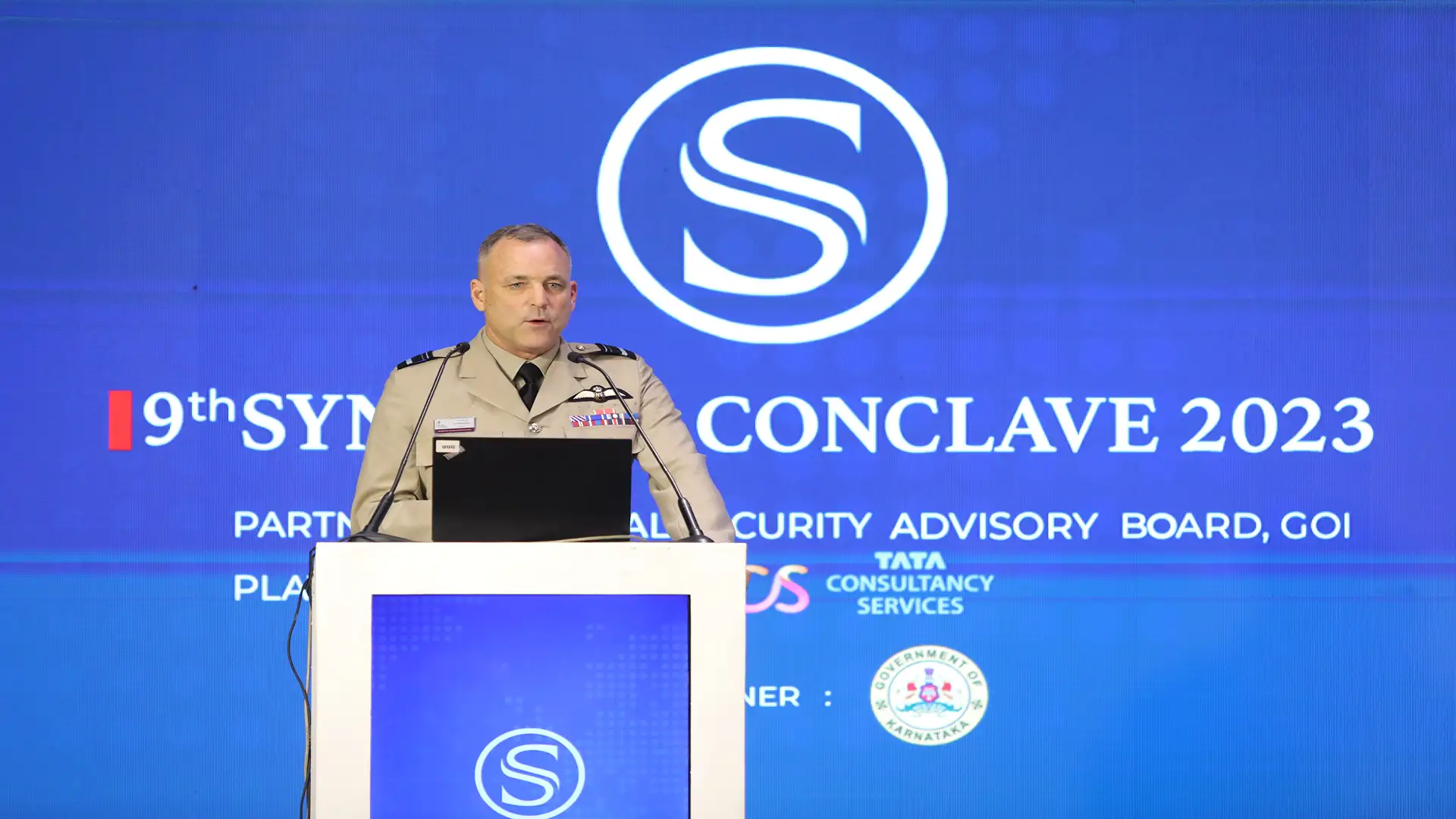
“For the first time, we are looking at the potential for global conflict on a scale of World War II.”
Air Vice Marshall John Finbar Monahan – Director Defence Concepts and Doctrine Centre, MOD, UK
A major driver influencing the global strategic trend is Demographic Pressure. For example, by 2055, two-thirds of the global births will occur in Africa. That underlines the importance of the global South, a very expanding population. Meanwhile, other parts of the world will have ageing populations, which also comes with all sorts of pressures, as experienced in Europe.
Climate change is yet another driver. There are very important implications for climate change. There are opportunities in climate change that can trigger a shift in the balance of power in the world. For example, China produces the most solar panels while India produces the cheapest solar panels in the world, and we see a shift, therefore, in leverage that is available to nations. Meanwhile, 70 per cent of the lithium for batteries lies underneath the land of Latin America. So, we see a shift away from the traditional oil-based economies to other areas of the world. What does that mean?
Global Drivers of Change
The aerospace and cyber domains are undergoing very rapid changes in the world. Many actual and potential adversaries are positioning themselves to exploit both these domains. Operating below the threshold of armed conflict, they wish to exploit legal loopholes that do not exist in these two domains but exist in the more traditional domains of the land, the sea and the air.
However, the connectivity issue presents challenges; 95 per cent of the internet on which most data flows actually still relies on undersea cables. Space is increasingly being used to deliver internet, but with the increased use of space will come the congestion of space. Therefore, vulnerabilities to our access to data will remain a major concern for some time.
Today, economic transformation and energy transition are enormous. Fighters are being flown on synthetic aviation fuel. Small nuclear reactors are being designed that are re-deployable, allowing energy to be produced anywhere on the earth. This will relieve expeditionary forces from the tyranny of the logistics chain for fuels; if the force can generate its fuels from its rubbish, it can be liberated from the stranglehold of carbon-intensive fuels.
As richer and more technologically advanced countries delve deeper into space, ocean depthsand the medical spectrum, we see massive inequalities emerging as not every human will have equal access to these expensive technologies. However, there has been democratisation of information particularly with the mobile phone. That is going to increase, and people are gradually going to become more aware of the inequalities that they suffer. That is significant as the state will face an increasing tempo of challenges from the people. Information has become a tool of war, as we saw in Ukraine, where Elon Musk's SpaceX spontaneously stepped in to provide satellite internet access to war-ravaged Ukraine. Later, just as abruptly, Space X decided to turn off the internet. Now, we are witnessing large corporations taking sides in global international relations.
Global power competition was never so stark as it is today; there is an ongoing major war in Europe, Gaza is in flames, and the Chinese are indulging in the biggest military build-up since World War II. For the first time in many years, there is amuch-increased chance of state–on–state conflict.
With all these drivers of change occurring almost concurrently, we can construct global strategic trends. These can be built into regional spaces but also refer to shared spaces. The future is not linear; it is complex and particularly at this moment in time, we see it as being very turbulent.
What are the paths that the world can take-multilaterism, multipolarity, fragmentation or network of actors?
Fictions from the Futures
A recognised futurology technique called 'fiction from the future', tries to build a series of tangible futures or worlds.None of them may come true in their entirety, but they allow our strategic planners, the people who develop our capabilities and the people who plan for our military, as also our other government departments, to test their strategies and theories against.
The current world order was developed under the aegis of the Bretton Woods conference, which we observe as ebbing and flowing with the turbulent currents of geopolitical events. The next world that we have is changing spheres of influence. This is a world in which we see increasing multipolarity and competition. We are experiencing a multipolar world breaking into a situation akin to the great game of the 1800s, in which major nations compete. This does make the future look fairly uncertain. For the first time, we are looking at the potential for global conflict on a scale of World War II, considering the amassing of fighting power in China and the challenges to the world order and multipolarity that are taking place.
Another scenario is one in which there is incremental instability; the network of actors becomes increasingly complex, which includes organised crime, radicalism, and the rising geopolitical power of major corporations having a real influence on international relations. It is a world with a networked order,which is unstable, actually bumping along, and quite problematic.
Conclusion
All nations have choices to make for their future. The issue is, what is that we want to drive for? What is it that our leaders want in the world? And that is one of the big questions we pose in global strategic trends. That leads the military to highlight the issues of the world with global strategic trends and allows our decision makers to start to understand that we want to be driving for X or Y. Next come the military concepts that allow the military to deliver the capabilities needed for the future; these capabilities must strike a balance between the exquisite and what is available in mass and is affordable or off the shelf.