
GLOBAL CONFLICT RESOLUTION
“The most inconvenient truth is that from Bogota to Mindanao, the history of conflict resolution is littered with failures.”
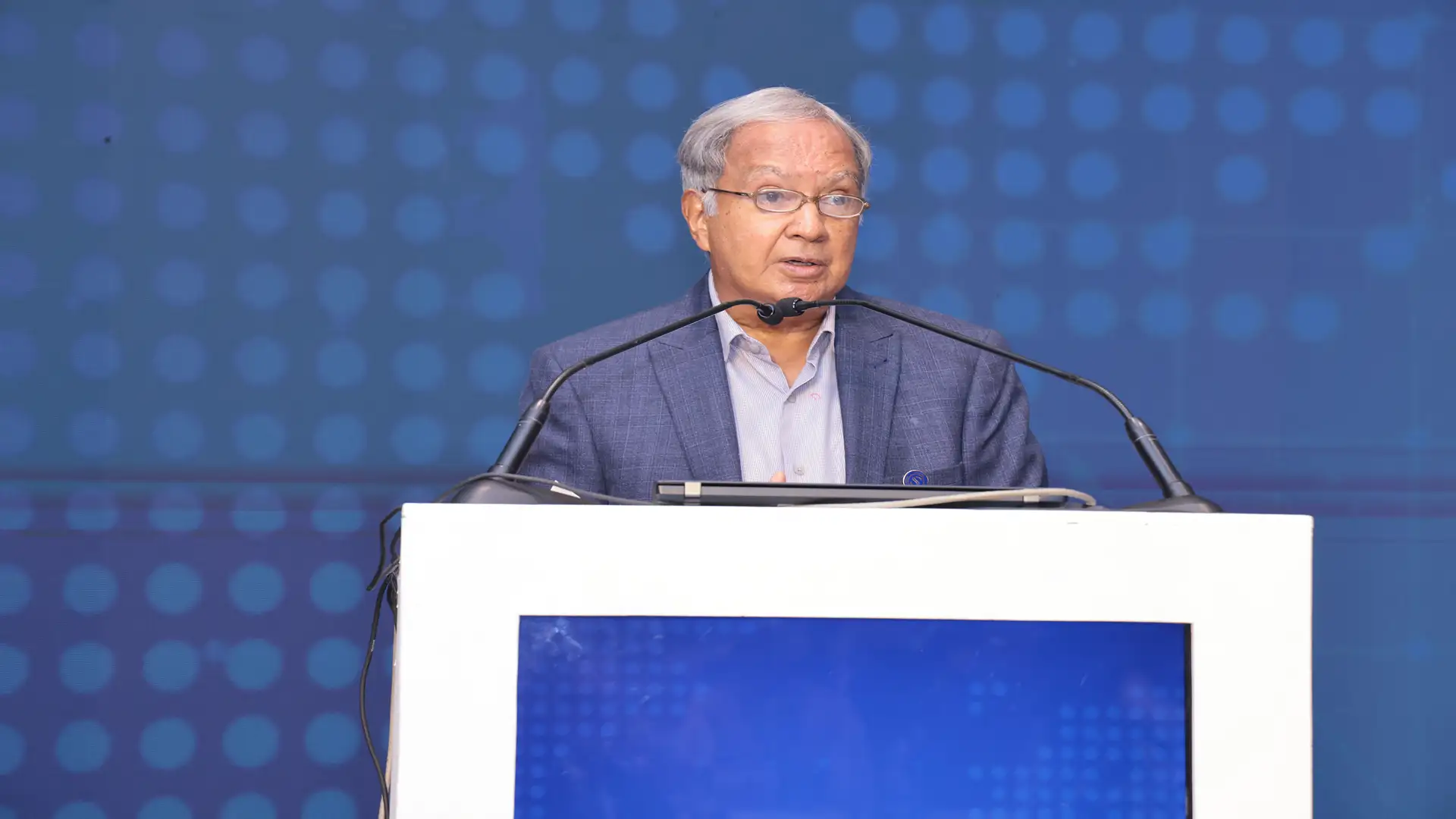
Mr. Krishnan Srinivasan, Former Foreign Secretary, Government of India
In the first century of our era, St. Matthew, the evangelist, wrote, “Blessed are the peacemakers, for they shall be called the children of God.” Six centuries before that, a Greek lawyer called Bias said, "Gain your point by persuasion, not by force. It is better to mediate between enemies than between friends, for a friend is sure to become an enemy and the enemy a friend.”
Conflicts and disputes are a part of the human condition, and conflict resolution is as old as humankind. No one can escape conflict at home, in the family, or at the workplace. When people come from diverse backgrounds, with different capabilities and attitudes, or when conflict escalates into violent actions and leaves aggressive words behind, the process of mediation is obviously far more challenging.
Principles of Conflict Resolution
Conflicts can be of different kinds: between individuals, businesses, states, provinces and nations. Conflicts exist between governments and opposition, authorities and civil society, and betweenwarring countries or blocs. There are decades-old inherited historical conflicts and brand-new ones that are unexpected. Almost every big nation suffers from some degree of separatism, and the list and variety of conflict situations are endless.
In 1981, an iconic book called “Getting to Yes, Negotiating an Agreement Without Giving In”, spawned a whole range of mediation literature, and it also introduced a mediation philosophy.
Harvard University now even has an entire course dedicated to this subject. It has mediation principles– check each side's perceptions, avoid blame, draw out the core interests, allow free expression without interruption, communicate only in a positive way, refuse to react to avoid escalation, and always express appreciation. To this, we might modestly suggest a couple of other principles. One is that mediation is not a court of law. It has no set rules, no procedures, no precedents. And secondly, that it is always better to achieve something than to end up with nothing.
Despite these principles, the bottom line is that there is no universal template. Each situation is unique and calls for improvisation. And the most inconvenient truth is that from Bogota to Mindanao, the history of conflict resolution is littered with failures.
The Art of Mediation
If both disputing parties are ready to accept the mediator, that is a giant step forward because it confers authority on the mediator and assumes that both sides are at least ready to discuss some kind of settlement. The disputants may not be equal in hierarchical terms, wisdom or strength, or frankly, in any other parameter.
This may, in fact, be the root cause of the problem. A basic equivalence may have to be contrived by the mediator reinforcing the weaker body. But this is a highly delicate manoeuvre because the appearance of partisanship will bring mediation to a very quick end. Negotiation, of course, is a process of give and take.
In identifying possible areas of compromise, a mediator must be clear on the red lines for each side.Every party to a conflict has a core position, which must be recognised and understood. Each side must have the opportunity to express its demands and expectations.
If this cannot be managed without acrimony in the other party's presence, then proximity talks are an option.This involves the two parties being in some reasonable proximity but not in the same room so that the mediator can shuttle between them until both can be brought together for a successful conclusion. But frankly, this option of proximity talks is less-than-ideal, and proximity talks have usually failed.
According to Henry Kissinger, the mediator's role is to formulate, persuade and perpetuate. The mediator must present ideas that could form the basis of a solution, identify the various steps required towards that settlement, and how that solution can be sustained in the future. Occasionally, the services of a guarantor organisation or an individual are needed and called upon. Even this arrangement is fragile. The UN Security Council, for example, failed to prevent the collapse of the JCPOA, otherwise called the Iran nuclear deal, of 2015.
It has been said that there is no problem that time does not solve. And it's true. But the mediator should never appear to be rushed. The mediator must be indifferent to time and allow rising tempers to cool. A deal struck in the spur of the moment is never a deal for long. The quicker the fix, the quicker it falls apart.
So, the ideal mediator is patient, pragmatic, neither deferential nor diffident, undeterred by setbacks, and willing to take responsibility for unpopular compromise. To save the face of the contending parties, the mediator must be ready to act as the lightning rod.
Ownership is important, and this can never be the mediator.Even if it is the mediator's formula, the settlement must be the language of the parties concerned. And at the end of the mediation process, both sides should feel they have achieved something. Neither should feel defeated. It is aptly said that the best settlement is when both parties end up feeling equally aggrieved.
Conflict Resolution between Nation States
Publicity is the enemy of conflict resolution, which is best done behind closed doors until the conclusion. This, for example, has been one of the many problems in attempts at reducing tension between India and Pakistan, where one country or the other has sought advantage by briefing to its benefit, thereby terminating the negotiations.
There have been calls in India for the government to mediate in Ukraine and even now in Israel-Palestine. India has a successful domestic dispute settlement record in Assam, Mizoram, Nagaland, Punjab and elsewhere. But overseas, especially after the period of Nehru, the record is patchy– the Tamil Tigers and the Sri Lanka government, or the communists and other parties in Nepal. So perhaps local is not global. But then, on the other hand, there was the successful G20. And let us remember that China, with no previous global mediation record, proved successful in bridging the profound rift between Saudi Arabiaand Iran.
Some governments have a reputation for mediation. As we all know, Norway was involved in the Middle East and elsewhere. In Norway, with a small population and the locus of the Nobel Peace Prize, for centuries, the search for amicable settlement has been a feature of its civil litigation. But there are gaps even in Norway's mediation record.It failed in Sri Lanka when the Tamils refused to disarm.
The Swiss and Swiss-based International Red Cross use constitutional neutrality in this area. And there are some intergovernmental bodies like the United Nations, of course, and the Commonwealth, and some non-governmental institutions like the Centre for Humanitarian Dialogue and Interpeace. Another that we all know about is the Carter Centre, which worked with some success in North Korea in hostage situations and in Cuba. Gulf states, Oman and especially Qatar, a small, rich country with a pan-world airline, an American military base and offices of Hamas and the Taliban, have been active in mediation efforts, especially with issues concerning Iran and now lately in Gaza.
Timing is essential. Mediation can come too early or too late. Turkey was the ideal mediator in the Russia-Ukraine war, being a Black Sea neighbour with strong economic ties to Russia and providing arms to Ukraine. It successfully facilitated a settlement in March last year, which would have saved at least 400,000 casualties. But possibly, it could be said that this settlement, this arrangement, was too soon. And it was aborted from a quarter that was not present at the negotiation.
There could always be a deus ex machina– the phrase used to describe any situation where something unexpected or implausible is brought into the storyline to resolve situations or disentangle a plot. The resolution could come from a new character, device, or event. I was the mediator between the Papua New Guinea government and the insurgents on the island of Bougainville. The understanding was that if the rebels laid down their arms, there would be a ceasefire. And talks would begin about the devolution of powers. The Port Moresby government refused to be present. So, these were proximity talks that took place near Brisbane in Australia. The rebel groups were not united, and there was also an initial problem in addressing them because they went by various fanciful military titles, like the Bougainville Revolutionary Army General, Admiral, Commander, et cetera. After ten days of hard slog, an agreement was reached, providing for a ceasefire.But the rebel boat was fired upon on the way back by sea to Bougainville. It is not known to this day who was responsible. But we could speculate that a party not involved with the negotiation brought that mediation effort to an abrupt conclusion.
Gandhians Nelson Mandela and Archbishop Tutu pioneered mediation and conciliation with a complete difference. The performative and dramatic aspect of the South African Truth and Reconciliation Commission was essential to its success. To quote from a contemporary account, “The commission itself is theatre, its hearings open to the public, televised, and broadcast. The hearings are presided over by the archbishop himself in full Episcopal purple. The hearings move from town to town, the table for witnesses set so high that they never have to look up. A large banner on the wall reads 'Reconciliation through Truth'. It could just as easily have read truth through reconciliation.”
The subject would not be complete without a mention of India's unique contribution to conflict resolution and the search for peaceful reconciliation. In the incomparable Mahatma Gandhi, India was privileged to possess a one-man truth and reconciliation commission, a case where one individual's aura was sufficient to bring a healing touch to even the most fraught and violent situation.Einstein called it the convincing power of his personality. Mahatma Gandhi believed in the principle of no victor, no vanquished. This surely must be the formula for every successful mediation.