
Increasing tourist footprints on the polar ice cap contribute to the ice melt.
We are witnessing a curious cold conflict in a warming world as wide-eyed citizens from all across the globe throng the polar regions in their insatiable hunger to see the unique and the untouched. Sadly, while ice-breaking ships, arctic cruise liner companies, and host countries may be happily laughing their way to their banks, the planet is suffering irreparable damage.
Background
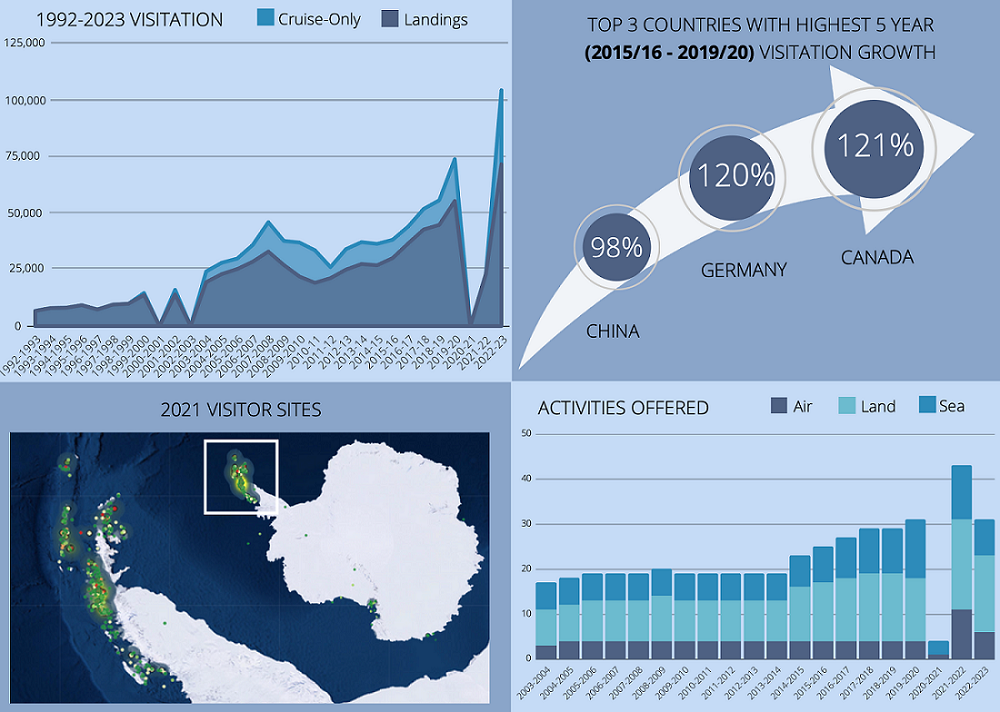
Considered the largest desert in the world, tourism in Antarctica grew 40 per cent, with expected numbers crossing 100,000 visitors between October 2023 and March 2024, according to the International Association of Antarctic Operators (IAATTO). This spike has ignited calls for more stringent management questions on the extent and necessity of the mushrooming tourism industry in Antarctica. An effort to mitigate unnecessary travel to Antarctica could soon be in the pipeline, so the rush has increased to be amongst the lucky few who have ventured into the frozen wastes, albeit in five-star luxury! What a change from the daring polar explorers of the early 19th century who walked or skied thousands of miles over the perpetual ice cap to reach the South Pole, a race that claimed many lives.
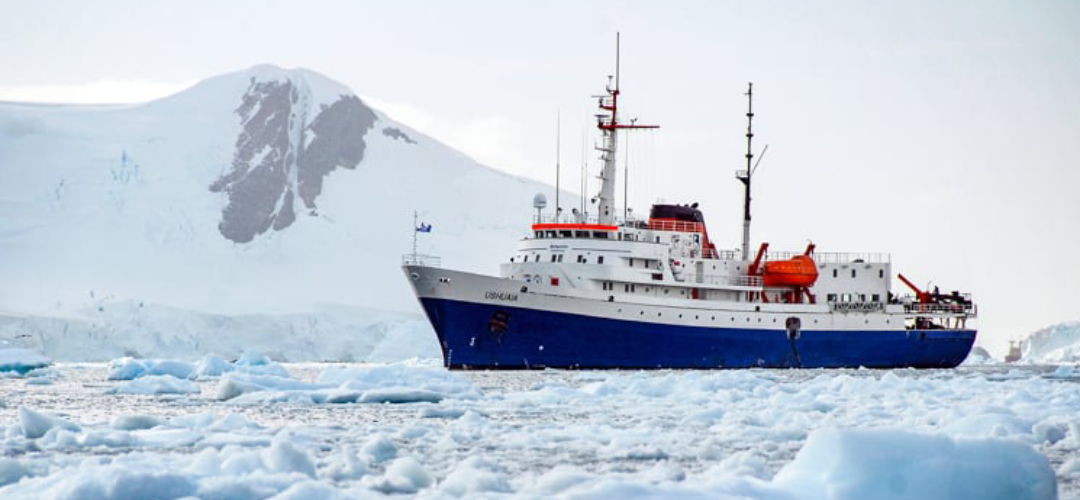
The IAATTO has a fleet of 95 vessels, with 21 yachts enabling ultra-luxury travels to the ‘last frontier’. The heightened demand has introduced competition and new activities by travel agencies, including penguin and seal colonies sightseeing on zodiac inflatables. “The impact and footprint are quite enormous’ infers Dr Daniela Liggett, Associate Professor at the University of Canterbury in New Zealand, specialising in Antarctic politics, management and tourism.
Since 1992, tourism in the Antarctic has led to significant ecological repercussions. The lack of regulations to safeguard the fragile ecosystem has resulted in habitat damage and wildlife discrepancies. This rampant, unchecked expansion is akin to a delicate glass sculpture being handled by too many hands; each change, though well-intentioned, risks shattering the sculpture. Although universally accepted as a global common, Antarctica is the modern glass sculpture with every nation, risking a loss in biodiversity climate regulations. The advent of privatisation might have adverse reactions concerning climate regulation, highlighting the necessity for proactive, science-based management practices.
India used to have three active research stations in Antarctica-Dakshin Gangotri, Maitri and Bharti- but lost Dakshin Gangotri due to the melting ice cap. In the 46th Antarctic Treaty Consultative Meeting (ATCM) held at Kochi from May 20 to 30, India announced that it would build its third base close to the existing Maitri in East Antarctica. This is an attempt by India to enhance its understanding of the East Antarctic ice sheets and its serious conservation efforts in its commitment to advancing polar research. India has introduced proactive measures by establishing responsible tourism practices and fostering collaborative and regulatory mandates to safeguard the icy lands.
Analysis
As Chilean scientist Dr Luis Miguel Pardo emphasises, the love for Antarctica must be balanced with the responsibility to protect its unique biodiversity.
While the allure of frozen icy wilderness might be a thrilling adventure to well-heeled visitors, the environmental burden to accommodate humans in the Antarctic is mounting. Amplified carbon footprints, destruction of pristine sites, and colossal destruction of wildlife, including the vulnerable penguin and seal colonies, are just the beginning of the manifestation of climate change. Tourism is adding more fire to the already rapidly warming region with no signs of reducing. Hence, ensuring the last great wilderness does not melt away is imperative. As a small first step, introducing reduced CO2 emissions vessels is intended to divert and distract. A recent study by Nature Communications indicated that a single tourist contributes to 83 tons of snow being lost due to cruise ship emissions.
Members of the International Association of Antarctic Tour Operators confine themselves to regulations attempting to preserve the delicate balance; recent biosecurity studies indicate a concerning increase of non-native species in certain regions. Antarctic ecologist Dana Bergstrom rings warning bells, inciting an imminent threat of avian flu, risking the local seal and seabird population.
Antarctica’s lack of a unified governing body leaves it in a vulnerable position. In response to these challenges, a government official from the Antarctic Council remarked, “We recognise the urgent need for collaborative efforts to protect Antarctica’s delicate ecosystem while ensuring sustainable tourism. The balance between conservation and exploration is delicate, and concerted action is necessary to preserve this pristine environment for future generations”.
Antarctica equates strategic significance beyond the icy terrain, with around 40 countries laying research foundations in the icy terrain stationed to conduct research. It’s difficult to dismiss the idea of nations not considering Antarctica as a military base for strategic benefit. Professor Klaus Dodd from the Royal Holloway University rightly characterises Antarctica as a critical zone where ecological concerns intersect with strategic and economic interests. Although military activities remain prohibited in pursuit of scientific preservation, the power dynamic continues to shape the future trajectory of Antarctica. The increasing presence of powerful countries like Russia, China, and the USA raises alarming concerns about potential outcomes in the Antarctic. Fortunately, the treaty provides a sturdy framework with secure regulations to be followed by nations, acting as a proverbial shield against reckless exploitation of this fragile ecosystem. Antarctica needs guardians, not ambassadors, to protect its fragile and sacred land. Experts argue that putting it off-limits for humans is not the answer.
The white continent has begun housing geopolitical competitors among stronger nations looking to exploit resources in the region. This is even more worrisome, given that Russia has discovered huge oil and gas reserves in British Antarctic territory, as per the British newspaper The Telegraph. Reportedly, the reserves are as much as 511 billion barrels of oil, ten times the output of North Sea oil fields over the last 50 years!
Assessment
- Antarctica’s tourism should be managed proactively, considering current climate trends and projections. This approach requires cooperation from stakeholders like the tourism industry, researchers, conservation organisations, and especially international governments and multinational bodies.
- Further research is needed to inform policies and implementation, including evaluating visitor sites and activities using the precautionary principle. New safeguards may be needed, including stronger protections within the Antarctic Treaty System.
- Continuous monitoring of tourism impacts is essential, and indicators should reflect wider impacts on biodiversity, wilderness, and ecosystem services.