
ENERGY SUSTAINABILITY
One country cannot achieve energy security by itself. Collective security in the military sense is also true in the energy sector, as well as sustainability.
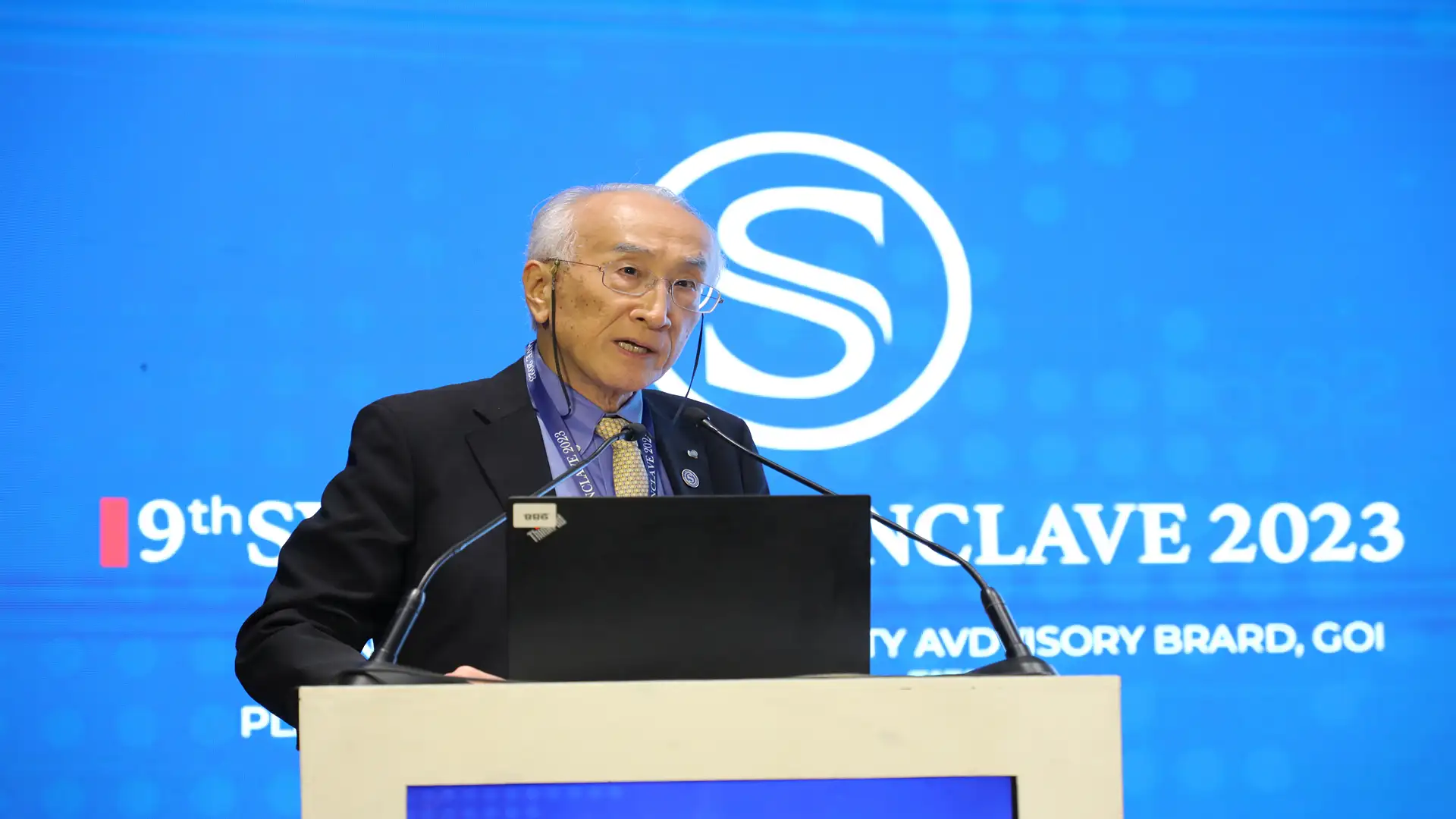
Nobuo Tanaka
A strategic oil stockpile was a key element of energy security when the IEA was created almost five decades back during the first oil crisis. Since then, the release of strategic stockpiles has occurred five times, the last being during the recent crisis created by the war in Ukraine. But now, it is not only oil but also gas, coal, and electricity. And we are facing the global energy crisis again after 50 years. This is the energy market structure that grows much faster than all other markets and in a very diversified way.
Changing Nature of the Energy Market
Oil was a major part of energy in 1973. Now the market has grown much faster in the emerging economies and diversified. The biggest expansion happened in electricity. It moved more than five times as AI and data centres put up enormous demand, which will only increase substantially. The Forecast of energy security suddenly changes accordingly. Henry Kissinger, the founding father of the IEA, wanted China and India as part of the IEA to make the institution a relevant forum for future energy security, climate change and sustainability.
The IEA surprised the oil market with the release of oil stocks last year. Two years ago, it surprised OPEC and oil majors with the Net Zero by 2050 Roadmap publication, saying that no new oil and gas field development would be needed in what can be termed the "IEA shock.” A couple of weeks ago, IEA surprised us again with the New World Energy Outlook 2023. Due to the slowdown of the Chinese economy in the future, their fossil fuel demand will peak sooner than expected, i.e., by 2030.
Expansion of the solar boom could reduce the gas and coal demands if Net Zero happens. Accordingly, this has seen investment in fossil fuels slowing down just as investment in clean energy grows much faster. However, it must be accelerated much, much more to achieve Net Zero by 2050. IEA’s major concern today is that the green technology supply chain is concentrated in a very limited number of countries.
The energy security paradigm will be very different in the Net Zero 2050. The IEA’s Net Zero scenario shows that 47 per cent of the energy trade will be critical minerals and 35 per cent hydrogen by 2050. China controls a major part of the processing and production of batteries, EVs, solar cells and electrolysers. Securing the supply of lithium, cobalt, and copper is already a major concern of G7. Strategic stockpiles may witness the replacement of petroleum by hydrogen strategic stocks, including MCH (Methylcyclohexane (MCH), a hydrogen carrier composed of liquid made by the chemical reaction of hydrogen to toluene).
Winners and Losers
Hydrogen will play a major role. Japan introduced a liquid natural gas supply chain 50 years ago. Now Japan leads, establishing a supply chain for creating green hydrogen by three transportation and storage technologies, namely liquefied hydrogen, MCH and ammonia. The golden age of hydrogen is around the corner.
Japan and Korea are very vulnerable because of importing 100 per cent of oil and gas now and in the future. The United States achieves energy independence by fossil fuel.
Russia seems to be least prepared for this climate shock. Russia lost its status as an energy superpower by the invasion of Ukraine and faces Western sanctions on technology and self-withdrawal of investment, expanding military expenditures and increasing brain drain. These factors may hurt its ability to adapt. Europe may well be a winner by accelerating decarbonisation and de-Russianisation. Hydrogen is a key tool together with renewable energy. EU’s Carbon border measures could force other European countries to share the burden of transformation.
Dr Fatih Birol, the current executive director of the IEA, said that the U.S. Inflation Reduction Act is the single most important energy and climate action by any country since the Paris Accord in 2015.Support for EVs, hydrogen infrastructure, carbon capture and storage are enormous. The U.S. will definitely be a winner.
Another big oil producer, Saudi Arabia, plans to generate green and blue hydrogen to avoid stranded assetisation of its oil and natural gas. China and India will aim at a renewable superpower. How can Japan and Korea survive? Maybe hydrogen and nuclear power.
Another winner is a group of corporations like Big Tech firms who demand that their supply chain be carbon-free by 2030. Sony may move out of Japan to stay in Apple's supply chain; a nation state may be a loser if it does not move quickly enough. The demand-side-driven transformation has come. Hydrogen cost will determine the cost of green steel production.
No Single Winner
One country cannot achieve energy security by itself. Collective security in the military sense is also true in the energy sector, as well as sustainability. The grid connectivity of Europe as an Energy Union is the case; it further strengthens the hydrogen pipeline system. For example, many ideas exist for connecting grid lines between India and its neighbours.
Future investment in energy–intensive industries will likely favour regions with outstanding green electricity and CCS. The U.S., in particular, has great potential in this regard. In Japan, the semiconductor companies and datacentres seek to build their new plants in Kyushu, where solar is abundant and in Hokkaido, where wind is abundant. And Japan's steel industries may be forced to seek their future production sites outside Japan.Nippon Steel is interested in investing in India.
Nuclear to the Rescue?
Many countries have been very positive about nuclear power recently for the sake of security as well as sustainability. Nuclear capacity should be doubled to achieve Net Zero by 2050, especially in developing economies. The cost of reactor construction is an issue. Delays and cost overruns have destroyed Areva, Westinghouse and Toshiba. Building a new reactor is very expensive, but extending the life of a running reactor is competitive relative to solar and wind power for the new build.
Flexible models and small modular reactors will be the choice. It is not the size but the modularity and standardisation that reduces total cost and risk in nuclear technology. There are four additional conditions for nuclear to be sustainable. First, the small modularity with passive safety features. Second, radioactive waste disposal plan. Third, the proliferation of registrants and the final point – the socio-political acceptability and sustainability in the locality.One of the models that satisfies all these conditions is an integral fast reactor of the Idaho National Laboratory of the United States.
The Dark Side of Nuclear
Sadly, nuclear power cannot be separated from the issue of the weapon.Continuous geopolitical mistakes by political leaders have increased proliferation risk. We are in the middle of a nuclear crisis.
President Obama's Libyan invasion and President Trump's rejection of the JCPOA with Iran and handshake with Kim Jong UN convinced North Korea to develop and hold nuclear weapons. President Putin is threatening the world with the use of tactical nuclear weapons in Ukraine. In the Gaza war, there have been references to nuclear weapons from Israel’s side by some ministers in the government.
Japan, the USA and South Korean leaders who met recently at Camp David should work together on a sustainable and peaceful nuclear reactor system as well as the issue of the North Korean nuclear threat. These countries can also cooperate to develop nuclear propulsion submarines– a Northeast Asian version of AUKUS. Japan needs a nuclear submarine to deploy tomahawks.
While Japan is not interested in building nuclear weapons, 50 countries in the world may potentially build weapons, although only nine of them have them right now. Japan and Korea should join the nuclear weapon ban treaty to renounce the weapon; India should also join this league by giving up nuclear weapons.
Nuclear weapon states monopolise the Permanent seats of the UN Security Council; non-weapon states must be given a prominent role in the United Nations.
Yuvak Noah Harari, author of The Sapiens, has called for political leaders with global identity to address the challenges of the current situation. The three challenges he mentions are nuclear war, ecological crisis and tech destruction by algorithms.
Women and the younger generation have a major role in addressing different challenges. Women can play a much larger role in peacebuilding than even the UN; in the pandemic, women leaders did a better job than their male counterparts. There is a positive correlation between climate change mitigation and women's participation.