
BIMSTEC Plus represents not only an economic framework but a celebration of our cultural heritage.
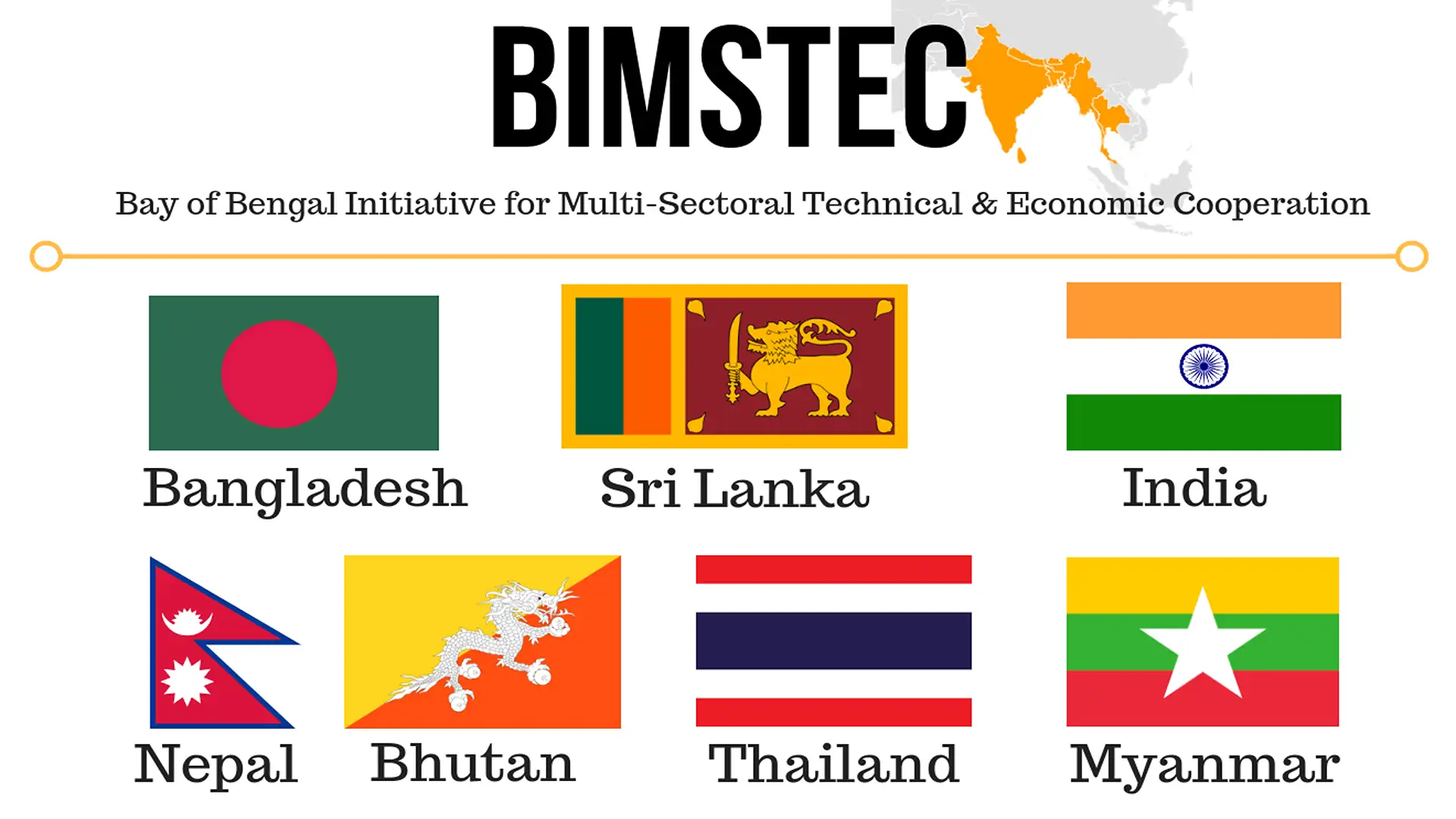
The Bay of Bengal Initiative for Multi-Sectoral Technical and Economic Cooperation (BIMSTEC) is a regional organisation established on 06 June 1997 with the signing of the Bangkok Declaration. Initially known as BIST-EC (Bangladesh-India-Sri Lanka-Thailand Economic Cooperation), the organisation is now known as BIMSTEC and comprises seven Member States, with the admission of Myanmar on 22 December 1997 and Bhutan and Nepal in February 2004.
BIMSTEC stands as a bridge between South and Southeast Asia, representing a confluence of diverse cultures, economies and ecosystems. Members states include Bangladesh, Bhutan, Nepal, India, Sri Lanka, and Thailand, share not only geographical proximity but also historical linkage, deep-rooted values, spiritual connections and a commitment for collaboration in today's world. These shared cultures and values are important for sustainable and inclusive regional development through economic integration by the BIMSTEC Plus.
Decoding BIMSTEC Plus
Culture is a catalyst for integration. At its core, BIMSTEC Plus represents not only an economic framework but a celebration of our cultural heritage. This potential was firmly identified as an arena for cooperation during the inaugural BIMISTEC summit of July 2004.
Civilisation within the Bay of Bengal region has been interconnected for centuries through exchanging goods, people, services, and ideas. From the Buddhist spiritual networks to the ancient maritime circles, our ancestors laid the foundation of regional connectivity long before modern trade agreements existed. These historical ties provide the cultural foundation upon which economic and political cooperation can flourish in the days to come.
Cultural values such as language, cuisine, festivals, and art present vast opportunities for regional tourism, creative industries and cross-border collaborations in media and education. By leveraging these traditions, we can foster people-to-people connections, self-power diplomacy and the development of regional identity, which strengthens economic ties.
Through BIMSTEC, South and Southeast Asia are bridging their diverse cultural, economic, and ecological landscapes, creating a dynamic and integrated regional framework. This collaborative approach reflects the shared vision of fostering peace, stability, and prosperity in the region, paving the way for a more interconnected and resilient future.
Unlocking the Power of Mutual Cooperation
The rich diversity of language, arts, crafts and traditions offer a foundation for multidimensional cooperation that transcends borders and political differences. Similarly, tourism was identified as a key area of cooperation.
By coordinating efforts to promote tourism, we can further tap into the region's cultural assets, increasing regional mobility and boosting local economies. These initiatives deepen cultural ties and promote economic integration by stimulating sectors like tourism, hospitality, and creative economy, laying the groundwork for sustainable and inclusive regional development. Next is the vision for a sustainable and inclusive future.
While culture forms the backbone of the cooperation, the future depends on economic integration that is both sustainable and inclusive. The challenges of the 21st century, such as climate change, technological disruption, and growing inequality, require reimagining how we work together for mutual benefit. We must focus on building economies that not only grow but also uplift all sections of society.
Women, young people, and marginalised communities should be central to our regional development strategies. By integrating them into the economic fold, we create resilient economies that thrive on diversity and inclusivity, economic integration, pathways, and priorities under the BIMSTEC.
Economic integration in BIMSTEC offers transformative potential. The region collectively represents 1.5 billion people and a combined GDP exceeding $40 trillion. To harness this, we must prioritise infrastructure development as number one.Infrastructure development, efficient and sustainable transport and digital infrastructure are key to unlocking intra-regional trade and investment. Asian highways, inland waterways, and the Bangladesh, India, Bhutan, and Nepal initiatives (BBIN) can significantly enhance regional mobility in the days to come and facilitate the smooth movement of goods and people in the region. These networks will boost trade and integrate supply chains across borders, enabling economic growth in the underdeveloped areas in the BIMSTEC regions.
Additionally, energy connectivity, particularly through renewable sources, should be central to the agenda, ensuring that economic growth is environmentally sustainable.Nepal supplies around 400 megawatts of power to Indiaand will soon supply 40 megawatts of power to Bangladesh. This is one example of developing countries starting to improve in the energy export market to India and Bangladesh. Nepal and Bangladesh had signed a 10,000-megawatt electricity purchase agreement for the next ten years.
While such deals are a testament to the bilateral partnership, it must be expanded beyond bilateral. Tomorrow, it may be possible to supply Nepal's power to Sri Lanka through the cable link, which India is currently developing. Stimulating cross-border procedures, enhancing regional supply chains, and encouraging investment in key sectors like agriculture, technology, and manufacturing are critical for building a cohesive regional economic network.
The Digital Economy Landscape
The digital economy has immense potential to transform trade, investment, and tourism. By fostering digital platforms for commerce, e-governance, and cross-border payments, we can simplify business processes, enhance regional connectivity, empower small and medium-sized enterprises. Digital tourism portals, virtual trade fairs, regional fintech ecosystems can provide the backbone for more seamless trade, investment, and travel across the BIMSTEC nations.
Nepalese will have the chance to pay through QR code in India in the next two or three months. Indians have already started paying through QR code in Nepal since the first of March. This is a good example of the bilateral digital economy system.
Another very important thing that is lacking is skill development and innovation. Investing in education, skills, and innovation is crucial for creating a competitive regional workforce that can adapt to the challenges of the global economy, particularly in digital technologies, green energy, and healthcare systems.
By promoting tourism and regional tourism, we boost local economies and foster greater cultural understanding and cohesion. To facilitate this, we need e-visas and online facilitation to harness the full potential of our cultural heritage.
Confronting Climate Change
Sustainability must be at the core of regional development strategies. BIMSTEC nations can work together to promote sustainable practices across key sectors. For instance, smart farming techniques and precision agriculture can optimise resource use and increase productivity while minimising environmental impact. In the energy sector, a shift towards renewable energy sources, such as solar, wind, and hydropower, can reduce reliance on fossil fuels and lower greenhouse gas emissions.
Addressing climate change as a shared responsibility is paramount. The Bay of Bengal is highly vulnerable to rising sea levels, extreme weather events, and ecosystem degradation. We must adopt collective strategies to mitigate these high risks as a region.
BIMSTEC nations can lead in green technologies, disaster resilience, and sustainable practices. We can strengthen cooperation in fields like climate, smart agriculture, renewable energy, and marine conservation to ensure that development does not come at the cost of our environment. National policies must be aligned with international climate agreements and set ambitious emission reduction targets.
Reaching Out Extra regionally
The BIMISTEC plus vision looks beyond current geographical boundaries, aiming to forge partnership with other regional organisations like ASEAN, SAARC, and the Indian Ocean Rim Association (IORA). This approach allows us to build wider economic corridors, facilitating trade with other important global economies.
Such multi-layered cooperation will help us collectively face global uncertainties while staying committed to our prosperity, sustainability, and inclusivity goals. It is essential to remember that economic integration is not merely about numbers, trades, investments, or growth statistics. It is about building a future where the aspirations of every citizen, from the remotest place to the busiest metropolitan cities, are realised.
Prosperity, sustainability, and inclusivity goals are not just aspirational; they are actionable commitments that drive the region’s development agenda. Prosperity involves creating economic opportunities and improving living standards for all citizens. Sustainability ensures that development does not come at the expense of the environment or future generations. Inclusivity guarantees that the benefits of growth are shared equitably, addressing the needs of both remote communities and urban centres.
The path to growth and prosperity is dynamic. It requires a balanced approach considering all member states' unique needs and contributions.
The journey towards a prosperous and sustainable future within the BIMSTEC region is about more than economic metrics. It is about creating a future where every citizen, from the remotest village to the bustling city, can achieve their dreams and contribute to the region’s collective success. This vision of comprehensive and inclusive growth is essential for building a resilient and equitable society in today’s interconnected world.
|
“We need to build a future where no one is left behind in the development process. So BIMSTEC tech plus, drawing on our culture, values, and futures, offers us the blueprint for social progress and environmental state worship. In this endeavour, I believe we have both the will and the capacity to transfer our vision into reality”. |