
ASIA 2035: ASIAN POWER GAMES
For China to define the Asian century, domination over Asia is essential.
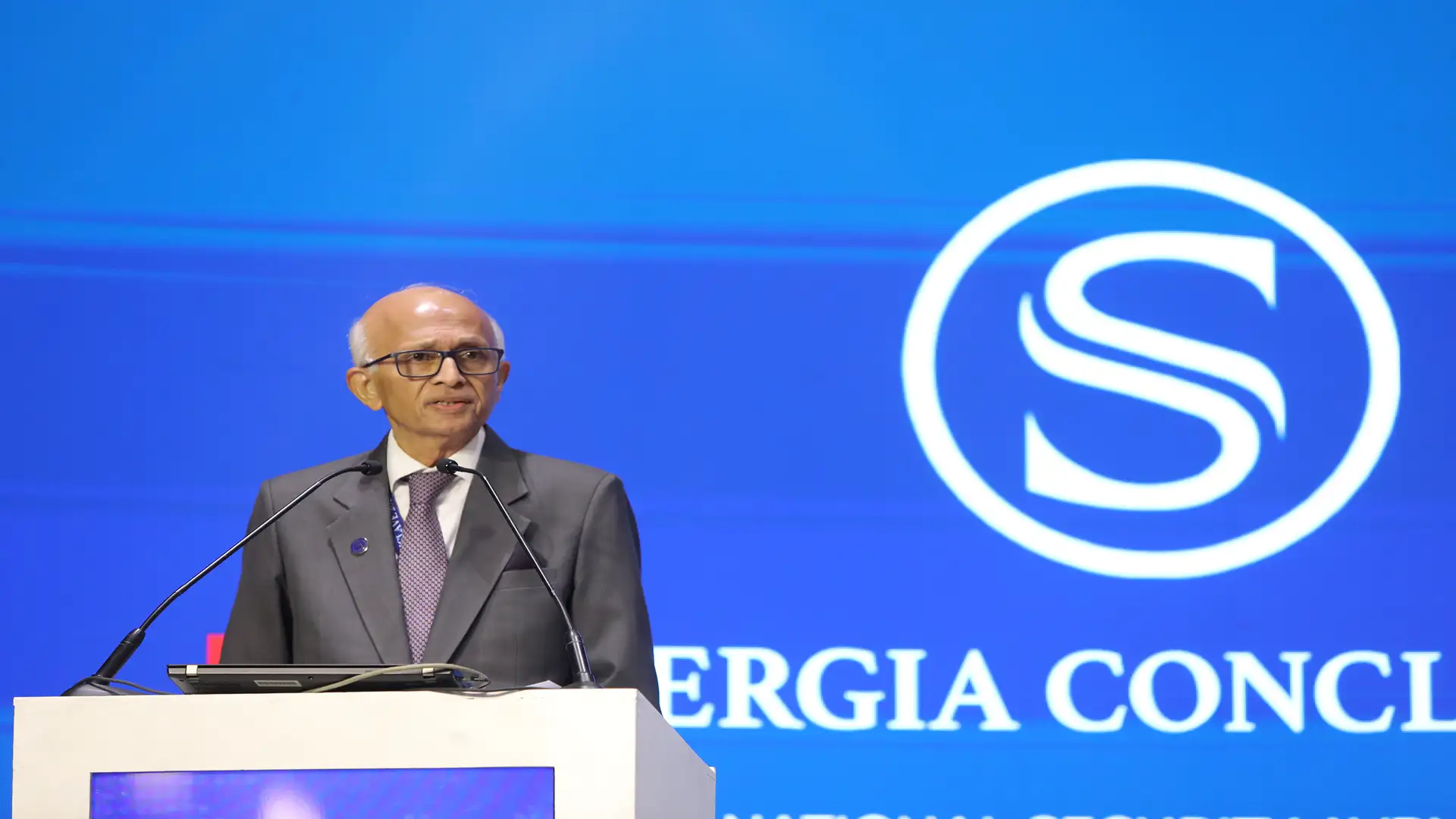
Ambassador Ranjan Mathai, former Foreign Secretary of India
Historically, there is little evidence of Asians having a geopolitical concept of Asia, such as Europe and America, for their continental regions. East Asia, Southeast Asia, South Asia, Central Asia, and West Asia were different geopolitical theatres, sometimes overlapping. Sometimes, there were conquests between one and the other, but there was never one single overarching connection.Henry Kissinger, in his book on World Order, even claims that until the arrival of modern Western powers, no Asian language had a word for Asia.
The popular use of the term Asian Century is recent and speaks of China vs Asia even though many other parts of Asia have risen rapidly in the World Economic Order for decades– Japan, Korea, and Southeast Asia.
Constituents of Great Power
In the 1970s, the Shah of Iran envisaged his country emerging as the fifth economic power in the world in the next two decades. We know what happened to that. World-beating economic growth is not enough to become the driver of a century. This comes with the potential to alter power distribution worldwide, as we saw in Europe in the 19th or the U.S. in the 20th century.
It involves comprehensive national power, military technology industry, global diplomatic leadership, global trading and preponderance in soft power, and a leading role in the institutional structures of world order and rule-making. All of this rests on one key foundation: the economy. The phenomenal growth of China from the 1990s and joined on a lesser scale from India in the 2000s made the expression Asian Century a projection that entered the popular lexicon by around 2010.
China's role in reviving world growth after the 2008 financial crisis in the West, its technological and military strength, and the thrust of its Belt and Road Initiative have now made the talk of an Asian century essentially one of a Chinese century with other actors playing lesser roles.
The Caveats
We in India have different ideas. There are too many unknowns, including some known unknowns, some which will come along, and some unknown unknowns. The biggest known unknownis the direction of internal politics within some of the major actors because of the extent of polarisation among all the Asian countries, the United States, and Europe.
To identify the key actors in Asia, the ADB did a 2011 study realizing the Asian century2050, and they listed seven- China, Japan, Korea, RoK, India, Indonesia, Malaysia, and Thailand. Iran, Saudi Arabia, and Turkey could also be added to this list. Now, Vietnam and the Philippines, or maybe ASEAN as a whole. Russia, Australia, and the US will be key actors in the Asian trajectory. Russia, Australia, and France, for that matter, are physically present in Asia, and the U.S. is getting entrenched in the island chains of the Asia-Pacific.
Asia continues to be one of the world's fastest-growing regions, and the IMF describes the region as a key driver, generating over 66 per cent of global growth at around 4.6 per cent per annum. The post-pandemic recovery has been generally impressive, though some questions have recently arisen about statistical data on growth rates, particularly the growth rates from China.
China
Since about 2015, through the pandemic and after, it appeared that China's rise to global supremacy was just a matter of time. Since 2022, Chinese growth has slowed. It now seems stuck in a property-related slump. The high U.S. interest rates are weakening its currency, but at the same time, the trade and tariff problems it is encountering have not increased, but they have slashed its usual trade surpluses. The People's Bank of China has tools to stop the currency slide, but raising interest rates to match the Fed would exacerbate problems in the housing sector as well as its debt repayment.
Exports, infrastructure investment, local government expenditure and state-owned enterprises have powered China's phenomenal growth till now. All four are facing serious headwinds, and household consumption, which could have compensated remains stuck below 40 per cent of GDP as against 50 to 60 in most other Asian major actors. Despite attempts at stimulus, household debt remains a serious problem.
One known unknown is whether China's surge in advanced technology despite the U.S. efforts to stall it and green technology will spur a wave of new growth. It is uncertain at this point. The U.K.'s hosting of the first really big conference on artificial intelligence suggests that while there is a lot of technology in China, the West is still trying to lead the rule-making process.
Some recent data suggest that the Yuan is enlarging its role in global trade payments and international finance. It is presently the most active for global payments, but it is only 3.7 per cent of the total in the world, according to SWIFT data.It is only the fifth largest among the currency reserves held globally. Will this continue to grow till 2035, given that the current dilemmas of the Chinese policymakers have already led to capital controls and capital flight? Chinese citizens can take only $50,000 abroad. It's a known unknown.
Has the Belt and Road Initiative achieved by 2023 what it set out to do? That is the transformation of both land-based and sea-based routes. It seemed to be geoeconomically and geopolitically transformative at one stage. China is emerging as the world's largest creditor for development. Still, recent trends suggest that BRI debt management is done with rollovers rather than repayment as creditors fail to profit from the investments.
China runs surpluses selling consumer, manufactured and infrastructure goods and buying largely commodities and other items that feed back into its own export machine. This leads developing countries to be largely tied to other markets. Take Sri Lanka for an example. It was being stated how China has overtaken India as the largest exporter to Sri Lanka. But where does Sri Lanka sell? It sells to the E.U., India, and the U.S; China ranks way down. So, when these countries want to make friends to sell, they must return to the West. The most recent US-China Leaders’ Summitsuggests that the 2024 elections in the U.S. could be a major factor in determining China’s trajectory till 2035.
There is increasing consensus in the U.S. on treating China as a strategic competitor, but there are differences over the extent to which trade and financial decoupling should proceed. BRI was the first attempt to dominate what the geopoliticians call the world island, Eurasia, as a whole. And that is not going to happen without serious competition.
Other Major Asian Players
Japan is growing slowly, but it has growth nevertheless, and it remains a global trading power. It is now investing in initiatives rivalling the Belt and Road Initiative. It still holds huge external reserves. It's at the cutting edge of many new transformative technologies. And now it is developing massive deterrent missile forces, though it remains demographically negative.
India's growth is expected to remain steady at around 6 to 7 per cent, so it should overtake Germany and Japan to emerge as the third-largest economy well before 2035.India has demonstrated the potential to play a greater role in international finance; bailing out Sri Lanka is a great example. But its flip-flops on trade policy are not helping it expand its influence. The rupee is still not a player abroad. And energy remains like a ball and chain hobbling its growth. Yet, it has demonstrated a strategic economy. Another known unknown is whether the 2024 elections in India will impact its trajectory.
Politico-military
The status of Asia in 2023 is believed to be encouraging as Europe and the Levant are bogged down in Asia's actual war, while the rest of Asia is not. However, military expenditures remain very high, including in ASEAN. There are tensions on the Taiwan Straits, in the South China Seas and Northeast Asia. The standoff between India and China in Ladakh continues. And in all these situations, the central actor is China. Then there is Pakistan, domestically turbulent but still sponsoring terrorism. Their border with Afghanistan is also volatile, and there are too many unknown unknowns in the trajectory of India’s Western borders.
The possibility of Iran getting into a conflict with Israel persists. The trajectory of Iran-U.S.-Israel relations is the biggest unknown because of oil. Oil and gas will in 2035 still be the dominant energy sources for Asia, and a crisis in the Gulf could derail energy management and trade balances across Asia, just as the 1973 oil shock slowed down Europe. Today, four top oil importers are Asian– China, India, Japan, and South Korea. All five top LNG importers till last year were Asian – Japan, China, India, South Korea and Taiwan. The U.S. is sitting pretty in this situation as the world’s largest oil and gas producer.
Amongst the forecast of drivers and factors, one is political change. Will China’s political direction remain as it is? One simple signal. The sentiments expressed over the death of Li Keqiang, the former premier, had shades of mourning when Prime Minister Zhou Enlai died. It reflected public grief for an era of greater growth and possibility. Does it mean something? Can growth in Asia continue on the same path, given that the financial situation in the world is changing?
Military-industrial complexesare growing rapidly in all the key countries and will be one factor. However, not one Asian country has successfully designed a jet engine, whether commercial or military.
Some Scenarios
2035 will not mark the milestone of the Asian century. For China to define the Asian century, domination over Asia is essential.Historically, China never had domination except for East and parts of Southeast Asia. Apart from that, Japan, Korea, India, Iran, as well as Vietnam, Philippines, Indonesia, etc., will not go along with a Chinese-dominated order. The U.S. is also not standing still and is determined to retain global preponderance in Asia.
The best-case scenario–the Chinese trajectory gets redefined either through internal change or by coexisting with the U.S. for a free and open Indo-Pacific, the Quad and a cold peace.
The most likely scenario– China does not change course but reaches some temporary modus vivendi with the U.S.Japan, Korea and Australia remain closely tied to the U.S. ASEAN's hedging strategy continues. The growth of India, Indonesia, and Vietnam proceeds in a way that makes Chinese dominance less likely, though China will have the largest weight in Asia.
We have several Black Swans – Taiwan, another war in the Gulf, the PLA deciding to push India around, North Korea out of control, another pandemic, etc.
Recommendations for India
Economy, economy, economy! Domestic first and regional integrations.
Get other Asians to push for United Nations Security Council reform, provided the UNSC
remains
relevant.
India need to build Asian dialogues, leading to institutional structures like Europe was able to build with the Organization of Security and Cooperation in Europe once detente started.