
ANOTHER KIND OF LOCKDOWN?
Social media's evolution introduces new complexities for both platform operators and users.
It requires a special kind of courage to challenge Elon Musk, the world’s richest man and owner of X, a social media platform often serving as his personal outlet. Alexandre de Moraes, the judge who ordered X to be blocked in Brazil on August 30th, definitely possesses this. His bold action has stirred up a veritable hornet’s nest with Musk going so far as calling him ‘Darth Vader’ and sharing an AI-generated image of the judge behind bars.
Social Media Under Attack
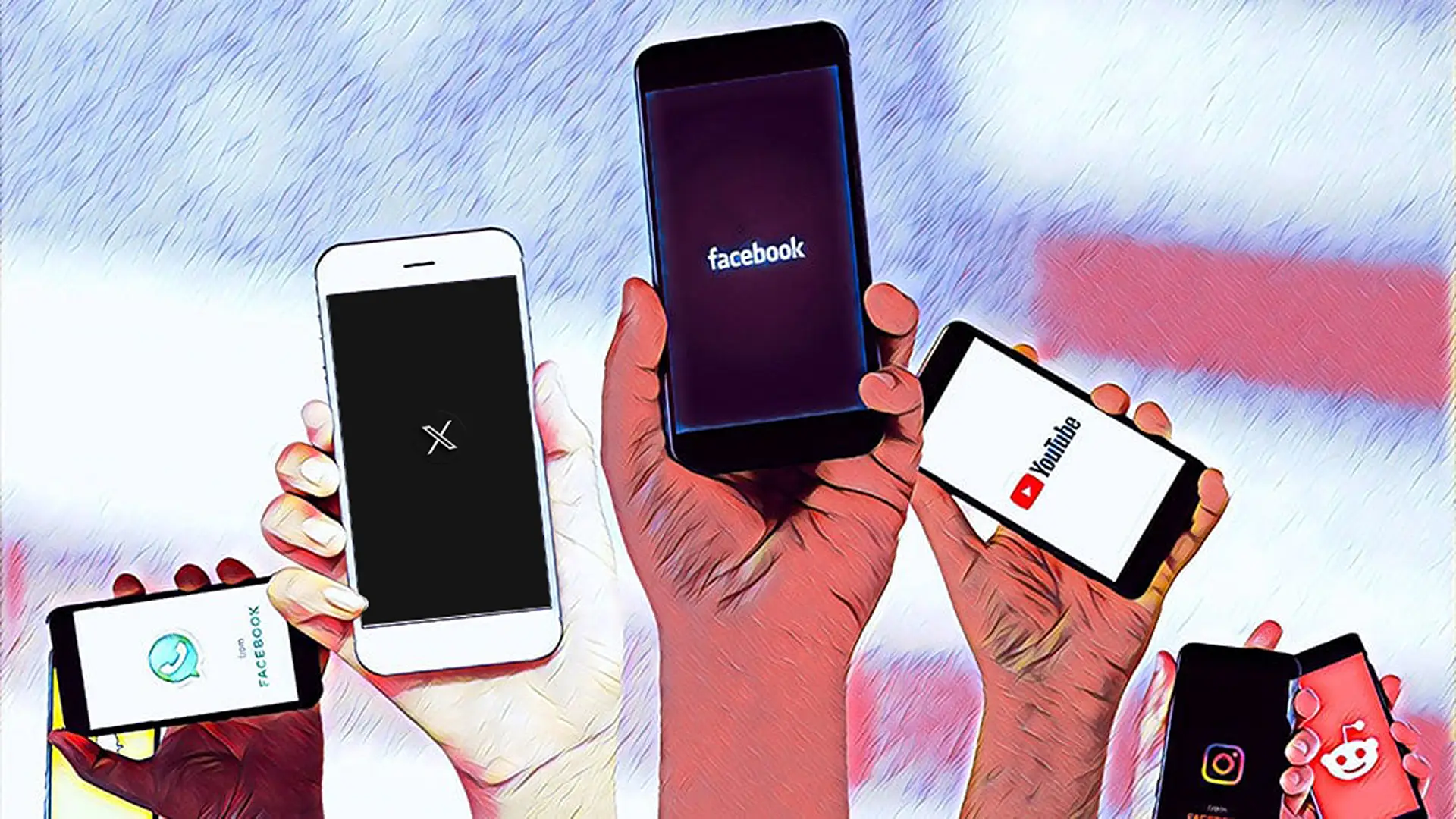
As Facebook celebrates its 20th anniversary, social media platforms undergo significant transformations. Despite ongoing controversies, Facebook remains highly profitable, with its parent company, Meta, valued at $1.2 trillion. However, social media is shifting away from personal interactions toward content consumption driven by algorithms, resembling a form of hyperactive television.
Social media, which occupies nearly half of mobile screen time, is becoming less focused on social connections. Inspired by TikTok, platforms now prioritize videos selected by algorithms based on user behaviour rather than posts from friends. Public discourse increasingly moves to closed platforms like WhatsApp and Telegram, where content is largely unmoderated.
While this transition reduces sensationalism in smaller, private groups and may benefit users' mental health, it presents challenges. Open networks, which once facilitated public debate, are losing relevance as users post less frequently. Algorithms now promote content that garners the most engagement, often rewarding provocative material. Additionally, there is a decline in news consumption, with entertainment dominating user feeds, raising concerns about the public's access to information.
Although some argue that governance improvements or changes in platform design could address these issues, these challenges are deeply rooted in the nature of human communication. As platforms shift towards private groups, oversight diminishes, while open networks expose users to more extreme content. Furthermore, as users prioritize entertainment, the availability of news continues to decline.
Brazilian Episode
The ban on X reflects Brazil’s stringent speech laws but also fitsJustice Moraes' pattern of making controversial decisions. In polarized Brazil, liberals once hailed him for standing up to former president Jair Bolsonaro, but now some fear he is overstepping his judicial powers.Moraes, a former prosecutor and known for his aggressive pursuit of high-profile cases, was appointed to the Supreme Court in 2017 by conservative President Michel Temer, not by a liberal figure. He had previously dealt with a hacker attempting to extort Temer's wife.The block on X is Moraes’ most high-profile move, coming after Musk refused to comply with orders to remove certain accounts as part of an investigation into misinformation. Instead, Musk closed X’s local office, rendering the platform inoperable without a legal representative in Brazil, a rare stance for a reputable company.
Moraes’ reaction seems disproportionate. He threatened fines for users accessing X through virtual private networks (VPNs) and froze Starlink’s Brazilian bank accounts, supposedly to collect fines owed by X.This severe approach is partly driven by Brazil’s interventionist speech laws, which now police “crimes against democracy” and “crimes against honour,” even in private messages. A panel of five judges recently upheld Moraes' rulings with minor modifications.
Moraes’ most notable confrontation was with Bolsonaro, whom he opposed during the pandemic and subsequent elections when Bolsonaro spread lies about voting fraud. In 2023, an electoral tribunal led by Moraes barred Bolsonaro from running for office for eight years.
Some of Moraes’ actions have drawn criticism for being authoritarian. He initiated a contentious investigation into misinformation targeting the Supreme Court and expanded it into “digital militias.” In 2019, he controversially ordered an article taken down, reversing the decision only after public backlash. More recently, he ordered raids and account freezes over loose private discussions in WhatsApp groups.
Moraes’ bravery in the face of threats is unquestionable, but his crusade may be losing public support. By May 2023, approval ratings for the Supreme Court had dropped significantly, with criticism growing. His order to remove X from app stores was quickly reversed after public outcry, signalling rising resistance.
Some legal experts have called Moraes' decisions extreme, such as freezing Starlink’s assets, which affects many in remote areas. His actions may inadvertently galvanize the very elements he seeks to suppress.
The Case of Communist China
In China, most citizens rely on social media platforms for news, and the Communist Party closely monitors this trend. Platforms like Douyin (the domestic version of TikTok), Weibo, and WeChat have replaced banned American sites such as Facebook, X, and YouTube. According to a 2022 survey, 46 per cent of Chinese obtain their news from short-video apps like Douyin, while a significant portion turn to platforms like Weibo and WeChat, which has over 1.3 billion users.
This growing dependence on social media for information presents a complex scenario for the Communist Party. Although the party has long exercised stringent control over information, it has also leveraged these platforms to disseminate its messages. Content deemed subversive is regularly scrubbed, yet officials in Beijing remain as concerned about the influence of social media as their counterparts in Washington.
Initially, social media platforms in China were viewed primarily as engines of economic growth, and their founders were celebrated as entrepreneurial pioneers. However, as these platforms grew in influence, they came under closer scrutiny. In 2020, Chinese regulators intensified oversight, asserting that tech companies had strayed from "socialist core values." Party involvement in the industry has deepened, with state investors acquiring stakes in key subsidiaries of companies like ByteDance, Tencent, and Sina, enabling the government to appoint board members and influence decisions.
While the Biden administration in the United States focuses on tackling misinformation, China’s ruling party seeks to eliminate any content that contradicts its official narrative. The Chinese government spends an estimated $6.6 billion annually on online censorship. In one instance last year, authorities reported deleting 1.4 million social media posts and 67,000 accounts in just two months.
Foreign Interference
While Western democracies are the most vocal about ‘foreign interference’ through social media, it is much less known that authoritarian states are equally under attack of influence operations.
Take the case of China. "All sides strive to spread and amplify their own propaganda while denouncing and suppressing the opposition's by manipulating social media platforms," noted a researcher at China's Academy of Military Science in 2022. These concerns were likely intensified when Reuters recently reported that the CIA had launched a covert operation in 2019 to influence public opinion in China through social media, although its impact appears to have been minimal.
The Chinese government is now doubling down on its control, scrutinizing the algorithms that determine what users see online. Since 2022, companies must register their algorithms with regulators and explain their logic. These algorithms often promote content favourable to the government, with trending topics on platforms like Weibo typically featuring news about President Xi Jinping. A 2020 study by Stanford University found that 57 per cent of trending videos on Douyin were created by government or party-affiliated organizations.
However, algorithms can behave unpredictably, sometimes in ways even their creators cannot fully explain. This unpredictability is unwelcome to the Chinese Communist Party, which prefers greater control over information flow. While the party has largely co-opted social media for its own ends, it likely longs for the era when news was exclusively delivered through state-controlled television and newspapers
The Case for Free Speech
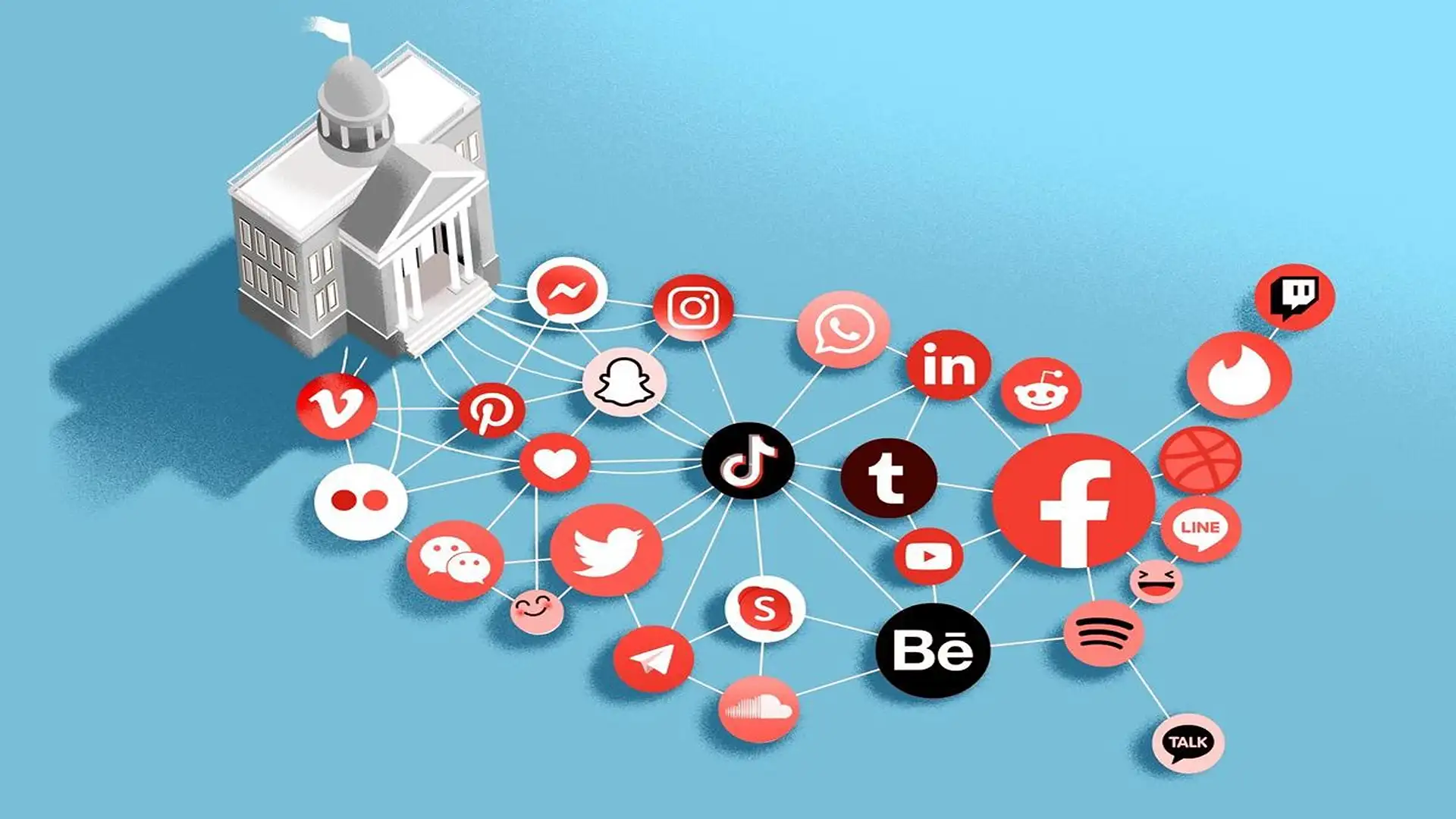
Free expression has become contentious, yet those who should defend it often remain silent. In France, prosecutors have restricted the movement of Telegram's head while investigating the platform. In Britain, social media users are being imprisoned for posts made during recent riots. Meanwhile, in the United States, efforts are to ban TikTok, a popular Chinese-owned app. As governments increase control over online speech, debates over free expression are intensifying.
In some cases, the restrictions are justifiable. France’s investigation into Telegram, a cloud-based messaging app developed by Russian entrepreneur Pavel Durova with 50 per cent more global users than X, centres on its inadequate regulation of illegal content, including material involving child exploitation and drug sales. While Telegram contests the charges, claiming compliance with European digital standards, the case targets clear illegalities.
Similarly, America's stringent stance on TikTok is defensible. With over a billion users, TikTok has disrupted the market, but its ties to Beijing raise concerns about potential manipulation by the Chinese Communist Party, particularly as many users rely on it for news. While individuals have a right to free speech, foreign governments do not, and banning TikTok may be necessary if it cannot cut its ties to China.
However, other cases seek to censor speech that should remain lawful. India, the United Arab Emirates, and others are attempting to weaken encryption, while Malaysia now requires religious posts to be pre-approved by the Department of Islamic Development.
Even wealthy democracies are increasingly resorting to censorship. The European Union is investigating X for spreading misinformation and racism—issues that, while concerning, do not warrant legal intervention. In Britain, while it is appropriate to jail those inciting violence, convicting individuals for merely “grossly offensive” tweets crosses into unjustifiable censorship. Even in the U.S., a country known for its strong free-speech protections, Facebook has accused the White House of pressuring it to remove satirical content about COVID-19.
Disputes over free speech have existed since the advent of print. The principle remains: societies only progress toward truth when individuals can express themselves, even if they are wrong. What is new, however, is that today, the most vocal defenders of free expression are right-wing figures like Elon Musk, while many self-identified liberals celebrate these restrictions as victories against figures like Musk. As free speech became part of the culture war, those who opposed the politics of Musk and his allies grew complacent.
This complacency is dangerous.
Assessment
Restrictions on speech affect all users of online platforms, not just the billionaires who own them. Moreover, freedom of expression is not secure in the hands of inconsistent libertarians like Musk
.
Free expression is a fundamental liberal value, and true liberals must defend it before it is further eroded.
B
etter governance, improved coding, or new business models can address the flaws in social networks. While these solutions may help, the deeper issues stem from inherent trade-offs in human communication. As platforms shift toward private groups, oversight diminishes.
Escaping echo chambers often exposes users to more extreme content, and focusing on entertainment leads to less engagement with news. As social media evolves, operators and users should shift focus from old concerns to addressing these emerging challeng
es.