
AN EYE ON WEST ASIA
The current developments in West Asia require adaptive strategies and collaborativeapproaches.
Lt Gen GAV Reddy
The current geopolitical context of West Asia, commonly also referred to as the Middle East, is characterised by complexity, change and emerging dynamics. Traditional power structures are evolving, and new alliances are forming.
The West Asia's geopolitical landscape is bracing withemerging regional blocs. The Abraham Accords had the potential for forming a "warm peace" between Israel, UAE, and other important West Asian stakeholders, enabling the Indian outreach to seek deeper economic and security integration.
There is a shift in power balance wherein Turkey, Iran and Pakistan act independently and assertively, sometimes with the help of outside powers like Russia and China. The added factor is the perception of reduced U.S. influence in West Asia, which is no longer considered the sole arbiter of the region, and its allies are increasingly looking to build relationships with various external partners.
Strategic Relevance of the Region
At the crossroads of three continents, the West Asian region is a critical transit point for trade and commerce, linking Europe, Asia and Africa. This strategic location also makes it a significant player in global maritime transportation and logistics. The other factors attributing to the strategic relevance of the region are enumerated in succeeding paragraphs.
Global Competition: Major powers like the U.S., Russia, China, and the EU hold regional interests, seeking influence and resource access. This competition intensifies regional dynamics and creates potential for proxy conflicts and alliances.
Rise of Regional Powers: Regional powers like Iran, Saudi Arabia, and Turkey, with their ambitions and agendas, add another layer of complexity to the geopolitical landscape. Their actions and interactions can significantly impact regional and global stability.
Rich Natural Resources: The West Asian region is home to the world's largest oil and natural gas reserves, accounting for about 60 per cent of the world's proven oil reserves and 45 per cent of the world's natural gas reserves. This vast resource wealth gives the region significant economic power and influence on the global energy market.Energy resources make global energy security crucial and influence economic and political dynamics. Rising energy demands further amplify its strategic importance.
Infrastructure: The region is investing heavily in infrastructure development, including transportation, communication, tourism and energy. This investment is improving the region's connectivity and competitiveness, making it a more attractive destination for foreign investment.
ReligiousSignificance: Home to major religious sites for Islam, Christianity, and Judaism, the region holds immense religious significance for billions worldwide. Any instability or conflict here can have deep religious and cultural implications, potentially triggering wider tensions.
Climate Change adds another dimension to the region's strategic relevance, as resource scarcity and environmental challenges can worsen instability and conflict.
Demographic Changes in the West Asian region are rapid, with a young and growing population, which brings both opportunities and challenges for governance, economic development, and social stability.The region has over 60 per cent of the population under 30. This large and youthful population represents a significant human resource potential, which can drive economic growth and innovation if properly harnessed. The young entrepreneurs are driving innovation and creating new businesses. This entrepreneurial spirit is fuelled by a desire for economic opportunity and a willingness to take risks. The political leadership in many of these rising West Asian nations reflects this youthful exuberance.
Political Instability: Ongoing conflicts, civil wars, and political rivalries within the region have created an environment of uncertainty and potential flashpoints. These instabilities are impacting global security and fueling extremism, demanding international intervention.
Regional Hot Spots
These conflicts have significant geopolitical impacts and involve regional and international powers, contributing to widespread instability and violence in the region.
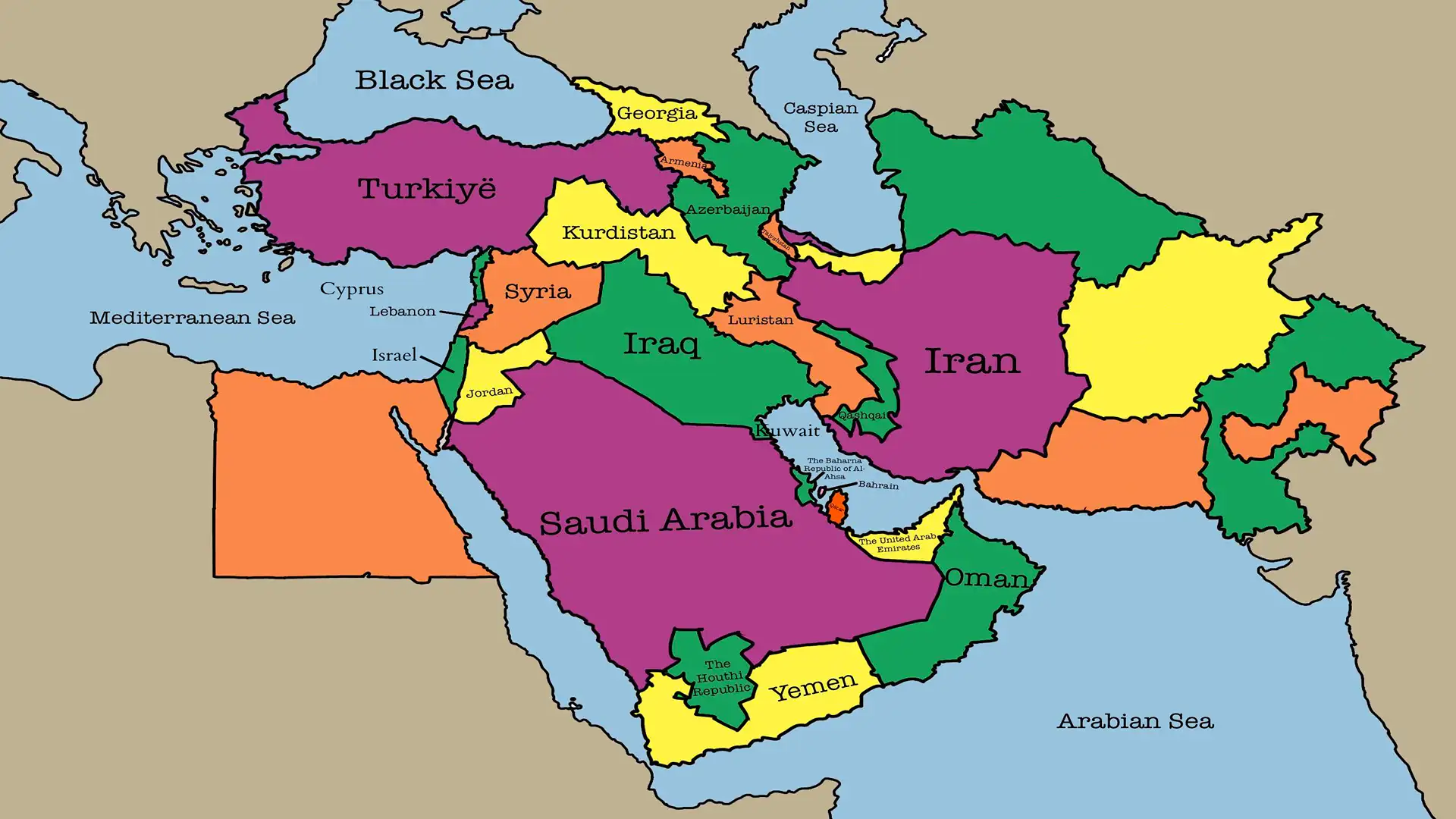
Syria: Multiple internal conflicts involving various armed groups, including the Islamic State (ISIS), Hayat Tahrir al-Sham, and the Kurdish-dominated Syrian Democratic Forces (SDF).
Yemen: A complex civil war involving the internationally recognised government, the Houthi rebels, and external powers such as Saudi Arabia and Iran.
Libya: An ongoing civil war between factions vying for control of the country, with external intervention from regional powers.
Turkey: Continued military operations in northern Iraq and northern Syria, often in response to Kurdish separatist activities
Iraq: Internal conflicts related to ethnic and sectarian divisions and external influences.
Israel and Palestine: Longstanding conflict over land claims and self-determination, with recent tensions surrounding Jerusalem and Gaza.
Kurds: Insurgencies and struggles for autonomy in both Iraq and Syria, led primarily by the Kurdish Workers Party (PKK) and affiliated groups.
What’s Spurring these Conflicts?
Conflicts in the region are multifaceted and interconnected.West Asia is clearly a tumultuous region, and the origins of nearly all the conflicts can be linked to three elements- water, oil and religion. However, historical animosities, ethnic and cultural differences, and external meddling play a significant role.
Water. Water issues have caused environmental and monetary concerns in the Middle East. In Jordan, the cost of water has increased by 30 per cent in the past ten years. The water dilemma is a central cause of quarrels among countries. At the current consumption rate, the Middle East predicts that the United Emirates alone will deplete its water resources in less than 50 years.
Oil. Oil is the life flow of many of the important countries of the region, bringing the populace to unimaginable levels of prosperity and well-being in nations that are carefully nurturing their oil wealth. Since 1973, oil exporters have learned to harness the market forces for energy to their advantage and to influence geopolitics. The control of oil has helped to preserve security and power in the Middle East for decades. Dominance over this non-renewable resource leads to interesting regional power dynamics and competition.
Religion. The Middle East is one of the most religiously diverse regions in the world, besides being home to holy sites for the three main Abrahamic religions — Christianity, Islam and Judaism.This region houses religions including Zoroastrianism, the Druze religion, Buddhism, Yaziti, Samaritanism and the Baha'i faith, among many others. This medley of beliefs can lead to differences in opinion and conflict, often leading to religious disputes in the region.
Historical events such as the 9/11 attacks, the Iraq War, and the Arab Spring uprisings led to the fall of long-established Arab regimes.
Ethnic and cultural differences, competition for water and oil, and religious disputes have been significant factors contributing to the conflicts in the region.
Conflict between Israelis and Palestinians, including rival claims to the area, borders, the status of Jerusalem, refugees, and settlement activities, is also a key source of conflict in the Middle East.
External powers and interests related to oil and geostrategic considerations have further complicated the region's dynamics.
India's Relationship with West Asia
The relationship has evolved significantly, transitioning from a period of ideological alignment to a multifaceted partnership centred on economics, security, culture and diplomacy. It initially focused on solidarity with the Arab World, especially during the decolonisation era and the nonaligned movement.During the Cold War, India maintained a balanced stance, avoiding alignments with the Soviet Union or the United States, instead focusing on developing friendly relations with all West Asian countries.
From the late 20th century, India's economic ties with West Asia grew rapidly, driven by increased trade and investments.In the 1990s, India established strategic partnerships with multiple West Asian countries, including the Gulf Cooperation Council (GCC) members, Iran, and Israel.India has deepened defence cooperation with select West Asian countries, notably Israel and the GCC members, particularly in procuring advanced weapons systems.India relies heavily on West Asia for its energy requirements, importing substantial amounts of crude oil and natural gas. India has actively engaged in regional and international forums to promote peace and stability in West Asia.
India needs to rework and develop a new West Asia-centric strategy to deal with the region, which must be non-transactional. India's relations with Arab states and Israel have warmed significantly in recent years, and the conflicts may require India to perform a balancing act between these partners. The conflict can unsettle India's relations with various West Asia players, potentially impacting its diplomatic advances. The geopolitical consequences may reverberate far, affecting India's geopolitical positioning and engagements in the region.
India is stepping up its military engagement with Arab countries and has a presence in West Asia, indicating a potential impact on its security strategy. The conflict may lead to delays and complications in the India-Middle East-Europe Economic Corridor, affecting the project's execution and outcomes. India's outreach toward the Persian Gulf region has been a defining success, but its domestic politics have presented challenges, which the conflict may further influence.
India –West Asia Cooperation: Opportunities
There are multiple domains of cooperation between India and West Asia to boost sustained relations in the region.These opportunities can help build a more comprehensive and sustainable partnership between India and West Asia, benefiting both economically and strategically. It is important to recognise that realising these opportunities requires sustained effort, political will, mutual trust and respect.
Strategic partnerships: India can establish long-term security cooperation with West Asian countries to promote regional stability and counter common security threats.
Economic cooperation: India and West Asia can strengthen economic ties by increasing trade, investment and joint ventures in energy, infrastructure and technology sectors.
Energy security: India can work with West Asian countries to ensure a stable and affordable oil and gas supply while promoting renewable energy sources.
Defence and Security Ties: India can cooperate closely in the domain of defence industries and capacity-building, including joint exercises, training, and high-level visits. There are possibilities for joint development and production of defence equipment.
Diplomatic engagement: India can engage in constructive diplomatic efforts to promote peace and stability in the region, such as supporting conflict resolution initiatives and participating in regional forums.
Regional connectivity: Developing transport and communication networks can improve connectivity and facilitate trade and tourism between India and West Asia.
Cultural and Social Cooperation: The two countries have a long history of cordial and friendly relations reflecting centuries-old economic and socio-cultural ties. They also cooperate in the domain of cultural and social exchange.
The Way Forward
Proactive initiativespointed towardseconomic integration to create more value beyond energy production and integrate the region with the main global economic engines of Asia, Europe, Africa, and the U.S. needs pursuing now. Efforts to address climate change, create new jobs, and prioritise human rights are needs of the day. Identify underlying grievances and work toward long-term solutions, such as addressing historical injustices, promoting equitable resource distribution, and supporting democratic reforms.
Diplomacyshould take precedenceto find common ground for negotiations in Syria, Yemen and Libya to de-escalate these conflicts that have drawn in regional and global powers while addressing persistent threats from terrorist networks with a global reach. To foster understanding and compromise, encourage direct negotiations among conflicting parties facilitated by neutral third parties.
Engage Iranwith a security strategy with other regional partners to produce lasting results.Even with the revival of the nuclear deal, it is unlikely that the U.S. or its security partners will be able to reach a viable grand bargain with Iran any time soon.
Create a Conducive Environment for Regional Integration with renewed and inclusive diplomacy on the Arab-Israeli front. The U.S. should seize upon the openings provided by recent normalisation agreements between Israel and several Arab countries to improve conditions on the Israeli-Palestinian front, include the Palestinians as central actors and move from the current one-state reality towards a two-state outcome.
Balanced Regional Security Policyis a must with a greater focus on emerging challenges by the U.S. from the current security model of being the unrivalled regional security guarantor in a hub-and-spoke set of bilateral relationships to one of being a regional security integrator, encouraging like-minded countries to build a self-sustaining regional security architecture over the long run.