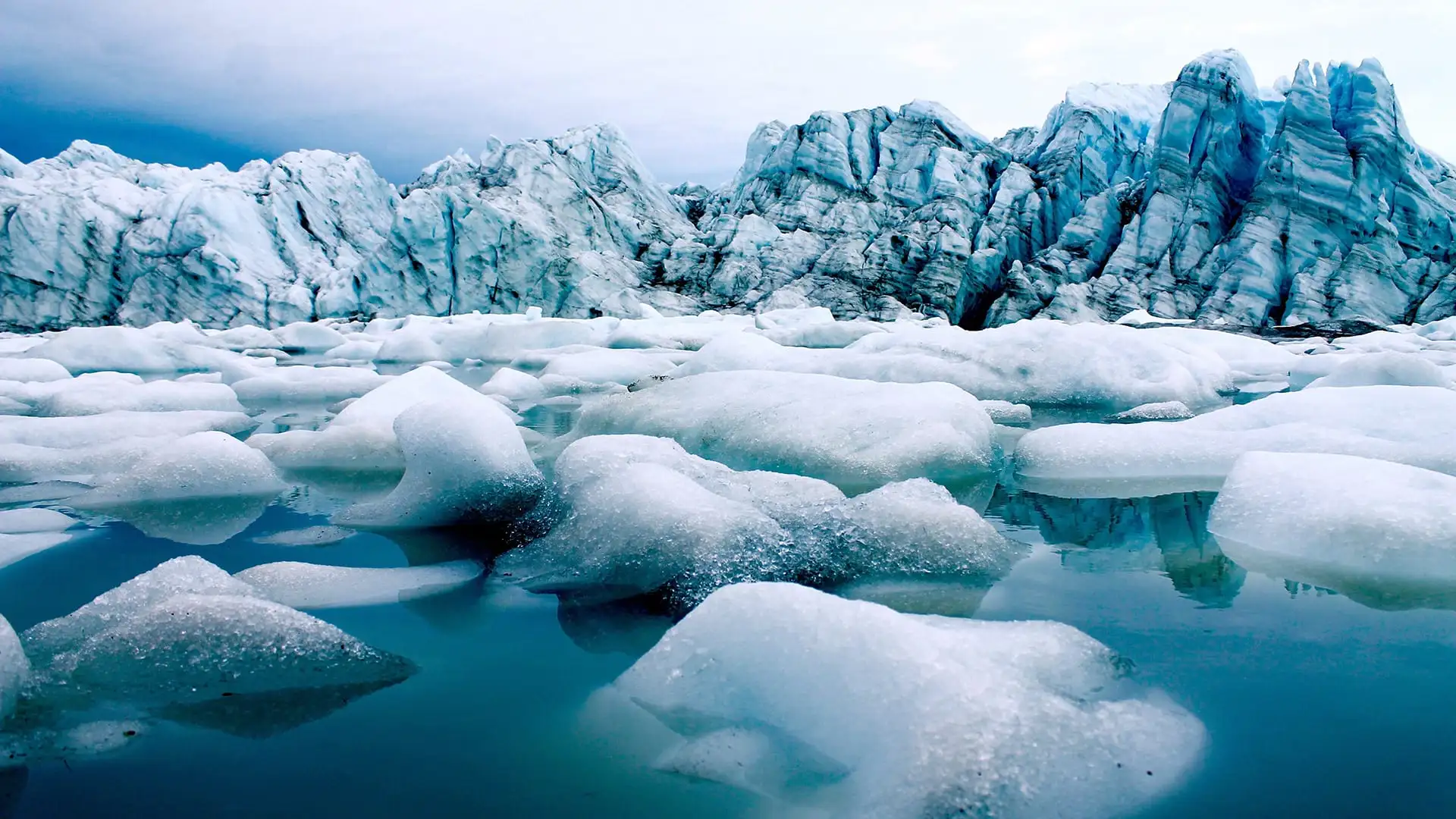

Arctic powering the business of the future
A combination of warming conditions and increased investment in the region has poised the Arctic as the new geopolitical tussle ground.
The Arctic stands out for both its diversity and potential, encompassing developed urban centers, subsistence communities, international educational institutions, and extensive wilderness that has been utilized by its inhabitants for generations. While hunting and fishing have historically been pivotal to the region's economy, the Arctic now hosts significant industrial operations, cutting-edge technology startups, and communities proudly preserving their traditional lifestyles.
The Arctic has transcended its former isolation and is now a integral part of the global economy, actively participating on the international stage. Like the rest of the world, the region is experiencing the impacts of major trends such as changing demographics, urbanization, and climate change. However, the Arctic possesses the tools and capabilities to effectively navigate and address these global trends
Blue economy supports business
The region has a lot of business opportunities to offer including sustainably harvested food to feed a growing world,renewable energy to power up economic development andthe raw materials needed for green transformation.In order to fulfill these ambitions, the Arctic region needs investments in infrastructure.
Infrastructure plays a dual role in the region, serving not only to foster business growth and employment opportunities but also as a crucial component for climate mitigation and security. This is particularly significant in a region where the rate of global warming is four times higher than the global average.
The Arctic Economic Council (AEC) is an independentbusiness membership organisation that facilitatespartnerships, develops policies, and promotes sustainableeconomic development in the Arctic. The members of AECare both Arctic and non-Arctic companies, the smallest areSMEs and entrepreneurs and the largest are multinationalsand other business organisations.
The Arctic Economic Council was created following theArctic Council’s acknowledgment of the key role businessplays in the development of the Arctic.One of the challenges to attract investments to the region isthe lack of awareness by investors of the immenseopportunities combined with some organizations andoutside policy makers wanting to eliminate activity anddevelopment in the name of environmental protection
The AEC is a business forum established to facilitate Arctic business-to-business activities, promote responsible economic development and provide a circumpolar business perspective to the work of the Arctic Council. It has a 42-member board from eight Arctic states and six permanent participant organizations.
The Arctic is a region defined by both its diversity and its opportunity. It is home to developed cities, subsistence communities, international universities, and vast wilderness utilized for millennia by the ancestors of the region’s inhabitants. Hunting and fishing have formed the lynchpin of economic activity for centuries, but in modern times the Arctic is host to major industrial operations, world-class technology start-ups, as well as communities proudly continuing their traditional ways of life.
The Arctic has emerged and is taking its place on the international stage. The region is no longer separated or isolated but is a part of the global economy. The Arctic is feeling the effects of the same megatrends of changing demographics, urbanization and of course climate change, as the rest of the world but it also has the tools to deal with these megatrends.
The Arctic stands out for both its diversity and potential, encompassing developed urban centers, subsistence communities, international educational institutions, and extensive wilderness that has been utilized by its inhabitants for generations. While hunting and fishing have historically been pivotal to the region's economy, the Arctic now hosts significant industrial operations, cutting-edge technology startups, and communities proudly preserving their traditional lifestyles.
The Arctic has transcended its former isolation and is now a integral part of the global economy, actively participating on the international stage. Like the rest of the world, the region is experiencing the impacts of major trends such as changing demographics, urbanization, and climate change. However, the Arctic possesses the tools and capabilities to effectively navigate and address these global trends.
Infrastructure plays a dual role in the region, serving not only to foster business growth and employment opportunities but also as a crucial component for climate mitigation and security. This is particularly significant in a region where the rate of global warming is four times higher than the global average.
Climatic changes in the Arctic region are affecting the business ecosystems of not only Europe and Asia, but also North America. The area has enormous business potential, but its realization requires major investments and viable communications links.
As the Arctic ice melts away, a huge new geopolitical area is being formed on the Earth. From a business perspective, the expectations with regard to the area are at least as high; according to estimates by Guggenheim Partners, around 900 projects are planned in Arctic areas, worth in total approximately a trillion dollars.
The Arctic region offers magnificent business opportunities for building infrastructure, for roads, as well as for the mining and energy industry. The fossil energy resources, oil and gas, as well as renewable energies, enable the creation of different kinds of business operations and models. Therefore, the investments in the area are also significant.
The changing climate in the Arctic is impacting business ecosystems not only in Europe and Asia but also in North America. This region holds vast business potential, but unlocking it necessitates substantial investments and robust communication networks.
As the Arctic ice continues to melt, a substantial new geopolitical landscape is emerging on Earth. Business prospects for the area are equally promising; Guggenheim Partners estimates approximately 900 projects, totaling around a trillion dollars, are in the planning stages for Arctic regions.
The Arctic presents lucrative business opportunities for infrastructure development, road construction, mining, and the energy industry. The abundance of fossil energy resources, including oil and gas, alongside renewable energies, provides a foundation for diverse business operations and models. Consequently, investments in the region hold significant importance.
Investment requirements
Unlocking the immense potential in the Arctic necessitates the establishment of a robust infrastructure that includes roads and energy solutions while respecting the delicate natural ecosystem. A well-functioning infrastructure is essential for enabling both living and working in the region.
Critical to Arctic investments is the provision of secure high-speed internet access. Presently, the area relies on satellite-based internet, which is neither cost-effective nor speedy.
Given the vast size of the region, secure high-speed internet access is a prerequisite for effective communication. In today's market, few industries can operate without network access, and businesses in the Arctic are no exception. The current reliance on satellite-based internet proves to be neither cost-effective nor efficient for transmitting information.
Reliable remote connections are vital not only for diverse employment opportunities but also for offering essential services in remote areas. Online healthcare services, such as doctor appointments, have become feasible, and there is a growing demand for remote training and consultancy services.
Recognizing the importance of connectivity, the Arctic Connect has gained political significance and is on the agenda of the Arctic Council. Supported by Germany, Finland, Sweden, Norway, Russia, Japan, and China, the Ministries of Transport and Communications from these countries have engaged in official-level negotiations. Cinia Oy serves as the driving force behind the initiative, spearheading efforts at the official level and involving commercial entities.
Innovative Businesses in the Arctic
Innovation within the tourism sector showcases some of the most distinctive hotels that integrate seamlessly with the Arctic landscape and nature, such as Igloo Hotel, TreeHotel, and SnowHotel. Credit: TreeHotel. The report "Innovative Businesses in the Arctic: Many Ways to Success," crafted by researchers as part of the Business Index North project, reshapes the conventional image of business opportunities in the Arctic, moving beyond mining, pulp and paper, oil and gas industries, fisheries, and tourism.
Companies in the region leverage unique resources to create value-added products, with drink and food manufacturers emphasizing the natural purity and cleanliness of raw materials sourced from the Arctic. The report spotlights businesses in tourism, high-tech, and the car-testing industry, where the Arctic provides a distinctive setting with its infrastructure, cold climate, and privacy, particularly beneficial for car-testing companies.
Highlighted businesses exhibit environmental expertise and high-quality manufacturing. A new generation of Arctic companies addresses the needs of the aging population by integrating health and IT technologies with the latest research. Examples include Bioactive Bone Substitutes (producer of bioactive bone-graft substitute implants) and Optomed (developer of an eye disease screening device).
Arctic innovation clusters encompass circular and bio-economy, space industry, server technology, car-testing, and smart-construction clusters, among others. Collaborative efforts through these clusters capitalize on access to cold water, snow, biomass, fish, space, darkness, and silence, as well as renewable energy. The Arctic's highly developed technical and knowledge infrastructures, including a space observatory, serve as crucial factors for building successful companies that add value to products and services.
A wave of investment
While the choice of environmentally unfriendly coal for the first freight to traverse the Northwest Passage may seem ironic, this voyage underscores the opening of the region for development due to warming Arctic waters.
The Northwest Passage becomes shorter and more cost-effective during lighter-than-usual ice conditions, with manageable and insurable risks. Owners of vessels like the Nordic Orion recognize the opportunity to carry a 25% larger load while saving USD $80,000 in fuel costs. These factors, along with others, are shaping the Arctic economy with a focus on marine, maritime, and coastal development — known as the "Blue Economy."
Investors foresee over USD $1 trillion heading towards Arctic development in the near future, primarily targeting infrastructure projects such as roads, ports, airports, hotels, housing, hospitals, schools, and more. Guggenheim Partners estimates that over USD $500 billion in infrastructure projects are already in the planning stages.
This combination of warming conditions and increased investment is not only transforming the Arctic physically but also altering humanity's perception of the region. No longer seen as remote and inaccessible, dominated by nature and impenetrable ice, the Arctic is rapidly becoming a destination for tourists, an aquaculture hub, a real estate opportunity, an Internet cable route, a shipping shortcut, and more.
Much of the Arctic's economy, including tourism, is intertwined with its oceans and coasts. Iceland experienced a staggering 400% increase in visitors over the past decade, while Svalbard's tourism doubled over the same period.
The Arctic's Blue Economy sectors, such as Norway's salmon aquaculture industry, are also witnessing significant growth and accompanying challenges. Norway's aquaculture industry in Arctic coastal waters grew by 500% from 1997 to 2016.
At present, the Arctic region contributes 10% of the global oil and 25% of the world's natural gas, primarily derived from onshore deposits. It is estimated to harbor 22% of the yet-to-be-discovered reserves beneath the Arctic Ocean. Discussions on economic development in the Arctic often revolve around these sectors.
Geopolitics play out
Russia's recent announcement to suspend funding to the Arctic Council may not be as alarming as it initially sounds. The Arctic Council's activities heavily rely on in-kind and financial contributions from entities directly involved in specific projects. For instance, the Aleut International Association, Finland, and the United States may contribute to a waste management project, while Iceland, Canada, and the Saami Council might support a gender equality initiative. Each project's expertise and funding come from the participating institutions.
Experts suggest that Russia's decision targets the suspension of annual funding to the Arctic Council Secretariat (ACS), responsible for administrative and communication support. While the ACS will need to make adjustments due to reduced funding, it's worth noting that over 40% of its budget is provided by its host country, Norway, with the remainder shared among the other seven Arctic states.
Russia's reduction in funding by slightly more than 8% of the ACS's annual budget signals a desire for substantial cooperation within the Arctic Council, surpassing symbolic gestures. In contrast to other multilateral institutions with severed ties, this decision underscores a commitment to genuine cooperation.
The Arctic Council stands at a governance crossroads, remaining functional but encountering challenges. Despite efforts to rejuvenate working-level cooperation, progress has been variable. There is an urgent need to enhance effectiveness in addressing critical issues such as climate change, supporting resilient Arctic communities, addressing infrastructure demands, optimizing resource utilization, and managing the growing risk of disasters.
Russia's announcement acts as a wake-up call, emphasizing that the status quo is unsustainable. While the Arctic Council retains the potential to play a central role in circumpolar cooperation, concerted efforts are required to overcome existing challenges and enable effective responses to the urgent issues confronting the region and the world.
Assessment
The Arctic has risen to prominence and is now asserting its presence on the world stage. This region is no longer secluded or isolated; instead, it has become an integral part of the global economy
.
As prospects for commerce expand, the blue economy truly stands out as the b
usiness zone of the future
An inevitable fall out of
this new commerce has been g
eopolitic
al rivalry. Russia has stated its intent as a keen
participant given its geographic proximity. China too has stated its intentions to
get involved in negotiations and business agreements
raising the heat
in
the Arctic climate.