
IMEC: A RELOOK
From India to the Mediterranean, IMEC and beyond.
Veer Puri
02/12/2024
Launched with much fanfare at the G 20 New Delhi Summit held in India last year, the India-Middle East-Europe Economic Corridor (IMEC) project was stymied by the October 7th attack on Israel followed by the massive Israeli offensive into Gaza. However, with so much hope and aspirations riding on it, it is far from dead and behind the scenes, efforts to revive it are continuing.
Why IMEC?
Economic growth and geopolitical stability in our increasingly interconnected world depend heavily on regional connections. Because they allow nations to work together on common objectives like improving infrastructure and increasing trade, these initiatives can open up new avenues for development and collaboration by overcoming regional barriers. In this quest, initiatives like the India-Middle East-Europe Economic Corridor (IMEC) project, spanning three continents, are essential.
To reshape international trade patterns and strengthen economic ties, IMEC intends to construct a web of trade and transportation routes connecting Europe and India via the Middle East. This corridor offers a platform for diplomatic cooperation and cultural exchange between the participating countries in addition to expediting the flow of commodities and services.
This massive corridor aims to improve the distribution of goods and services across numerous regions by connecting them through a system of railroads, roads, and marine linkages. Starting in India and making its way through the Arabian Peninsula to Europe, the route will primarily connect major ports and towns.
The IMEC initiative depends on the participation of several important nations. As part of its larger plan to build an economy worth $10 trillion, India is leading the charge and is spearheading the drive. The United Arab Emirates is a major logistical hub that helps commerce flow by means of its sophisticated infrastructure and accessible location in relation to the IMEC route. Saudi Arabia, which links Europe to the Middle East, is another vital component of the corridor. Although not officially involved with IMEC, Morocco is a valuable asset to the project because of its location and its ability to tap into global value chains, especially in the aerospace and automotive industries. Cooperation between the member nations, each with its own set of advantages, helps to stabilise the regions involved and boost their economies.
According to some estimations, IMEC can increase trade volumes by a big margin and add 9 trillion dollars to global GDP yearly. China's Belt and Road Initiative (BRI) has come under fire for the debt it would impose on the countries that take part in it. IMEC stands in stark contrast to BRI. While both initiatives seek to improve connectivity, IMEC emphasises long-term sustainability and the reciprocal benefit of participating nations. Improving trade efficiency is just one of IMEC's many aims; the organisation also hopes to build a more linked world where economic growth may flourish despite geopolitical obstacles by concentrating on common objectives and regional collaboration.
India's Vision
Initiatives like the India-Middle East-Europe Economic Corridor (IMEC) are vital to India's worldwide strategy, driven by its lofty goal of creating a $10 trillion economy in the next ten years. India, the major economy with the fastest growth rate in the world, is expected to increase its GDP by $6 trillion a year, of which $3 trillion will come from trade. Millions of Indians hope for better prospects and lifestyles, so this economic growth is more than numbers.
The IMEC, which was created to assist India's transition to a $10 trillion economy, is a logical continuation of its economic trajectory. This corridor is an essential infrastructure to support India's expanding trade and is not only a reaction to other international initiatives. The IMEC serves as a crucial conduit between India, the Middle East, and Europe, with a projected $2 trillion of India's trade expected to pass through waterways. India's goal of becoming a responsible global participant and establishing economic links that benefit several regions is embodied in this project.
More than merely a geopolitical measure, connecting the water bodies from the Mediterranean to the Indo-Pacific is about tying together the lives of millions of people from different continents. Consider a student in Alexandria who wants to study in Bangalore or a small company owner in Mumbai whose handcrafted items can now more effectively reach markets in Rome or Athens. Better connectivity makes these dreams more feasible. This sea connection symbolises a bridge connecting civilisations, ideas, and aspirations. It's about imagining a society in which a shopkeeper in Marseille and a fisherman in Kerala are both a part of the same economic fabric, their lives enhanced by the trade of commodities, services, and cultures. In addition to establishing economic lines, India is paving the way for mutual prosperity and understanding in a globalised world by connecting these bodies of water.
UAE: A Hub for Global Trade
As a key player in the India-Middle East-Europe Economic Corridor (IMEC) and other regional projects, the United Arab Emirates (UAE) is positioned at the intersection of international trade.
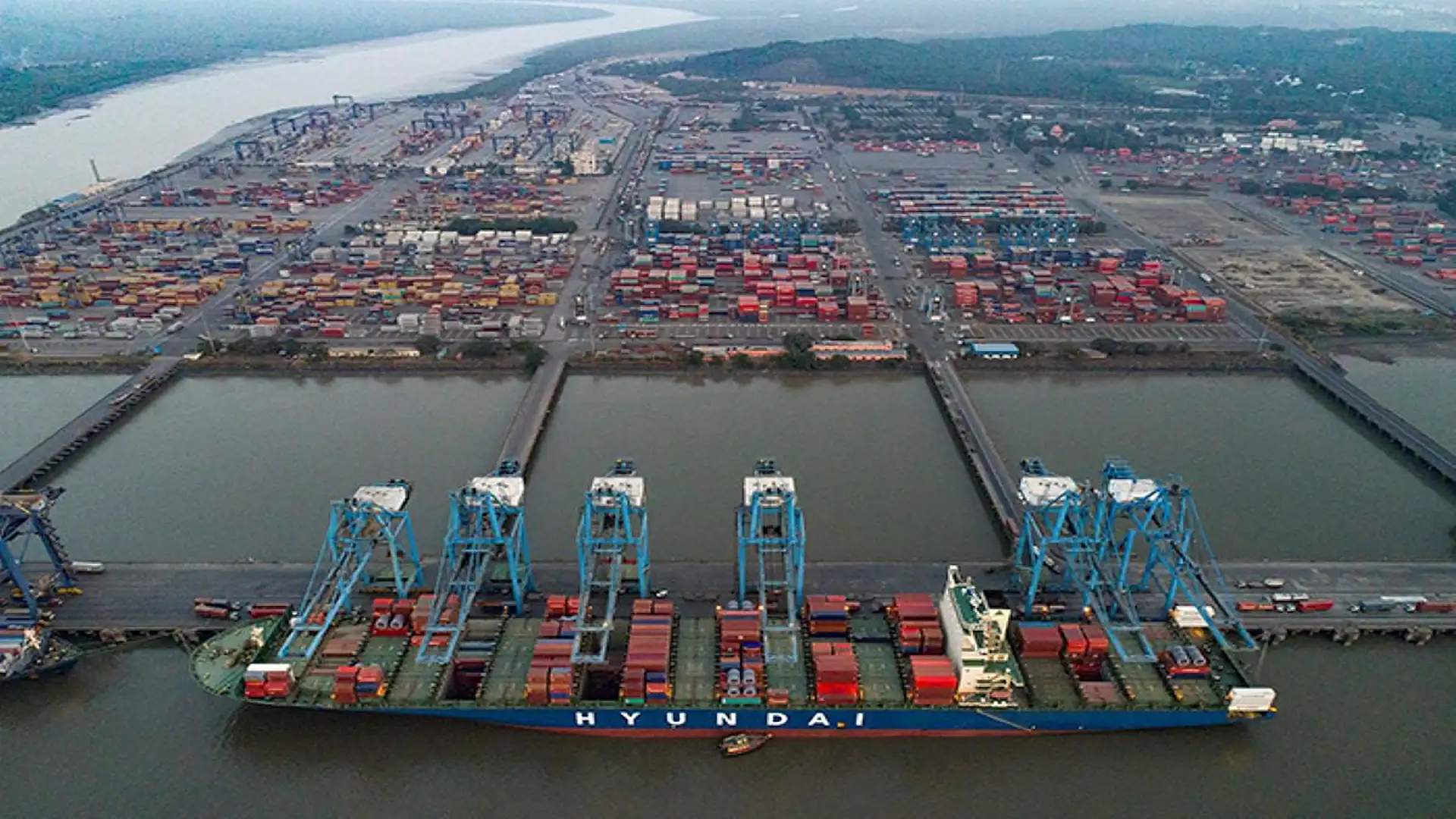
The UAE's goal of being a premier logistics hub is at the core of its plan. Modern ports like Jebel Ali, Khalifa, and Fujairah are helping the nation revolutionise the transcontinental movement of products. These ports serve as more than just ports of entry; they are doors to opportunities where the needs of European customers and the ambitions of Indian businesspeople collide. Supply chain management is being revolutionised by the UAE's investment in cutting-edge technologies and AI-driven platforms, which increases trade efficiency and accessibility for companies of all sizes.
Apart from logistics, the United Arab Emirates is spearheading the change toward an artificial intelligence and sustainable energy future. The United Arab Emirates is positioned to pioneer sustainable technology and green hydrogen generation while the world searches for a solution to climate change. Their commitment to innovation transcends financial benefits and helps preserve the earth for future generations. The United Arab Emirates is contributing to constructing a digital Silk Road that links markets and minds by encouraging cooperation in areas such as artificial intelligence and cybersecurity.
Saudi Arabia: A Key Player
Because of its advantageous location at the intersection of three continents, Saudi Arabia plays a crucial role in the IMEC. This enormous connection project cannot proceed without the Kingdom, thanks to its large landmass and substantial investment ability. Logistics, renewable energy, and technology are some of the areas that Saudi Arabia is concentrating on to diversify its economy away from oil, according to its Vision 2030 plan.
Saudi Arabia leads the way in the great possibility for energy cooperation and infrastructure development via IMEC. The corridor's infrastructure can be run on the Kingdom's expertise in energy generation and distribution, therefore supporting the change to greener energy sources. Important hubs along the IMEC route can be Saudi Arabia's modern transportation networks and smart cities.
Saudi Arabia is doing more than simply protecting its economy; it is also helping to create a region where trade is easier and cultural exchanges are more robust by taking on this role.
Challenges and Opportunities
Initiatives like the India-Middle East-Europe Economic Corridor (IMEC) confront both opportunities and problems in the current complex geopolitical environment. Paradoxically, there is a rise in nations' desire to participate internationally, even as the globe struggles with fragmentation and attacks on the multilateral system. This contradiction is especially noticeable in the global South, where enthusiasm for collaboration coexists with the understanding that conventional globalisation models might no longer be enough.
The success of IMEC and related initiatives depends on factors other than governmental aspirations. Involving the private sector is essential, and the most effective paths and collaborations will ultimately depend on market conditions. To encourage private investment, governments must do more than just draw borders on maps; they must also offer subsidies and incentives and develop healthy markets. The cautionary story of certain projects under the Belt and Road Initiative shows the importance of guaranteeing market demand and economic sustainability.
It's challenging to strike a balance between participating nations' collaboration and competition. Although every country wants to be a centre, in practice, roles will probably be more specialised than comprehensive. Within the IMEC framework, for example, the UAE may be a trade finance and logistics leader, and Turkey may be an important hub for connections. Addressing such "spoilers" is also essential to the project's success. The need for an inclusive strategy that generates win-win situations for all stakeholders is highlighted by the possibility that excluding some actors, such as Iran, might make them into barriers. In order to manage geopolitical upheavals and guarantee sustained inclusive development, IMEC must adapt to the reality of a more unstable world as it goes forward.
Is IMEC Still Viable
IMEC was supposed to facilitate the process of Arab -Israel reproachment and may thus have been an added motivation for the Hamas attack. Post the Abraham Accords of 2020, the chances of Israeli-Arab normalisation had gained currency, especially with the UAE, Bahrain, Sudan, and Morocco subsequently joining. But even in moderate Arab countries, public opinion is pro-Palestinian, and solidarity will intensify with rising civilian casualties in Gaza. This impedes normalisation and stiffens opposition against Israel's participation in IMEC.
One option could be re-routing the corridor through Iraq and Turkey. It would bring Ankara back into the game. IMEC's original design sidelined Turkey, much to the chagrin of Turkey's President Recep Tayyip Erdogan.
Another pathway could be to develop the eastern route, with Saudi Arabia and the UAE moving ahead to increase rail connectivity across the Arabian Peninsula and India.
The Indian side has been upbeat about the project despite the worsening geopolitical situation in the Middle East.External Affairs Minister S Jaishankar has been frequently cited by the domestic and international media stating that India was working to establish the India-Middle East- Europe Economic Corridor (IMEC) and the International North-South Transport Corridor (INSTC), passing through the Chabahar port, asserting that there is a need to re-engineer the global logistics map. “We are dead serious about it (IMEC) and have been talking to each other. Not everything has to fall in place for something to start. Wherever we can get moving, we will get moving,” the minister said. The Middle East Institute has quoted the Indian Finance Minister as saying, "IMEC is for the long term." For that reason alone, the stakeholders are unlikely to abandon it.
Key Takeaways
While IMEC
faces multiple viability challenges, none of them are insurmountable.
The Gaza war, illustrative of geopolitics' impact on the best intentions to propagate international trade, cannot last forever. It will no doubt delay the project's completion and might lead to some adjustments to avoid Israel in the short term. The core logic of the project is indisputably strong; it will see the light of the day.
Despite the difficulties brought on by international wars and unpredictability, stakeholders still have a tremendous desire for connectivity
. This is a very positive sign.
As history demonstrates, trade continues even during difficult times, underscoring the tenacity of economic activity. This spirit is best demonstrated by IMEC, which focuses on creating strong networks that can endure geopolitical unrest and promote long-term development.
Overcoming geopolitical uncertainty requires a delicate balancing act between private investment, inclusive alliances, and resilience.
|
"IMEC is a natural infrastructure and connectivity project with multiple layers that is preparing for India's transition to a $10 trillion economy in less than 10 years. Despite wars, trade has always found its way. Show them the road, and money will move. Show them the ports, and goods will land." Samir Saran: (President, Observer Research Foundation (ORF)) |
|
"We are seeing a paradox: fragmentation and fierce blows to multilateral systems on one side and a strong willingness of countries to cooperate on the other. IMEC is part of this dual dynamic." Karim Elnaoui: (Executive President, Policy Center for the New South (PCNS)) |
Sources Cited:
https://pib.gov.in/PressReleaseIframePage.aspx?PRID=2052486
https://arabcenterdc.org/resource/the-geopolitics-of-the-india-middle-east-europe-economic-corridor/