
BRICS: SPREADING WINGS
Indonesia could bring great value to BRICS + with its impressive footprint in ASEAN.
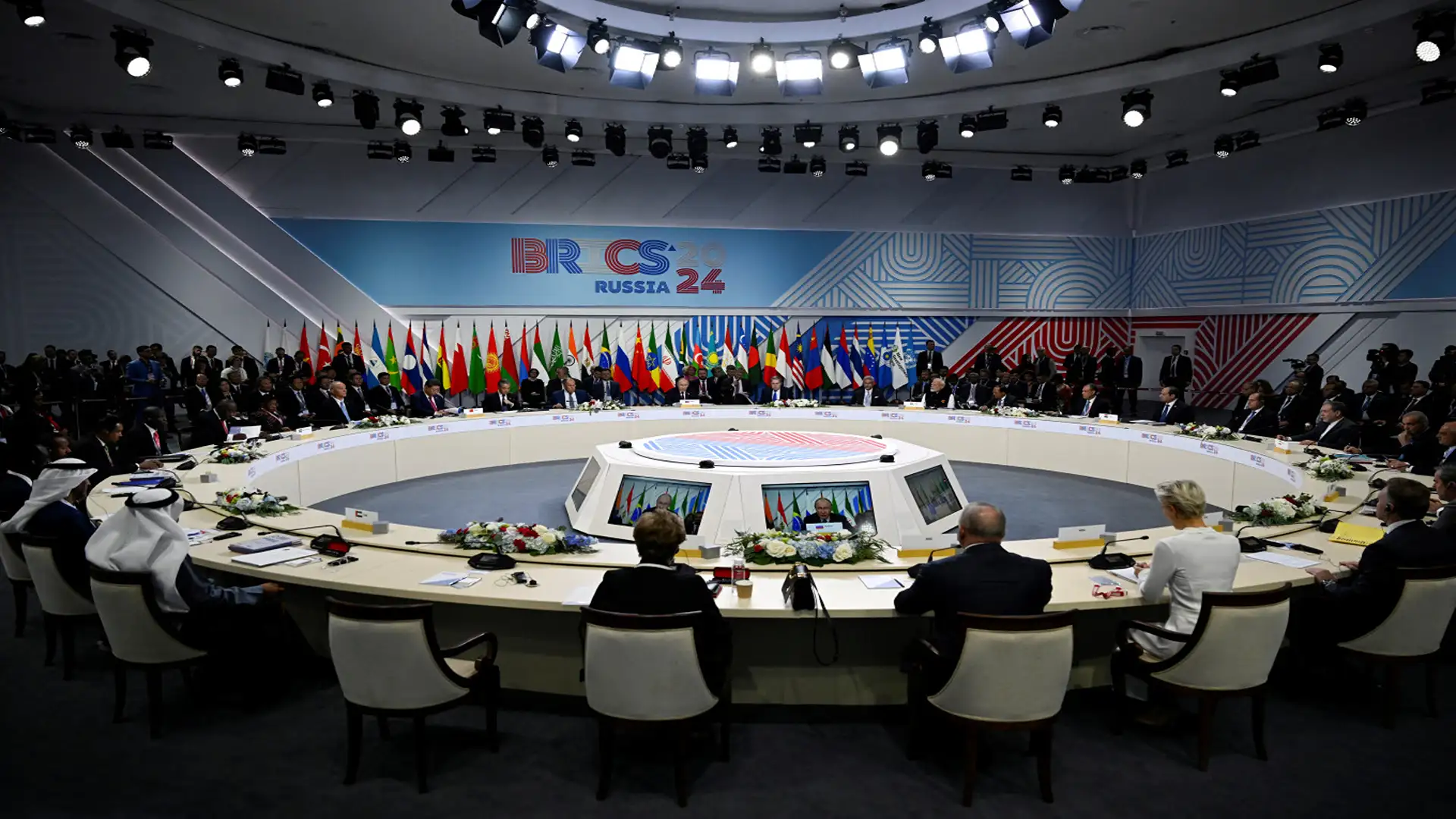
Indonesia has recently been designated as a "partner country" within the BRICS+ framework, joining other Southeast Asian nations like Malaysia, Vietnam, and Thailand during the BRICS+ summit held in Kazan, Russia, in October 2024.
Reacting to the rapidly changing global geopolitical dynamics, Jakarta is naturally keen to join this Block fast, which is emerging as a challenger to Western-dominated alliances, as an early responder. The move is also seen as a marker of the changing foreign policy goals under President Prabowo Subianto, who reputedly emphasises an independent approach to foreign relations.
However, a ponderous process must be undergone before Indonesia achieves full membership. This entails several stages – beginning with as an "interested country," then progressing to "prospective member," and finally becoming an "invited member" before attaining full membership status.
Geopolitical Factors
Indonesia is banking upon BRICS + as a prospective platform to enhance its economic prospects while navigating the increasingly twisting maze of big power games. Foreign Minister Sugiono called it a reflection of his country’s commitment to an independent foreign policy, allowing the nation to engage with multiple international forums without aligning strictly with any specific bloc. As a founder member of the Non-Aligned Movement under then President Sukarno, Indonesia seeks to re-position itself as a leader for the Global South within BRICS+. Mr Sugiono emphasised the need for a more inclusive multilateral system that reflects current global realities, aiming to strengthen solidarity among developing nations. This aligns with Indonesia's historical stance on anti-colonialism and support for equitable development.China is an important factor in Indonesia's geopolitical gambit. By cultivating strategic ambiguity in its foreign relations, it wishes to avoid getting trapped in the developing tussle between these two big powers. This approach allows Jakarta to engage economically with China, its largest trading partner, while also preserving ties with Western nations.
As an influential member of the Indo-Pacific community with the largest Muslim population in the world, Indonesia stands to gain strategically by becoming a BRICS + partner in several ways.
The size of Indonesia, huge population and economy is propelling it as a heavyweight in ASEAN along with its historical leadership position in the NAM giving it leverage over the Global South. As a BRICS + member, Indonesia joins the high table with Brazil, Russia, India, China and South Africa. Here, its Indo-Pacific roots and relationship will act as an anchor for generating a calmer strategic balance in the restive Indo-Pacific region, acting as a bridge between Russia/ China and the West. This balancing act is vital as geopolitical tensions rise, particularly between the U.S. and China.
Enhanced International Standing
BRICS+ allows Indonesia to align with other emerging economies, amplifying the collective voice of the Global South. This coalition aims to address systemic challenges such as economic dependency and inequities in global governance, providing a platform for Indonesia to advocate for the interests of developing nations more effectively.
Within BRICS+, Indonesia can push for reforms in international institutions like the U.N. and Bretton Woods institutions, advocating for more inclusive representation that reflects the realities of developing countries. This aligns with Indonesia's goal to reshape global governance structures that have historically marginalised the Global South. Indonesia aims to leverage its position in BRICS+ to champion sustainable development initiatives.As the 4th most populated country in the world, the 3rd largest democracy with diverse unique culture, Indonesia would be a strong contender for a permanent UNSC seat, and BRICS+ would provide the ideal stage to project its case.
Indonesia's strategic position in Southeast Asia enables it to act as a bridge between BRICS+ nations and other developing countries. This role can facilitate dialogue and cooperation on shared challenges, fostering solidarity among nations facing similar economic and developmental issues
Money Matters!
Indonesia aims to leverage its BRICS+ membership for economic growth while maintaining strategic autonomy and upholding its non-aligned foreign policy principles,
With an eye on economics, Indonesia views BRICS+ as a platform to enhance economic growth through increased market access and investment opportunities. The country aims to leverage its membership to bolster food and energy security, poverty eradication and human capital development, which are central to President Prabowo's administration goals. By engaging with BRICS+ nations, Indonesia hopes to reduce reliance on Western economies and diversify its economic partnerships.Cooperation with BRICS+ countries could bolster Indonesia's food production capabilities and energy transition efforts. Indonesia can enhance its domestic production capacity by engaging with BRICS+ on agricultural technology and renewable energy investments while ensuring energy security amidst global supply chain disruptions.BRICS+ could enhance its access to large markets within the bloc, which collectively represent about 43 per cent of the world's population and a substantial portion of global GDP. This access would allow Indonesia to diversify its export markets beyond traditional partners like the U.S. and Europe, potentially stabilising its economy against global market fluctuations.
China is Indonesia's largest trading partner, with significant investments flowing into various sectors, particularly under the Belt and Road Initiative (BRI). In 2023, Indonesia was the largest recipient of China's Belt and Road Initiative (BRI) funding, with US$7.3 billion in investment. Indonesia's leadership sees a strategic link between the BRI and BRICS+. President Prabowo Subianto's administration appears willing to align its economic strategies with China's vision, viewing BRICS+ as a platform that complements the goals of the BRI. This alignment could facilitate development initiatives funded by Chinese investments, reinforcing Indonesia's economic growth while enhancing its global standing. Indonesia couldalso leverage its membership to enhance trade opportunities and attract investments from other BRICS+00 nations.
However, there could be a price. While significant opportunities exist, Indonesia may face increased competition from other BRICS+ countries in various industries. Effective domestic policies will be essential to ensure that local industries can compete while benefiting from foreign investments.
The Indonesian Foreign Minister has emphasised the importance of ensuring that developed nations fulfil their commitments to support developing countries in areas such as food security, poverty eradication, and human resource development.Indonesia’s membership could generate greater FDI flows into the country and enhance its outbound investments to less economically robust countries. This could stimulate economic growth and foster stronger trans-regional cooperation, particularly in Southeast Asia and Africa, where Indonesia could play a more substantial role in project financing.
Hurdles Galore
While Indonesia's pursuit of BRICS+ membership presents opportunities for enhanced global influence and economic cooperation, it also poses significant challenges that require careful management of its international relationships and strategic interests. Balancing these dynamics will be crucial for Jakarta as it navigates its role in both BRICS+ and the broader international community.
Strained Relations with Western Allies?BRICS+, often viewed as a counterweight to Western influence, may lead to perceptions that Indonesia is aligning itself more closely with countries like China and Russia. This could strain relations with the United States and other Western nations, which may interpret Indonesia's membership as a shift away from its historically strong ties with them.
Relationship with the U.S. Potential Backlash and impact on existing alliances is likely as Indonesia strengthens its ties with BRICS+, and it risks alienating its traditional allies, particularly if it is perceived as taking sides in geopolitical conflicts involving the U.S., China, or Russia. This could result in reduced support from the U.S. in areas such as security cooperation or economic assistance. To reassure the U.S., Indonesian Foreign Minister Sugiono has emphasised that Indonesia's engagement with BRICS+ does not signify alignment with any specific bloc but reflects an independent foreign policy approach. However, if the U.S. views Indonesia's entry into BRICS+ as a tacit endorsement of a bloc that often opposes Western interests, particularly given Russia's actions and China's assertive policies in the Indo-Pacific region, Jakarta could face a blowback from Washington. This perception could also lead to increased scrutiny of Indonesia's foreign policy decisions and potential diplomatic repercussions. Indonesiadiversifying its economic partnerships aligns with President Prabowo Subianto's vision of enhancing economic resilience and fostering independence from Western economic structures but this shift may be perceived by the U.S. as distancing from its influence. While BRICS+ membership offers potential economic benefits through increased market access and investment opportunities, these gains must be weighed against the political costs of alienating the U.S. The challenge for Indonesia will be to navigate these dynamics carefully to maximize economic benefits without compromising its strategic relationships.
China Factor. Despite strong economic ties, Indonesia faces ongoing tensions with China over territorial claims in the South China Sea. Joining BRICS could complicate Indonesia's ability to assert its sovereignty in these disputes while engaging with China within the BRICS+ framework. Balancing economic cooperation with national security concerns will be a delicate task. As BRICS+ expands, Indonesia may be caught in geopolitical conflicts between major powers. The need to navigate relationships with both Western countries and BRICS+ members like Russia and China could limit Jakarta's diplomatic flexibility and complicate its foreign policy strategy. With China being a dominant player in both BRICS+ and Indonesia's economy, there are fears that closer ties within BRICS+ could lead to increased dependence on Chinese investments. This situation might limit Indonesia's ability to negotiate favourable terms that protect its national interests and economic sovereignty.
Impacting ASEAN. Indonesia has traditionally played a leadership role within ASEAN, promoting regional stability and cooperation. Its deeper involvement in BRICS+ could raise questions about its commitment to ASEAN principles of consensus and neutrality. If Indonesia adopts positions within BRICS+ that diverge from ASEAN's collective stance, it may create rifts within the organisation and prompt other member states to reassess their foreign policies. Indonesia’s alignment with BRICS+ may encourage other Southeast Asian nations to explore partnerships outside the ASEAN framework, leading to polarisation within the region. This could undermine ASEAN's cohesion and influence in regional matters, as member states may seek to counterbalance Indonesia's growing ties with BRICS countries.
Economic Risks. As Indonesia engages with BRICS+, it risks alienating Western partners, potentially impacting trade agreements and investments. The U.S. has been a significant trading partner for Indonesia, and any perceived anti-Western stance could lead to economic repercussions, including reduced investment or trade barriers. There are concerns about whether joining BRICS+ will yield significant economic advantages for Indonesia. Critics argue that while BRICS+ presents opportunities for trade and investment, it may not provide substantial benefits compared to existing partnerships within frameworks like the G20 or RCEP. This uncertainty necessitates careful evaluation of the potential economic impacts of membership.
Key Takeaways
Indonesia's potential membership in BRICS+ represents a strategic pivot that could enhance its economic prospects and geopolitical influence in the Indo-Pacific region while presenting challenges that require careful management to safeguard its national interests.
Indonesia aims to participate more actively in international forums while remaining independent
and
seeks urgently needed development opportunities rather than endorsing Russia's or China's views on the world order.
As Indonesia navigates its new role within BRICS+, it must ensure its engagement does not compromise its national interests or sovereignty. A careful diplomatic approach will be necessary to balance relationships with both BRICS+ members and traditional Western allies.
It will be hard-pressed to
maintain strategic ambiguity in its foreign relations, especially between major powers like the U.S. and China.