
INDIA AND CANADA IN A CHANGING WORLD
India and Canada have so many complementary attributes that make a dispute that much more surprising.
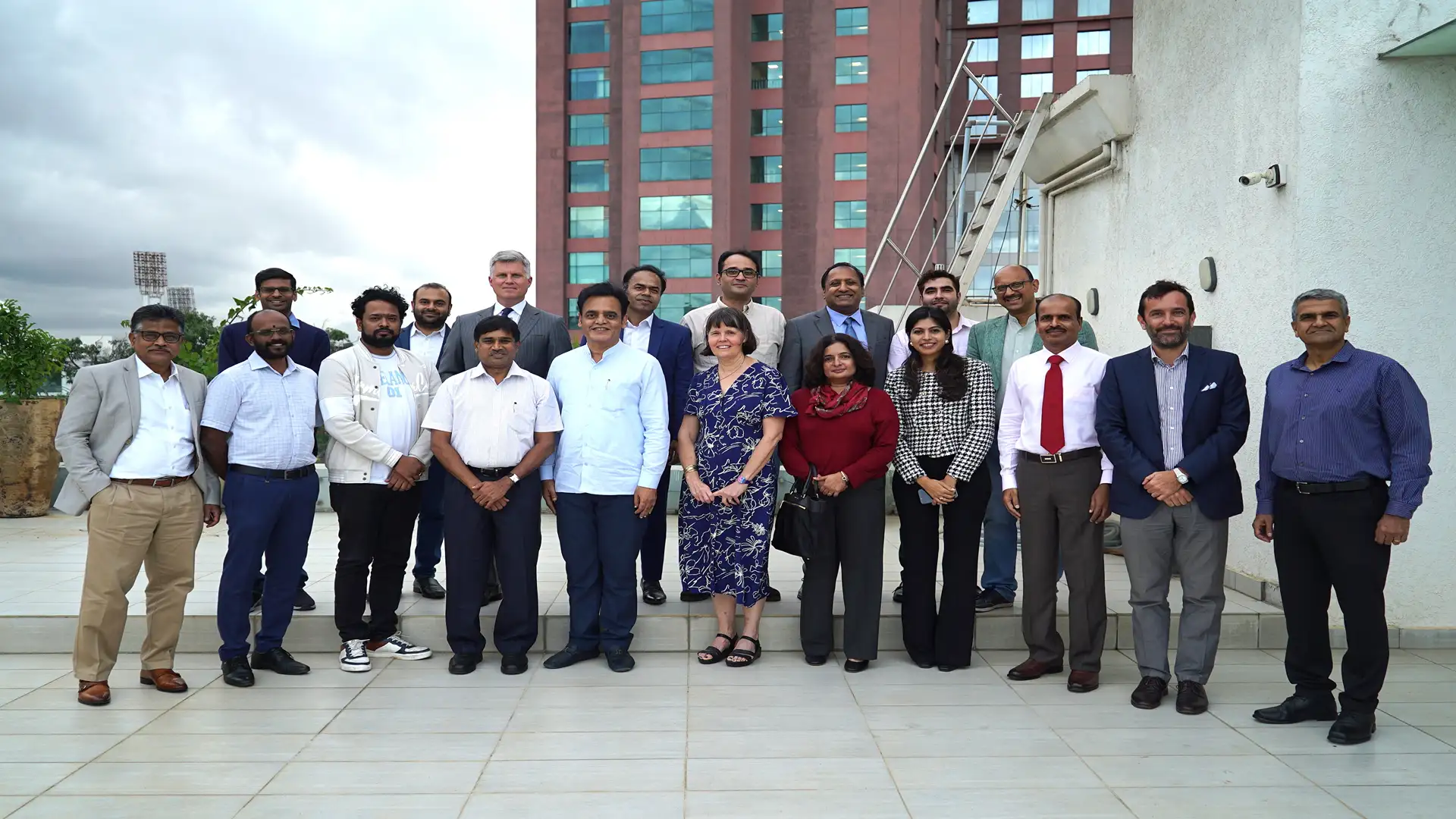
By Synergia Research Team (based on a Synergia Foundation Forum with Canadian diplomats led by High Commissioner Cameron Mackay)
We're living in this tremendous era of relentlessly accelerating change. What is happening now is like the shifting of tectonic plates.Over the last decades, the United Kingdom left the European Union–Brexit finally happened; the Taliban 2.0 is in power in Kabul, and China has grown from strength to strength. However, with all that impressive economic growth under President Xi, there is a much more aggressive posture regarding its territorial ambitions. Donald Trump, of course, has reshaped politics in the United States of America; he aspires for a second term this November. Prime Minister Modi and his BJP have just begun their third term and are reshaping India in all kinds of ways, especially from an economic point of view. India's political and social change will also differ when he finishes the third term.
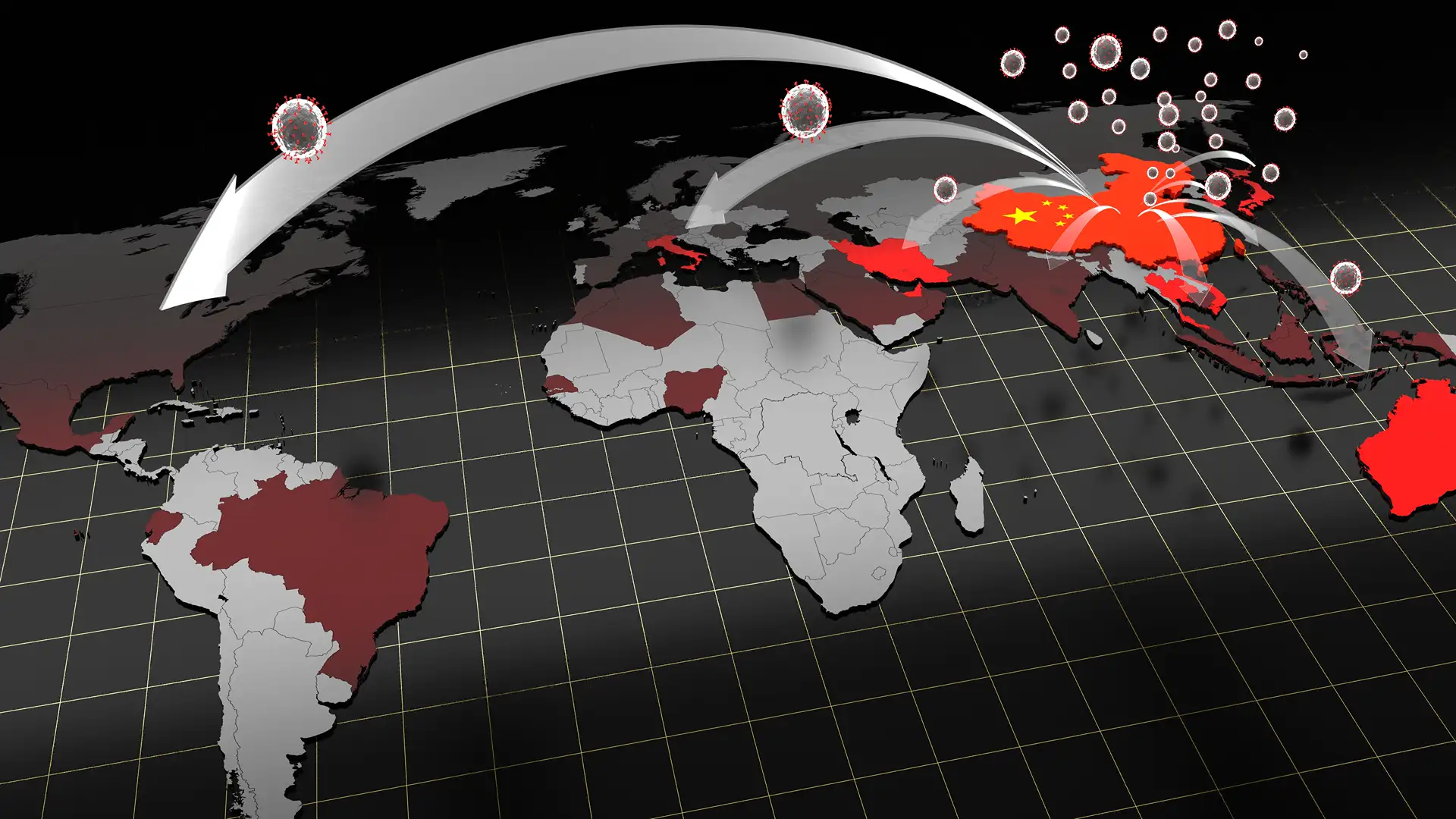
The economic consequences of COVID-19 are far from over yet. This is nowhere more apparent than in Canada, where economists are struggling to understand its impact on out-of-control prices in the housing market, pressure on interest rates, and high inflation. Consumer behaviour has changed quite dramatically. The same is true in the U.S. and Europe but less so in India. The so-called global North is still seeing the consequences of COVID-19’s impacts on labour markets and how we live and work.
Human-driven climate change will change the way we live. We should also remember the unprecedented biodiversity loss. Scientists say they cannot measure a time when there has been so muchhuman-driven loss of biodiversity and plant-animal life.
Technological change has been overtaking our preparations to confront it; smartphones are portable surveillance devices relentlessly following our footsteps everywhere. The Internet keeps us under constant surveillance, and our privacy is arguably at risk more than ever. We are so dependent on technology that it puts us at great risk of cyber-attacks.With fully developed artificial intelligence and machine learning, quantum computing is a whole new world of risk for cybersecurity.
Old World has Changed
To navigate through these turbulent waters, nations have relied largely on the multilateral system built by what were then the great powers of the day, with the active assistance of countries like Canada. The systems built after the Second World War included the United Nations, along with the UN Security Council and all the specialised agencies of the United Nations, the World Bank, the International Monetary Fund, and the General Agreement on Tariffs and Trade that eventually became the World Trade Organization.
To be fair, any economist or political scientist will look back and say that despite all their failings and their weaknesses and the pressures of the Cold War, at that time, they helped to ensure decades of a largely peaceful planet.Economic growth surged through that period, particularly because trade was opened and businesses went global. There were downsides and risks, but overall, it was very positive.
However, those organisations need to be more fit for the purpose; they no longer represent the world as it is today. The UNSC is lopsided, with big countries like India out of it. The WTO has been eviscerated and effectively no longer functions. We are moving into a new world of protectionism where the U.S. and others can take protectionist policies with little fear of retaliation, jacking up tariffs and banning trade or exports.
Middle powers need great powers to get along, and we need great powers to be constrained by rules. The law of the jungle does not work in international relations. This is especially an anathema for Canada, which likes to curate its foreign policy to work with its friends, including collective defence, trade, UN rules, etc.
India and Canada
A dispassionate appraisal of the two countries would reveal how deeply complementary both are- complimentary economies, deeply intertwined populations and the history of democracy. Canada is one of the oldest democracies in the world; it has been voting since the 1700s. India is the world's largest democracy. There are many shared values, and in the long run, the strategic interests of both are intertwined.
People–to-People, Indians have been welcomed in Canada for over a hundred years, now making up 5 per cent of the Canadian population (2 million out of 40 million), and successful in every walk of life-from film and music and entertainment to academia, to medicine to business and politics as well as premiers of provinces and cabinet ministers. The Canadian High Commission in Delhi processes nearly 20,000 visas a week! It shows the scale of people-to-people movement, ferried by 25 to 35 direct flights a week between two countries on opposite sides of the planet. And air travel and humanity's movement are growing. Air Canada announced new flights in October, and Air India will soon follow suit. Over 400,000 Indian students seek higher education in Canada.
The Business-to-Business relationship is also flourishing, with more than $140 billion in bilateral commercial relationships led by $95 billion in Canadian investment in India. This includes well-known brands like the Canadian pension plans, Canada Pension Plan Investment Board, Ontario Teachers, and the Quebec Pension Plan. To give a concrete example, the ring road encircling New Delhi is mainly owned by the pension plan of the province of Quebec!
The Canada Pension Plan Investment Board has invested in the largest solar farm in India. Brookfield Asset Management is perhaps the largest private-sector landlord in India;it owns commercial real estate, shopping malls, office towers, the Leland Palace hotel chain, and Fairfax Financial is the majority holder of the capital behind Bangalore's spanking new T2 Terminal.Canada is atrusted supplier of uranium to India.
The business ties are, of course, mutually advantageous for both sides. More than 600 Canadian companies have an established presence in India, and more than 100 Indian companiesemploy thousands of Canadians.As per the Canadian Commerce Minister in the High Commission, Jennifer, “South India is of special importance to Canada where we have a lot of Canadian investment. Over 650 companies that have invested in India have an overwhelming presence in the country's South. And that, I think, says a lot about India: a level of development in the central communities and talent in the South. So, we will keep supporting those companies and those who have invested in and will invest in other parts of India.”
Government-to-Government relationships are also good. An ongoing and active collaboration exists on agricultural technology, climate change, and polar research. India is home to the third pole, the Himalayas, and Canada has two research stations. The science and technology and research and development collaboration go back decades with high levels of trust and mutual advantages.
Of course, there are strong irritants. There is strong support for the Khalistan Movement amongst a small group of the Sikh diaspora in Canada. The Air India Kanishaka bombing still rankles Indians who lost many innocent friends and relatives. The Diplomatic spat between India and Canada that began last September has been widely covered in the Indian media. The case at the heart of the dispute has gone to trial in Canada, and its outcome/ revelation may cause more road bumps in the relationship between the two countries. As per the view of the Canadian government, “And with a trial, it's completely out of the hands of the government now, complete bifurcation of now. It's in the hands of the judiciary—defence attorneys, prosecution, police, etc.”
The Way Ahead
In diplomacy, especially in a relationship like this, it is important to be as calm, cool, and collected as possible. Responding emotionally and angrily when sensitive things happen rarely serves the long-term interest.
Of course, there will be politics on both sides– politicians need to be seen as responsive to the most vocal part of the population.
We need to be calm, think ahead, and have dialogue all the time. It can be either official dialogue or unofficial and quiet. Negotiating in the media never helps.
Technology is, in a way, the glue that binds both countries together. India's GDP per capita today and its growth trajectory are identical to China's 15 years ago. One only has to look at China and how much China has changed the world in the last 15 years for outsiders to understand what is happening in India today and where it is headed.