
IS THE COMBAT HELICOPTER PASSÉ?
Lessons from the Russia Ukraine War
By AVM Ajay Shukla (Retd)
As soon as the war between Russia and Ukraine began to unfold, practitioners and votaries of air power in the rotary domain were suddenly faced with uncomfortable videos showing armedhelicopters in the combat zone falling like nine pins. The accompanying blogs and comments were unsparing and outright embarrassing for the ‘chopper guys’. The verdict appeared to beclear—the helicopter in a high-threat zone had outlived its utility.
A Revisit Needed?
In contrast, this was also the period when the Indian MoD issued a Request for Proposal (RFP) to procure 156 Light Combat Helicopters (LCH) ‘Prachand’from HAL, budgeted at Rs 45,000 crore. These are slated to complement the existing AH-64E Apache, Mi-35s and the large fleet of ALH WSI ‘Rudra’.Additionally, the renewed vigour with which HAL began to pursue the Indian Multi Role Helicopter (IMRH) programme also gained much traction in 2022. The six prototypes for this ambitious project for 314 helicopters (including in the armed role) itself has a budget of Rs 10,000 crore.
The latest laboratory for testing the toys of modern–day warfare—the Russia Ukraine warzone— appeared to be telling us to keep the rotorcraft shielded from the perils that lurk therein, and here we were going full throttle on their mega acquisition programmes. While manned armed helicopter programmes worth billions of dollars are being pursued world- wide, there were unnerving reports of shelving of helicopters programmes too, including the cancellation of the US Future Attack Reconnaissance Aircraft (FARA) project, and scrapping of Japan’sprogramme to replace its Bell AH-1 Cobra, with plans to substitute them with a combination of "attack/utility," "miniature attack," and "surveillance" drones. Clearly, something was amiss.
Some of the amiss pieces in this puzzle, though, appeared to be gradually falling in place as the war in Ukraine has progressed. While the last word on the lessons from this conflict is yet to be written, there are fair indicators now on what may have transpired with the armedhelicopter in this warzone.
The term ‘armed helicopters’ here refers in general toall helicopters being employed in a conflict scenario possessing offensive capabilities.
Armed Helicopter Roles
Modern armed helicopters are capable of performing a variety of roles in the warzone. These include Battlefield Air Strikes (BAS), which involves air actions against enemy targets in close vicinity of own ground forces. Their ability to hover and manoeuvre at low altitudes allows them to deliver accurate firepower, including anti-armour. These time sensitive missions require joint planning and have to cater to enemy AD threat, communication jamming etc.
Armed helicopters also undertake armed reconnaissance and serve as protection escorts to other rotary wing aircraft engaged in Special Heliborne Operations (SHBO) and Combat Search and Rescue (CSAR) including casualty evacuation.Complemented by advanced sensors and communication suites, they are capable of robust real-time ISR.
High Number of Helicopter Losses
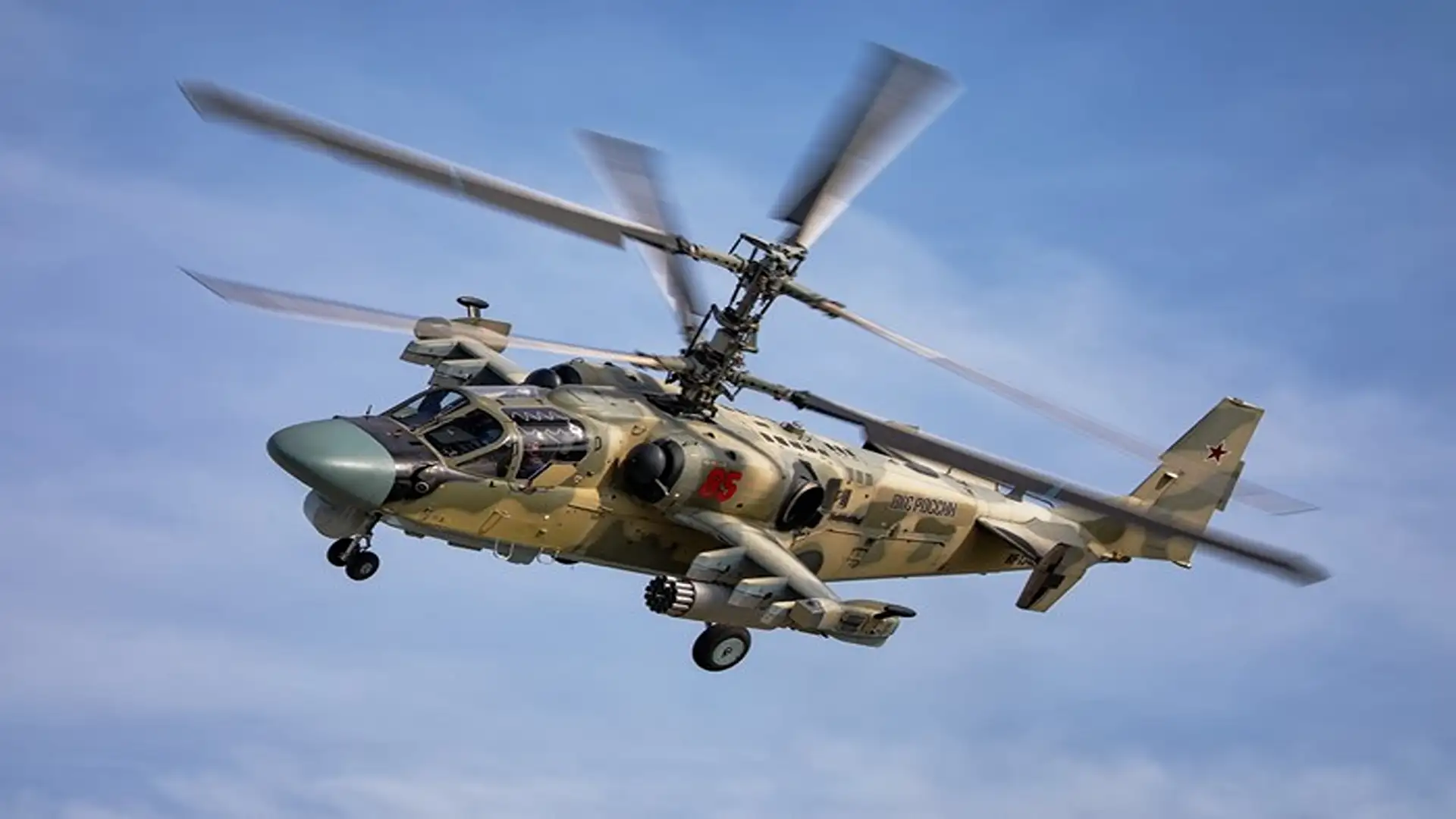
So what happened to armedhelicopters in the Russia Ukraine theatre? By all accounts, this has not been a good playground for them, at least in its initial phases.Russia has used the Mi-24/35 Hinds, the Ka-28 Havoc, the single seat Ka-50 Black Shark, and the twin seat Kamov Ka-52 Alligator attack helicopters. The much vaunted Ka-52 made more news than others andhas reportedly suffered one-thirdattrition to its fleet of about 100 machines. While this was indeed alarming, it would be useful to get a sense of the quantum of attrition in other previous conflicts.
During the Vietnam War (1955-75), The U.S. lost more than 5000 helicopters, which was more than half of the fleet inducted in the theatre. During the AfghanistanWar (1979-89), more than 300 Soviet helicopter losses were reported, including about 75 formidable Mi-24 Hinds. In Operation Desert Storm (1991), Coalition forces lost 23 helicopters. In the Second Gulf War (2003-11), total US helicopter losses amounted to 130, with 27 of these being the AH-64 Apaches. Not all of these losses took place due to enemy action; a significant number were destroyed on the ground, or were lost due to accidents, inclement weather, mechanical failures and friendly fire.
Armed helicopter vs Air Defence Systems
Modern armed helicopters are sophisticated platforms, very expensive to acquire, maintain, and operate, making them valuable targets for relatively inexpensive countermeasures, such as MANPADS. It becomes financially more viable for adversaries to invest in large numbers of MANPADS to counter helicopters.
Certain AD systems Ukraine has employed stand out due to their impact. Among the various Ukrainian MANPADS, the Stinger (range 4.8 km) with its portability and ease of use, and the Piorun system (range 6.5 km) with its enhanced seeker, have been the most effective. The anti-tank laser-guided Stugna-P (range 5 km) has proven effective against hovering helicopters too. Among the Short-Range AD systems, UK’s Starstreak (range 7 km) has made a big impact. The Buk-M1 Medium-Range AD system (range 30 km) has been effective against high flying Russian helicopters. While primarily a gun-based system, the Gepard (range 4km) too has been highly effective in countering low-flying helicopters using its radar-guided twin 35mm cannons.
Probable Causatives for Losses
A close examination leads us to certain probable causatives for the disproportionate armed helicopter losses by the Russians in the initial phases of the conflict. These relate to over reliance on hover mode of target engagement, flying high, under-estimation of the enemy AD environment, and undertaking operations from forward bases close to enemy lines.
Helicopters in high threat areas fly NoE (Nap of the Earth) hugging the ground, thus denyingreaction time to the enemy to take a shot. If one flies any higher, then not only the MANPAD operator, but also the small arms bearing foot soldier would gethis targeting solutions.Many videos showed Ka-52s being brought down while flying high. Similarly, while the Ka-52 are perfectly capable of firing on the move, they were seen as frequently doing so while at hover, and were shot down usingeven anti-tank missiles like Stugna.
Why would the Russian pilots fly in such a manner? Perhaps some answer can be found in leafing through TC 7-100.2, aUS Army training circular available on open source thatprovides details onhow the U.S. forces should expect the Russians to engage in combat.Itindicates that hovering fire is a well-established practice in the Russian SOPfor armed helicopter pilots to have better firing accuracies. However, the conjoined presumption also was that while doing so they would be protected from enemy action by their own AD. This ‘vital element of some degree of favourable air situation’ in the battlefield was clearly missing owing to massive infusion of AD arsenal and missiles from the west to Ukraine, and it had become a contest between near peers.
The Hostomel and Chornobaivka operations during the early stages of the war highlight the challenges of using armed helicopters from forward operating bases. At Hostomel, Russian Ka-52s played a key role in providing fire support during the aggressive takeover of the airport, aided by Russian EW. However, the influx of Western-supplied ATGMs and MANPADS significantly increased Russian helicopter losses, undermining their strategy. In Chornobaivka, poor basing decisions led to heavy helicopter losses due to Ukrainian artillery targeting helicopters stationed at this forward base, forcing the Russians to eventually withdraw.
Helicopters may be used, as exemplified by the U.S. in the opening hours of Operation Desert Storm to take out enemy AD radars and for EW. But that is feasible when you attrite an unequal adversary such as Iraq. Between near peers (Russia and Ukraine), thearmed helicopters are not the ‘Day One” options. They can indulge in their classical roles only post adequate suppression of enemy AD. Else, there has to be a recalibration of what is achievable, and modifications are warranted. This is what transpired eventually in this war.
Technological Adaptations for Survivability
There have been logical doubts therefore, on thedogmatic approach and training status of Russian helicopter pilots. Posers have been raised whether they lacked operational and tactical autonomy to deviate from doctrine even when it became clear that the doctrine was not working. Despite these doctrinal underpinnings, it is important to realise that the problem lies in the gap between doctrine and reality, as doctrine presumes sufficient protective measures that may not always be present on the battlefield.
Technological adaptations to enhance the survivability of armed helicopters include advanced EW systems such as radar and infrared jammers, self-protectionsystems that detect and intercept incoming missiles with countermeasures like flares and chaff, Missile Approach & Warning Systems (MAWS) andLaserWarning Systems (LWS). Directional Infrared Counter-Measure (DIRCM) systems use lasers to confuse the infrared seekers of incoming missiles, offering a more reliable defence against heat-seeking missiles compared to traditional flares. These systems have shown some success in this war, with reports of missiles being deflected or losing track of their targets. Additionally, Millimetre Wave fire-control radars for targeting, early warning and situational awareness systems for real-time data sharing,data-link-enabled missiles and helmet-mounted displays allow pilots to detect threats early and manoeuvre effectively.
Armour protection and stealth measures too enhance survivability. However, the extent to which they can be incorporated inarmed helicoptersremains shrouded in controversy.
Improved light weight armour using modern composite materials to shield vital helicopter components,and damage-tolerant rotor blades that do not disintegrate when hit, enhance resilience against ground fire. However, unlike a tank, weight considerations severely limit how much armour protection can be incorporated on helicopters.
Stealth technology is costly and focusses on reducing radar, infrared, and acoustic signatures. Innovations include Radar-AbsorbingMaterials (RAM), faceted designs that deflect radar waves, quieter rotors, low-observable coatings,advanced avionics, and heat-reducing engine exhaust systems to minimize infrared visibility. However, the usefulness of stealth in helicopters is debatable. In 2004, the U.S. had shelved its ambitious RAH-66 Comanche stealth reconnaissance and attack helicopter programme. Critics argue that stealth is less effective on helicopters operating close to the ground and at slower speeds. Additionally, networked operations and drones can reduce reliance on manned stealth platforms. Stealth features can still be useful in specific missions, such as deep-strike operations behind enemy lines, where avoiding detection is critical. Current trends suggest a hybrid approach, combining some stealth elements with other survivability features.
There has been a push to equip helicopters with longer-range stand-off munitions and more sophisticated countermeasures. Many countries, including India, have procured the Israeli Spike Non Line of Sight (NLOS) missiles, which extends the effective range of the armed helicopters to about 30 km, beyond the reach of most short-range AD systems. However, this is not a panacea for all situations. Stand-off weapons are less effective in close support scenarios, where helicopters need to operate within range of enemy defences. Additionally, the cost of advanced munitions such as Spike and the helicopters themselves raises questions about their cost-effectiveness in face of cheaper, ground-based alternatives, such as truck-mounted missile systems.
Directional Infrared Counter-Measure (DIRCM) and other countermeasures too are not fool-proof, and may be effective against certain types of older, less sophisticated missiles only. UK’s 7 km range Starstreak missile available with the Ukrainians with its Mach 3 speed makes it difficult for enemy aircraft to evade. Its unique triple-dart warhead increases the chance of a hit, while its laser-guided system ensures precision targeting. Unlike the IR seeker heads of most other MANPADs, this is much less prone to IR jamming. Hence, tactical options too have to be found to mitigate the threats.
Tactical Adaptations and Role Modifications
A commonly adapted procedure observed has been ‘toss rocketry,’ a form of rocket slinging in a ballistic trajectory, aimed at doubling the 2 km range of the unguided rockets to 4 km, thus staying that much away from the enemy AD. Effectiveness of this method has been questioned, as it doubles the Circular Error Probable (CEP) and rocket dispersion.
Both sides have adapted their tactics. Russia has improved air-ground coordination, relying on artillery and missile strikes to suppress AD before helicopters enter contested zones. They have markedly increased EW efforts to jam Ukrainian AD systems, adopting more cautious flight paths to avoid MANPADs, and arerelying now more on ‘fire on move’ targeting than in hover mode, avoiding flying high in active combat zones and forsaking advanced helicopter basing locations close to enemy lines. Ukraine has continued to enhance its AD networks, and improved intelligence-sharing to anticipate enemy helicopter operations. All these have made a visible change to the helicopter attrition levels and the negative social media buzz has gradually ebbed.
However, to the discerning military watchers, it has also remained clear that the vulnerability of the helicopter in peer combatant situations will remain high. Hence, a re-evaluation of helicopter roles too became necessary. The basic raison d’etre for these machines that made them indispensable, such as vertical envelopment and rapid response, became too risky to execute in high-threat environments. There has been a shift away from deep penetration and close air support missions to stand-off roles and indirect fire missions. Thus armed helicopters arestillable to contribute without incurring heavy losses. Of course, in asymmetrical warfare and specialized missions, they hold the sway in providing rapid fire support, troop transportation, and reconnaissance missions. Clearly, their mobility and flexibility cannot be easily replaced by other platforms yet.
Reducing detectability of helicopters and improving their ability to counteract EW measures would help mitigate some of the vulnerabilities exposed in Ukraine. Additionally, integrating UAVs with helicopter operations could provide a safer and more effective way to conduct reconnaissance and strike missions without exposing manned aircraft to undue risk on the frontlines.
Conclusion
The ongoing Russia-Ukraine war offers valuable lessons that highlight both the vulnerabilities and enduring value of helicopters in contemporary conflicts. Much like the tank that has been written off many times in the past, and yet continues to be in the reckoning, the helicopter would continue to find its place in armed conflicts.
The lessons from the Russia-Ukraine war underscore the need for adaptation, both in terms of technology and tactics. Each of these conflicts also serve as a chastening exercise, forcing the military planners and industry to sit up, take notice and fast track the required changes. The future of helicopters lies not in obsolescence but in their ability to adapt to the demands of modern and future battlefields.These evolutionary adaptations would continue to secure a doctrinal place for the armed helicopters in battlefields and assure us that the heavy investments in them are justified.