
BANGLADESH – WHAT NEXT?
By Lt Gen GAV Reddy
After an unbroken rule of 15 years, the pro-India Awami League is out in the wilderness. What awaits Sonar Bangla?
It would be an understatement to say that today, Bangladesh is experiencing significant political upheaval; perhaps never in its history has this teeming nation faced such a political upheaval. The tragedy is that a Prime Minister who can rightfully claim to have turned the economic cart of this poverty-struck nation around in a dramatic manner was the subject of the wrath of the people.
Under Hasina Wajed, Bangladesh emerged as a model for Third World countries from a basket case. The country also fared well in terms of human development indicators. Yet, the economic slowdown of recent months and spiralling inflation raised questions about medium- and long-term economic prospects, adding to the social and political unrest.
The Current Situation
A newly established interim government led by Nobel laureate Muhammad Yunus has taken over, with its members reportedly recommended/ approved by the students who spearheaded the protests. The Army Chief General Waker-Uz-Zaman promised to stand behind the interim government. The “Chief Adviser” Yunus holds the rank of the PM, while members of the advisory council enjoy the status of ministers.
In another significant move, Khaleda Zia, a bitter rival of Sheikh Hasina, was released, and her party attended the all-party meeting (to which the Awami League was not invited). This move is seen as a response to the protesters' demands for a shift away from the Awami League's longstanding dominance.
The evolving political situation in Bangladesh remains fluid, with the interim government facing the daunting task of restoring stability and addressing the populace's demands for democratic governance and economic reform.
Yunus's immediate challenges will be to ensure law and order after days of chaos that saw attacks on the houses of Awami League politicians, sporadic attacks on temples, and homes of minority Hindus who were considered close to the ousted Hasina.
What Triggered the Collapse?
As per the popular narrative, it was Hasina’s autocratic rule, economic disparities, rampant corruption and a discriminatory job quotas policy that forced the hands of the people. There may be an element of truth in this. Media reports on using state machinery to quash dissent and maintain control were a common feature for many years. Like India and other emerging economies, despite significant economic growth under Hasina's leadership, the benefits were not evenly distributed. The widening gap between the wealthy elite and the impoverished masses possibly fuelled public anger and resentment.
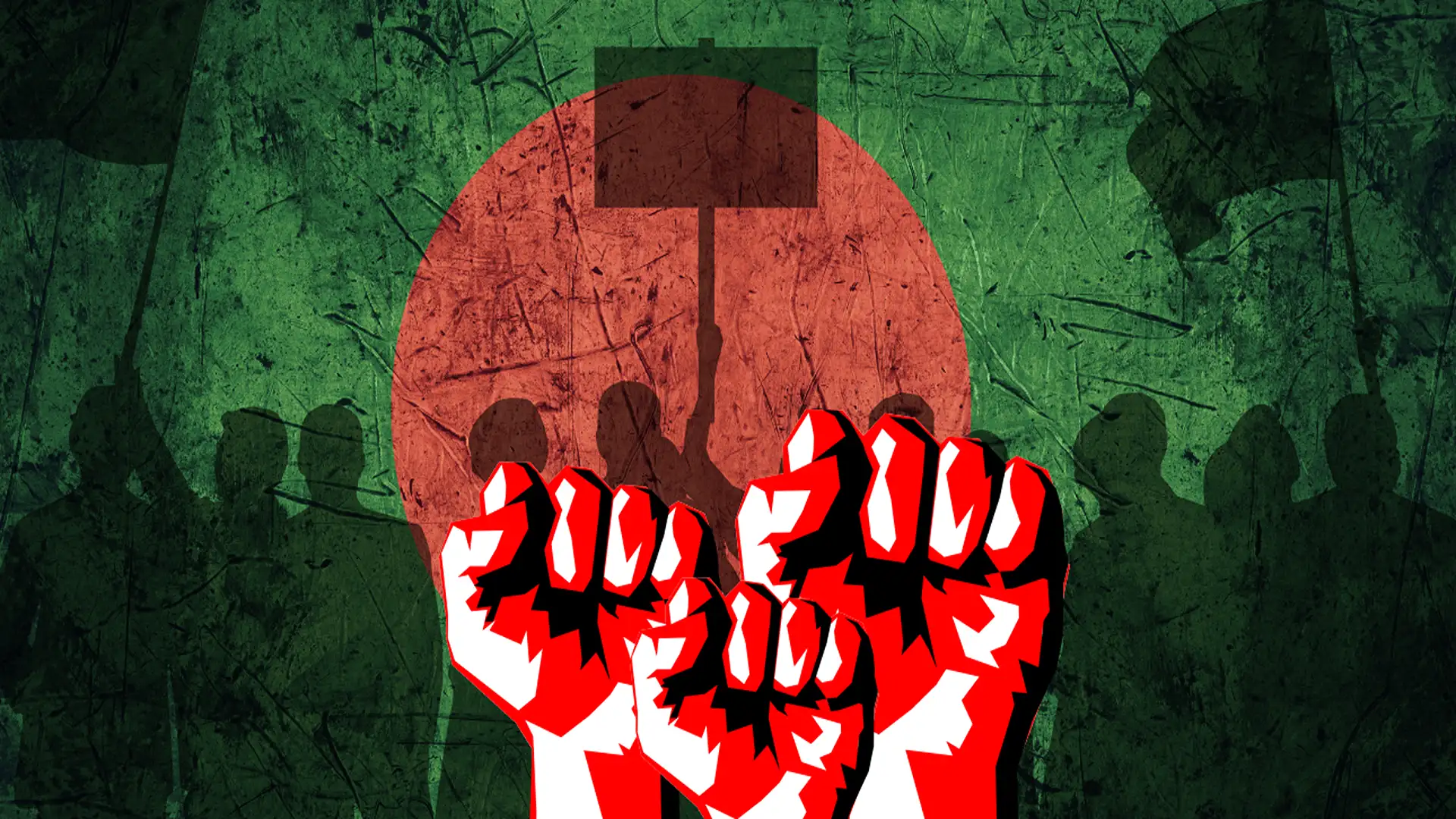
In the weeks preceding Prime Minister Sheikh Hasina's resignation, Dhaka became a focal point for escalating protests. Initially driven by student-led movements against civil service job quotas, these demonstrations quickly transformed into widespread anti-government protests. The protests revealed deep-seated discontent with Hasina's authoritarian regime and highlighted the growing demands for democratic reforms and accountability. Sadly, over 455 deaths occurred and thousands of injuries that included students, police officers, civilians and, in the latest round of bloodletting post the collapse of governance, minority Hindus and Awami League cadre.
A cursory examination of past parliamentary elections of 2014, 2018, and 2024 will give an insight into the brewing undercurrents of discontent and political angst against the Hasina government. Allegations of rigging, low voter turnout, and violence were endemic. Worse, the Opposition parties boycotted the elections, further eroding public trust in Hasina's government.
More worrying for India, a host of conspiracy theories are doing the rounds. Analysts are pointing to the role of foreign actors, which adds a layer of complexity to the already volatile situation.This suggests a complex web of international interests and influences affecting Bangladesh's political landscape– highlighting the intense geopolitical manoeuvring.
Role of the Army
The military played a pivotal role as Army Chief General Waker-Uz-Zaman announced the formation of an interim government, signalling the military's involvement in the political transition.
Although the current Army Chief has shown no proclivity so far in ruling through a military junta as in the past, some analysts are calling the collapse a "silent coup."The Bangladesh armyhas a long history of coups. It had taken a back seat over the past 15 years or supported the Hasina Wajed government, but the current power vacuum pulled it into the role of arbiter.
It may not be possible to impose military rule in the country now. It is highly doubtful that the people who fought against authoritarian rule by a political party will accept military dictatorship.Another reason deterring a military takeover is the expected reaction from the international community, particularly the UN. Bangladesh is among the top contributors to UN peacekeeping forces. There's a clear indication that the country could lose that position in case of a military takeover. It is now becoming increasingly clear that the military will back an interim government comprising technocrats. However, it remains to be seen if such an arrangement can work in a highly volatile situation.
The current situation may lead to a more pronounced military influence in political affairs, which could have lasting implications for democracy in Bangladesh. The relationship between the military, the BNP, and any interim government will be critical in shaping the future political landscape.
Regional Implications
The immediate future of Bangladesh is fraught with challenges. The need for democratic reforms and addressing economic disparities will be crucial for the country's future stability.
Bangladesh's instability can potentially significantly impact regional security in South Asia. The political chaos could create a power vacuum that extremist groups might exploit. Historically, political instability has been linked to the resurgence of radical elements, which could lead to increased terrorism and insurgency not only within Bangladesh but also spilling over into neighbouring countries, particularly India. The potential for radicalisation of disenfranchised youth amid economic hardship could further exacerbate this threat.
The ongoing unrest could undermine regional cooperation frameworks, such as BIMSTEC and BBIN, crucial for economic and security collaboration among South Asian nations. A less stable Bangladesh may impede progress on joint initiatives and connectivity projects, affecting regional integration efforts.Continued unrest may lead to a humanitarian crisis, potentially resulting in an influx of refugees into India. This could strain resources in border states and create social tensions, complicating India's internal security landscape. The situation could mirror past refugee crises in the region, historically leading to significant challenges for India.
The Bay of Bengal, in which Bangladesh holds a strategic location, has become increasingly important in geopolitical terms. Control and influence over its maritime routes is crucial for both economic and military reasons, prompting increased naval activities by regional and extra-regional powers. Dacca can balance regional contestation in the Bay of Bengal or alter the balance.
Bangladesh's instability may provide an opportunity for China to expand its influence in the region. If a government less favourable to India were to emerge, it could shift alliances towards China, complicating India's strategic interests. Increased Chinese investments and military influence in Bangladesh could alter the regional balance of power.
The Danger of Extremism
Jamaat-e-Islami, an organisation promoting political Islam, has been a persistent challenge. The Hasina government, before the collapse, claimed that the Jamaat-e-Islami activists were responsible for the recent spate of violence in Bangladesh. Based on its investigation, Jamaat-e-Islami was banned by her on August 1, 2024.
Influenced by Hasan Al Banna, Sayed Qutb, and Abu Ala Maududi, Jamaat-e-Islami is the equivalent of the Muslim Brotherhood in Bangladesh. The widespread view is that Jamaat-e-Islami will bring back not democracy but its Muslim Brotherhood ideology. In such a milieu, both Islamist political and religious parties, such as Hefasat-e-Islami, will grow. The real danger to Bangladesh will be the revival of Al Qaeda-aligned Harakat-ul Jihadi Islami and Islamic State-aligned Jamiatul Mujahideen Bangladesh, which was kept under check. Furthermore, the environment will create the opportunity for new threat groups, notably Allahr Dal and Jamaatul-Ansar-fil-Hindal Sharqiya (Assembly of the Helpers in the East of India, or “Jamaatul Ansar”) to re-emerge.
Pakistani intelligence service ISI has been operating in Bangladesh through Jamaat-e-Islami. Many are of the view that the Bangladesh government should have banned Jamaat-e-Islami in 2023 when it instigated Hefazat-e-Islami to promote an Islamist agenda. Although Sheikh Hasina took control of Hefazat-e-Islami from the Manhajis, the pro-Al Qaeda and Jamaat-e-Islami faction, she banned Jamaat-e-Islami belatedly. The return of Political Islam will threaten not only Bangladesh but also the countries where Bangladeshi nationals work and live.
The possibility of Jamaat-e-Islami gaining influence in the interim government may lead to increased radicalisation and anti-India activities. The biggest unanswered question is whether this would impact the internal security situation in India’s Northeast, confronting India with 3.5 Fronts.
Should India be Concerned?
Undoubtedly, Hasina Wajed's rule saw Dhaka becoming very close to New Delhi. Her party's association with it goes back to India's role in the 1971 war. Hasina Wajed's exile in India after the assassination of her father also brought her closer to the Indian leadership. However, her pro-Indian stance drew criticism from the opposition, particularly the religious parties. In her ouster, New Delhi has lost a close regional ally.
The instability may lead to heightened tensions along the India-Bangladesh border. Increased infiltration attempts by militants or criminal elements, necessitating a stronger security response from India. This could strain relations between the two countries, as India may feel compelled to enhance border security measures, potentially leading to confrontations.
The protests against Hasina and its aftermath have taken on a definitive anti-India flavour, which may affect India's relationship with the new government.
The political instability will likely disrupt the robust trade relations that flourished under Hasina's leadership. Bangladesh has been a crucial trade partner for India, with bilateral trade reaching approximately $13 billion in the last fiscal year. The exit of Hasina could stall ongoing discussions regarding a proposed free trade agreement (FTA), which aimed to enhance trade volumes significantly by reducing tariffs on goods exchanged between the two nations.It would especially worry many Indian companies operating in Bangladesh. Approximately 25 per cent of textile units in Bangladesh are Indian-owned; due to the instability, investments from Indian firms pending establishing a stable government will have to be put on hold.
India has invested approximately $8 billion in various infrastructure projects in Bangladesh since 2016, including critical rail links like the Akhaura-Agartala and Khulna-Mongla Port rail lines. The current unrest poses a risk to these projects, potentially delaying construction and implementation timelines, which are vital for enhancing connectivity between the two nations. Disruptions in infrastructure projects could weaken India's influence in Bangladesh and open opportunities for other regional powers, including China, to expand their presence there.
The political flux will impact projects funded by India designed to benefit local communities significantly. Delays or cancellations could hinder economic development at the grassroots level, affecting the livelihoods of Bangladeshis and access to essential services, including health and civic amenities.
Obviously, it is a challenge to India's foreign policy because we don't expect regime change to take place this way. India's wish for Bangladesh is stability, democracy, and continued development. Speaking to Moneycontrol.com, Veena Sikri, India's Former High Commissioner to Bangladesh, put it very succinctly when she said that India's future relations with Bangladesh will hinge on the new leadership and the country's stability. India will need to manage this situation carefully, maintaining good relations while addressing border security and potential unrest,
Key Takeaways
A stable and cooperative Bangladesh is vital for India’s regional security and sustainable development goals. India needs to carve an adaptive strategy to deal with the Long-term Strategic Implications.
Shifts in Foreign Policy: India needs to recalibrate its foreign policy towards Bangladesh, balancing support for democratic processes with the need to maintain stability. The challenge will be to engage diplomatically without appearing to interfere in Bangladesh's internal affairs, which could further alienate the populace.
Diplomatic strategy
must focus on engaging with the interim government to maintain and strengthen bilateral ties. Monitoring China's activities in Bangladesh will be critical to ensuring that India's regional influence and security are not compromised. Fostering regional stability will be essential to address potential unrest and security concerns.
Countering Chinese Influence
. India must counter Chinese influence in Bangladesh by enhancing military cooperation, investing in joint infrastructure projects and leveraging soft power – the cultural and historical ties to strengthen bilateral relations.
Regional Security Collaboration
. India needs to collaborate with other regional powers – Japan and Australia to form a collective strategy to counterbalance China's growing influence in South Asia.