
SURVIVING GEOPOLITICS
Despite unforeseen geopolitical shocks, the global economy has exhibited surprising resilience, but will it sustain indefinitely?
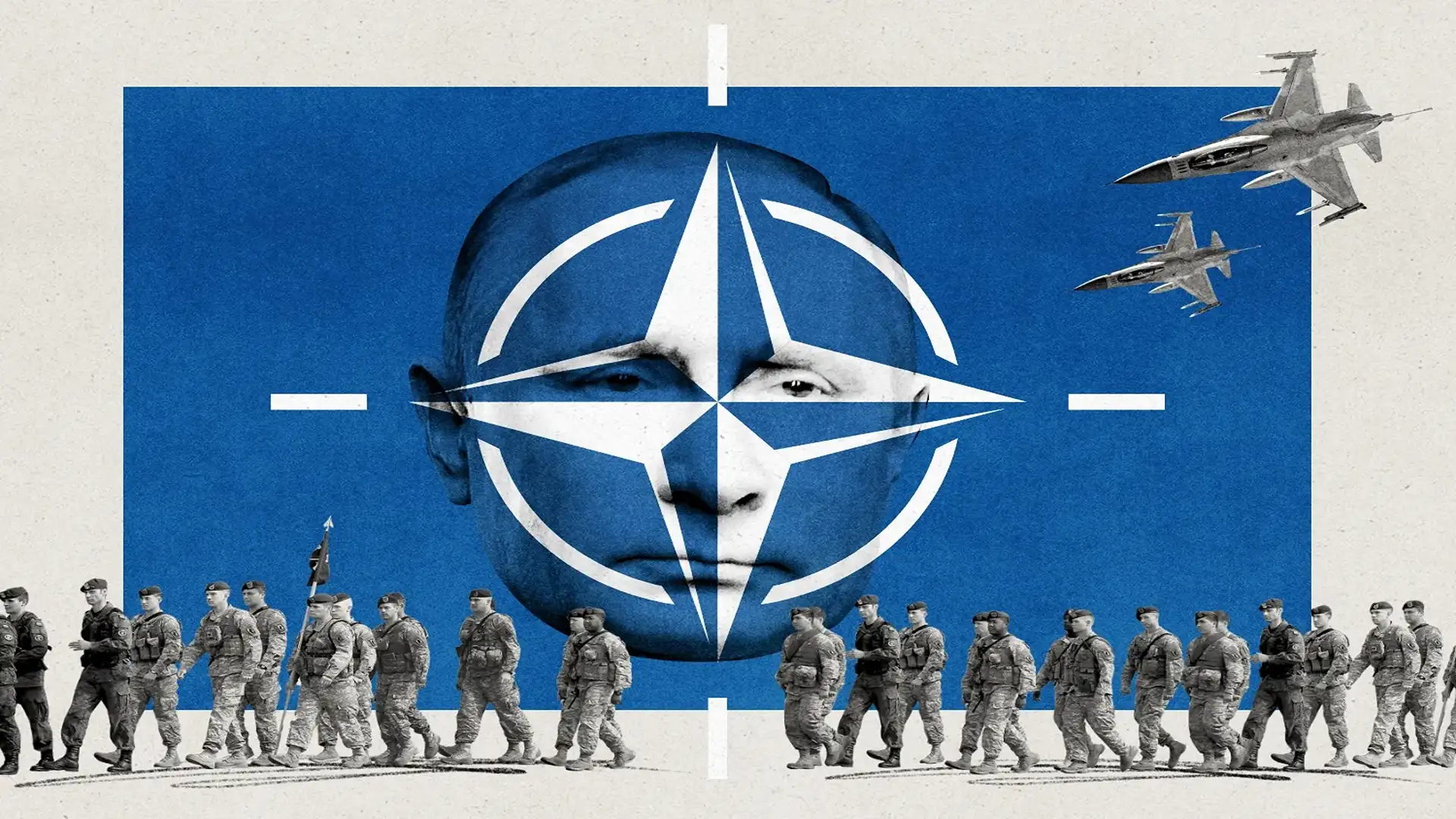
For the last two years, the geopolitical landscape has been anything but encouraging-a savage battle of attrition in the European heartland, consuming thousands of lives and draining the treasures of the West and Russia. Gaza is a lunar wasteland, and even if the fighting ceases, it will cost billions to rebuild the territory. And even more threateningly, the U.S. and China glower at each other over the existence of a defiant tiny island state.
Many countries, especially in South Asia, were faced with the daunting predicament of an economic collapse, largely blamed on the two-year-long pandemic. The congruence of economic downturn and geopolitical upheavals has brought the world to a dangerous inflexion point.
Yet, there seems to be a silver lining that gives rise to hope and optimism. On the face of it, the global economy seems to have successfully weathered the storm, at least for the present. American economy, the lifeblood of global markets, has boomed even as its trade war with China intensified. Europe, a wealthy and generous customer and especially its star performer, Germany, hassuccessfully cut the energy umbilical cord with Russia and deflected that economic winter predicted by many doom-sayers. Gaza conflict and exchange of missiles between Iran and Israel did not materialise into an all-out regional conflict, keeping the world markets safe from the dreaded oil shock. Even the pesky Houthi rebels, with their inexhaustible supply of drones and missiles, could not stem the global flow of goods through the Red Sea, even if shipping and insurance costs went up. The international outlook has turned positive, with the share of trade in global GDP bouncing back from the lows it hit during the two-year-long pandemic lockdowns, and it is projected to grow healthily this year.
However, if looked deeper, the fragility is clearly visible. For years, the Bretton Woods system of monetary management order established in the closing days of World War II had been steadily eroded and is threatened by an imminent collapse. As the world stepped into the 21st century, an increasing number of global hot spots and myriad conflicts could set off a descent into political anarchy and economic waste; these friction points have yet to be resolved and are only being managed to bring about a façade of uneasy peace-the Middle East, India-Pakistan, India-China, the Korean Peninsula, Taiwan and the list goes on. Needless to say, once the guns start blazing, economic ruin is the norm, and it could be fast and brutal!
Multilateralism on the Backfoot
The disintegration of the old order is visible everywhere. Sanctions are used four times as much as they were during the 1990s; America has recently imposed “secondary” penalties on entities that support Russia’s war-waging capacity. A subsidy war is underway as countries seek to copy China's and America's vast state backing for green manufacturing. Although the dollar remains dominant and emerging economies are more resilient, global capital flows are starting to fragment.
The institutions that safeguarded the old system are either already defunct or fast losing credibility. The World Trade Organisation (WTO) turns 30 next year but will have spent more than five years in stasis owing to American neglect. An identity crisis grips the International Monetary Fund (IMF), caught between a green agenda and ensuring financial stability. The UN Security Council appears paralysed as the P5 quarrel amongst themselves.
The system's decline threatens to slow that progress or even throw it into reverse. Once broken, it is unlikely to be replaced by new rules. Instead, world affairs will descend into their natural state of anarchy that favours banditry and violence. Without trust and an institutional cooperation framework, it will become harder for countries to deal with the 21st century's challenges, from containing an arms race in artificial intelligence to collaborating in space. Clubs of like-minded countries will tackle problems. That can work but more often involves coercion and resentment, as with Europe's carbon border tariffs or China's feud with the IMF.
Reshaping of Global Markets
The global financial system is being refashioned. Recurrent crises and the West's inability to contain their effects have pushed middle-income countries to strengthen their domestic capital markets, fortify institutions, and shield themselves from international capital flow volatility. American-led financial warfare has created parallel systems beyond U.S. control, resulting in a more distributed model where countries have alternatives to relying on America. Additionally, America's growing economic conflict with China might eventually force countries to choose sides, threatening to fracture the entire system.
Countries hit hardest by the 1997-98 Asian financial crisis have pursued self-sufficiency to avoid the uncertainties of global capital. Middle-income countries globally have also strengthened their financial systems, stockpiling foreign exchange reserves to defend against speculative attacks and crises. Many central banks have adopted independent inflation-targeting mandates. During the recent global inflationary surge, countries like Brazil, Chile, and South Korea raised interest rates ahead of the U.S. Federal Reserve and European Central Bank, successfully controlling rising prices.
These developments have eroded the West’s dominance in the financial system. Stronger national institutions have enhanced stability and enabled domestic markets to mature without cutting off international finance. Southeast Asia’s capital controls have reduced volatility, providing stable capital for growing firms, evidenced by multinational banks' continued presence in Singapore.
However, America and its allies' increasing use of economic warfare is a less benign force reshaping the financial system. The weaponisation of finance, facilitated by trackable electronic payments and the dollar's dominance, has given the U.S. unprecedented influence, enabling it to exclude banks or entire jurisdictions from the financial system. This has led many to seek alternatives to U.S.-controlled financial levers.
America tightened its control over foreign finance after the 9/11 attacks, utilising SWIFT's data to track transactions and enforce sanctions. The Patriot Act further empowered the Treasury to drive non-compliant banks out of business.
The tense economic rivalry between America and China is another force reshaping the global financial system. China, like Russia, has developed its own payment networks to mitigate potential sanctions. This Sino-American tension impacts global capital flows, as seen in America's new approach to outbound investment.
Spreading the Wealth
The consequences of this shift in balance in global financial markets will be enormous. A system long dominated by America, with both its benefits and drawbacks, has diversified to the point where significant portions could potentially break away and operate independently. Financial centres in Asian financial centres like Singapore, Hong Kong, and Tokyo, along with emerging hubs such as Shanghai, Beijing, and Dubai, are rapidly catching up with New York and London.
There is much to celebrate about this. In the old hub-and-spoke era of global finance, America's monetary policy, unpredictable investors, and general mismanagement of banks often triggered global crises, with some European assistance. In contrast, the current, more decentralised financial system appears to offer greater stability. Countries have become more resilient to the system's recurrent volatility and crashes. Poor countries are also starting to build crucial financial infrastructure, with new national payment systems coming online. Due to the competitive threat these systems pose, established players are upgrading outdated digital architecture and racing to lower costs.
However, dangers loom as well. Rising geopolitical tensions or full-blown wars could pull the system apart entirely. In a world where countries, investors, and businesses are forced to choose a bloc and never step outside, it would be poorer, more volatile, and possibly more prone to conflict. Financial sanctions, protectionism, and a geopolitical realignment of capital flows all contribute to this fractured world.
Currently, the system's shape is unstable. The growth of non-Western financial centres, combined with shifting geopolitical distances between them, makes them prone to sudden changes with unpredictable consequences.
Advantage India?
As one of the few major economies displaying robustness in these difficult times, there is much speculation that India could act as a driver of the global economy.
As global markets experience a diverse mix of fragmentation, competition and indecisiveness, the limelight is turned on other regional centres. Several key factors drive India's attractiveness as a business destination. Its robust domestic consumption and favourable demographics create a thriving market for various products and services. With a burgeoning middle class and increasing disposable income, Indian consumers drive demand and offer significant market potential.
India's flourishing tech ecosystem has also gained international recognition. The country has seen a surge in tech startups and innovative ventures, especially in fintech, e-commerce, and software-as-a-service (SaaS). This technological prowess enhances India's appeal as companies see opportunities for collaboration and growth within this dynamic landscape.
Foreign direct investments (FDIs) have solidified India's position as a key investment destination. In the fiscal year 2023, India attracted nearly $71 billion in FDIs.The substantial FDIs highlight India's immense potential and stability as a market. Companies recognise the long-term prospects and favourable returns on investment that India can provide, reinforcing its appeal as a destination for global firms and consulting giants seeking expansion and growth opportunities.Hundreds of companies, including Maersk, Samsung, and Wells Fargo, have offices in white-collar hubs in cities like Bangalore, Chennai, Pune, and Hyderabad.
The Tech Pivot
In the 1990s, global firms such as General Electric began outsourcing tedious tasks to Indian workers, including filling out forms and patching mainframe software. Over time, Indian companies like Infosys, TCS, and Wipro took on much of this work. Now, foreign firms are expanding the scope of white-collar jobs outsourced to India’s well-educated, cost-effective workforce. They have established "global capability centres" (GCCs) to handle tasks from data analysis to research and development (R&D), fuelling a new wave of services-led growth in India.
Offshoring white-collar work to India has always been easier than blue-collar work. Spreadsheets and emails don't need to navigate the country's congested roads or rely on its inadequate infrastructure. GCCs generally have reliable internet connections, which is a luxury that is not always available in India. Additionally, labour laws regarding redundancies and working hours are less restrictive for white-collar workers, making operations smoother for global firms.
Recent advancements in cloud computing and video conferencing have made accessing India's vast pool of talented workers easier. Having adapted to remote supervision during the COVID-19 pandemic, many managers now actively consider outsourcing many job specifications to distant locations like India.According to NASSCOM, this shift explains why the number of Global Capability Centres (GCCs) in India has surged from 700 in 2010 to 1,580 last year. A new centre opens roughly every week, with two-fifths in and around Bangalore. NASSCOM estimates that India's GCCs generated $46 billion in revenues last year. At the same time, Pune-based consultancy Wizmatic suggests this figure could be as high as $120 billion, approximately 3.5 per cent of the country’s GDP.According to Wizmatic, these centres employ about 3.2 million workers. Many Indian graduates eagerly seek these opportunities, as starting salaries at outsourcing giants are often less than $10,000 annually, whereas GCC positions can triple that income.
The activities of GCCs are increasingly diverse. For example, Lululemon’s workers in India analyse sales data to advise stores in Dubai to stock more bright colours and those in New York to stock more neutrals. Although design remains in Canada, the Indian GCC handles tasks from pricing to supply chain management. Wells Fargo's teams in Bangalore, Chennai, and Hyderabad support the bank's lending and investment portfolio management operations.
This surge has significantly boosted India’s services exports, which reached $338 billion last year, nearly 10 per cent of GDP, up from $53 billion in 2005, according to Goldman Sachs. India now represents 4.6 per cent of global services exports, up from around 2 per cent in 2005. In contrast, the country's goods exports make up just 1.8 per cent of the global total, an increase from 1 per cent in 2005.
Tier 2 Boom
IT companies are now expanding into smaller cities to tap into local talent and capitalise on lower land costs, rents, and wages. Before the pandemic, workers typically moved from smaller cities to major IT hubs for jobs. However, firms like Cognizant, Tata Consultancy Services, Infosys, HCLTech, and Wipro are now setting up operations in these areas due to cost efficiency, government incentives, and the availability of skilled workers.
This shift helps companies reduce attrition and cut costs amidst weak sales growth in the $254 billion Indian IT sector. According to Deloitte and Nasscom, employee salaries in these smaller cities are 25%-30% lower, and real estate rentals are about 50% cheaper than in major tech hubs. Tech Mahindra's "Nxt.Towns" initiative and Wipro's "Project Lavender" encourage employees to relocate to smaller cities. Additionally, state governments offer incentives like stamp duty concessions, land benefits, and subsidised power. As jobs move to these Tier 2 cities, so will consumption, potentially replicating the economic multiplier effects seen in Tier 1 cities.
Assessment
The global financial system is undergoing a distinct transformation
.
A decline in the dominance of the West, led by the American dollar, has given rise to alternate centres of economic power in
Southeast
Asia
and
a larger, more decentralised financial system.
For the time being, this change seems sustainable.
India's robust economy, diverse market, and
favourable
investment climate make it a key player on the global business stage, attracting global firms and consulting giants seeking expansion and growth opportunities.
Growing geopolitical tension with the West
has dented Chinese attractiveness, which India should be able to capitalise upon, provided it has the right processes, regulations and incentives in place. Otherwise, it stands to lose out to other emerging markets in SE Asia and Latin America.
The geo-economic system is crying out for fundamental reforms. Merely tinkering with it cannot get us out of the interregnum. A new avatar of the Bretton Woods deal is urgently needed to revive the international economic architecture and prepare it for the challenges of the 21st century.