
AN AXIS IN THE MAKING?
Russia and China: Strategic Partnership or Mariage de Convenance?
Making a surprise appearance at the Shangri-la Dialogue in Singapore, Ukrainian President Volodymyr Zelensky accused Russia and China of attempting to undermine the upcoming global peace summit in Switzerland. Beijing has been repeatedly accused by Ukraine and its supporters in the West of propping up the Russian economy through its purchase of vast quantities of Russian gas and oil. More importantly, China has been accused of covertly maintaining a pipeline supplying weaponry to Moscow that has enabled an offensive momentum for over two years despite debilitating losses in men and material.
The accusations are nothing new. Despite the pressure from the U.S. and Europe, China has proved that it is no longer a second-rate power that can buckle down under such pressure.
Seeped in History
Russia and China have a long history of complex relations marked by periods of both cooperation and conflict. In the 19th century, the Russian Empire took advantage of a weaker China, forcing it to cede territory through unequal treaties like the Treaties of Aigun and Peking. To date, this legacy of Russian imperialism has remained a source of suspicion in China.
In the mid-20th century, tensions between the USSR and Mao’s China devolved into the Sino-Soviet Split, which lasted well into the 1980s. Border disputes were a central flashpoint, nearly resulting in large-scale conflict in 1969. Moscow also pressed Beijing on other fronts, criticising Chinese repression in Tibet and indirectly calling for its independence.
Following the normalisation of relations in 1989, China and Russia officially resolved their border disputes. However, enduring structural factors like geography continue to generate friction. China's growing presence in the Russian Far East has stirred anger among some Russians who complain about Chinese workers stealing jobs and exploiting resources.
Despite strengthening ties in recent years, considerable strategic mistrust exists between the two countries. Russia fears an increasingly powerful China may infringe on its interests, while China remains wary of Russia's reliability as a partner given their history.
Multidimensional Relationship
The complex relationship is driven more by their common rivalry with the U.S. than by any natural affinity. The enhanced cooperationbetween Russia and China encompasses a broad spectrum of strategic, economic, and military collaborations.
Strategic Partnership. Russia's and China's partnership extends beyond economic and military realms. Both countries have emphasised political mutual trust, comprehensive strategic coordination, and cooperation in international and multilateral forums. They have forged a new paradigm of relations based on non-alliance, non-confrontation, and mutual benefit, aiming to maintain global strategic stability and promote cooperation among emerging major countries.
Economic Cooperation. The economic ties between Russia and China have significantly strengthened over the years, with bilateral trade reaching record levels. China has become Russia's largest trading partner, with trade volumes exceedingexponentially in 2023. The two countries have been working on large-scale energy projects, increasing cooperation in the energy sector and enhancing trade relations in various industries.The economic cooperation between Russia and China has evolved significantly over time, reflecting a complex relationship that has seen both growth and challenges. The total trade between Russia and China has shown substantial growth, increasing to $ 240 billion in 2023, more than 64% since 2021. China's exports to Russia surged from $3.5 billion in 2002 to $ 110.94 billion in 2023, while Russia's exports to China changed from $8.4 billion to nearly $ 101 billion in 2022.Russia has become more dependent on China economically, with China being Russia's largest trading partner. While China has become crucial for Russia, Russia only accounted for a small percentage of China's total trade. This asymmetry has been raising concerns about the depth of their economic relationship in Moscow.The economic ties between Russia and China are heavily concentrated in natural resources, with energy playing a significant role; most of Russia's exports to China are energy-related. China's enormous energy needs align with Russia's abundance of oil and natural gas, creating complementary economies. Despite the deepening economic ties, challenges remain in the economic relationship between Russia and China. The partnership faces structural constraints, with Russia's junior status potentially becoming more of a liability as the economic connections strengthen. Russia is considering reducing the risk of greater reliance on China as the partnership evolves.
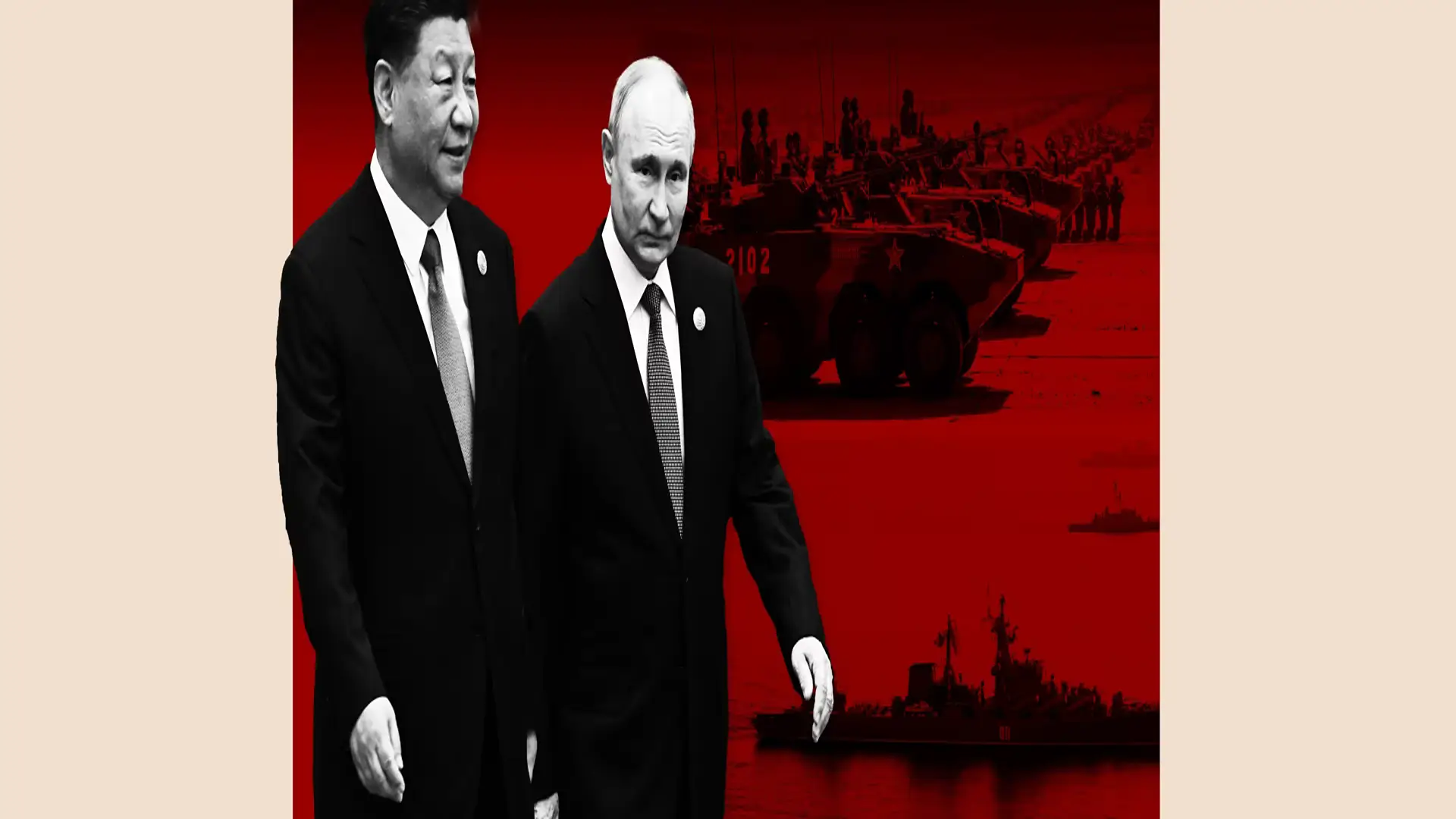
Military Collaboration. Russia and China have expanded their military cooperation, conducted joint military exercises and boosted defence ties. They have worked on developing missile warning systems, enhancing collaboration in space, and engaging in joint bomber patrols over the Pacific and East China Sea. Despite historical tensions over arms exports, the two countries have increased military exchanges and exercises, signalling a deepening military partnership. In January 2024, China's new Defense Minister Dong Jun and his Russian counterpart Sergei Shoigu affirmed their commitment to elevate military cooperation to unprecedented levels. Russia and China have increasingly utilised joint military exercises to assert their presence and capabilities. In September 2022, Russia hosted the Vostok-2022 military exercise, with China participating. In July 2019 and December 2020, Russia and China flew joint bomber patrols over the Pacific. While China now produces most of its weapons, it still imports certain military products from Russia, such as jet engines. The two countries have also been working on developing missile warning systems and enhancing collaboration in space.Following the implementation of international sanctions, China provided economic relief to Russia.In April 2023, Chinese Defense Minister Li Shangfu made his first overseas visit to Russia, stating that the ties between China and Russia "surpass military-political alliances of the Cold War era". In May 2023, Russian Prime Minister Mikhail Mishustin and Deputy Prime Minister Alexander Novak visited Beijing and met with Chinese President Xi Jinping.These developments highlight the deepening military cooperation between Russia and China, driven by their shared interests and desire to counter Western influence. However, the relationship remains complex, with both countries cautious about preserving their individual sovereignty and strategic autonomy.
The recent military cooperation between Russia and China has significant implications.
Deepening Strategic Partnership
: The two countries have elevated their military cooperation to unprecedented levels, with their defence ministers affirming a commitment to strengthen ties. This marks a notable advancement in the strategic partnership between Russia and China.
Potential Threat to NATO
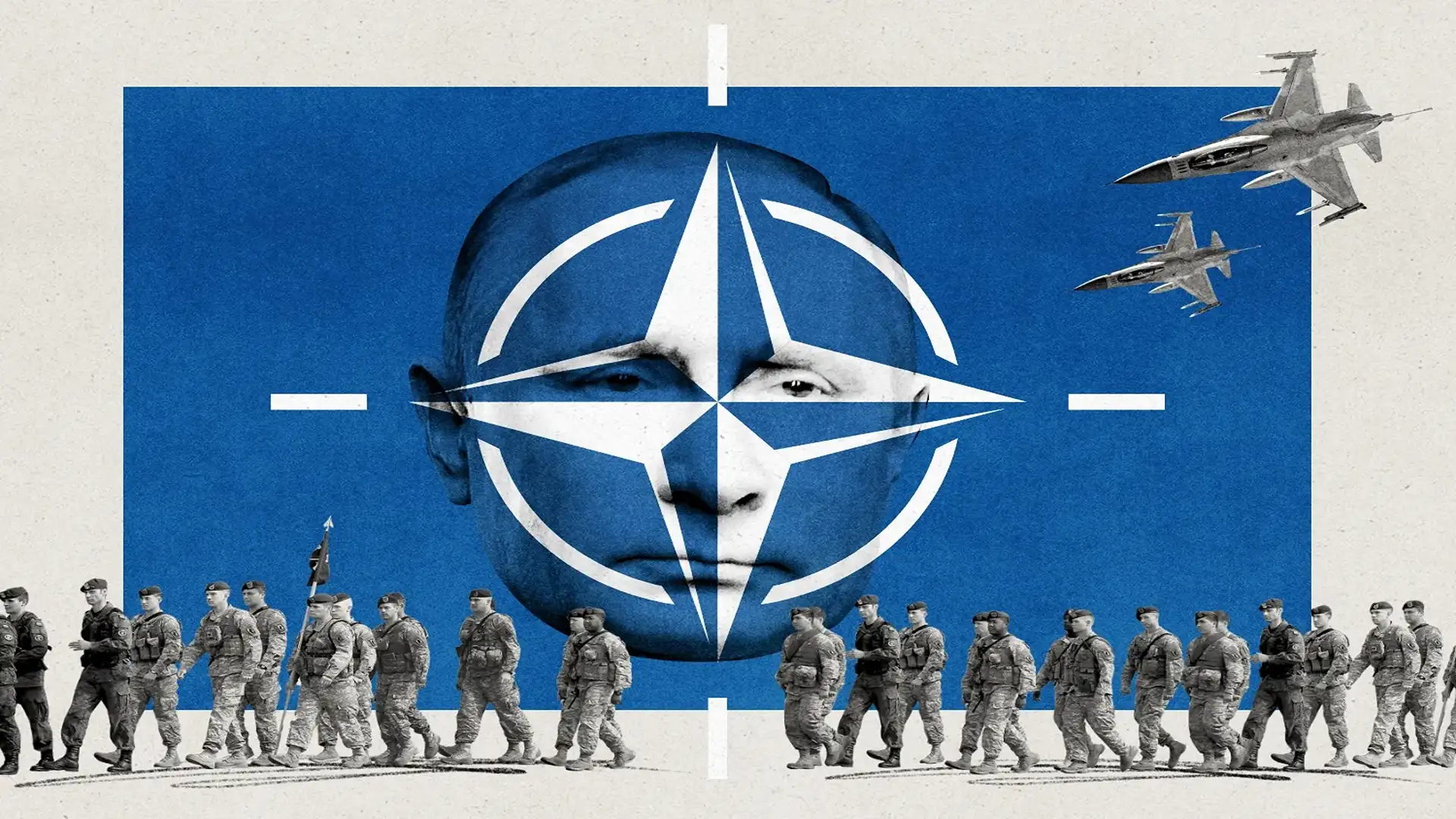
: If China's military cooperation with Russia provides evidence of a de facto military alliance, it could lead NATO and its member states to perceive both Russia and China as threats to their security
,
result
ing
in far-reaching consequences across diplomatic, financial, trade, economic
and military relations.
A Russian-Chinese military alliance would have significant political and military-operational impacts on NATO's deterrence and defence capabilities. Russia's calculus would be encouraged to take on high
er
risks if China contributed proactively with substantial forces and capabilities.
Challenges in Crisis Management
: A military alliance between Russia and China
may
make it more difficult to achieve a common view among actors involved in crisis management and stabilisation efforts in Europe and on Europe's periphery. Russia has already expanded its influence in several crises.
Intensified Military Exercises and Patrols
: China and Russia have increasingly utilised joint military exercises to assert their presence and capabilities. They have conducted joint naval exercises and patrols in the Sea of Japan, Taiwan Strait, and South China Sea.
Mutual Support and Assistance
: China has supported Russia on the Ukrainian issue despite Western pressure. Shipments of dual-use equipment and industrial products from China have measurably contributed to Russia's war effort.
Implications for Taiwan
: China's intensified military cooperation with Russia may have significant implications for President Xi's ambition of bringing Taiwan back into the Middle Kingdom's fold, either peacefully or otherwise.
The U.S. Perspective
Recent military cooperation between Russia and China isa concern, and the U.S. has adopted strategic recalibration,prompting a reassessment of its defence and foreign policy strategies.
The U.S. has criticised Russian and Chinese military cooperation, particularly joint military exercises and the deepening strategic alignment between the two countries. The U.S. views this cooperation as challenging its global hegemony and a potential threat to international securitydynamics. Efforts have been made to impose sanctions and diplomatic pressure to counter the activities perceived as undermining global stability and security. The U.S. has also engaged in discussions with China on issues related to Russia-North Korea military cooperation.
The U.S. has expressed concerns, particularly regarding regional stability and the balance of power. This has led to increased vigilance, preparations, and potential adjustments in U.S. defence planning to address the changing security landscape influenced by the Sino-Russian partnership.
Indian Position
As Russia's long-term strategic partner and sharing a troubled relationship with its next-door neighbour, China, India predictably looks at the growing axis with concern. To protect its national interests, India must navigate its relationship with Russia with a delicate balance of diplomatic and strategic considerations.
With more than 40 per cent of its defence supplies coming from Russia, despite major efforts at indigenisation and diversion, dependency is critical. The extended military stand-off with China, with thousands of troops and armour in an eyeball-to-eyeball confrontation, makes this dependency even more critical. India's strategic calculations vis-a-vis Russia could go awry if China successfully exerts unbearable pressure on its junior partner, Russia.
This has necessitated a careful balancing of diplomatic and military strategies. India faces a dilemma between its "comprehensive global strategic partnership" with the U.S. and its "special and privileged partnership" with Russia.The strengthening of the Sino-Russian partnership could lead India to perceive both countries as threats to its security, with far-reaching consequences across diplomatic, financial, trade, economic, and military relations.
The growing China-Russia alliance casts a shadow over regional stability, with implications for India's strategic positioning amidst increasing tensions. China and Russia's intensified military exercises and patrols in the region are direct responses to Western military activities.India is concerned about the potential consequences of China's growing economic influence in Central Asia. China may use its economic power to strengthen its influence and even politically pressure competitors in the region.
Indian Strategy to Counter the Axis
India must adopt a suitably nuanced approach to maintain its interests amidst regional tensions. Indian strategists could align India's strategic interests with global powers like the U.S., Japan, and European nations to counterbalance the influence of the China-Russia partnership. By fostering closer ties with key allies and participating actively in multilateral forums, India can assert its position and protect its national security interests in the face of evolving regional dynamics.
To achieve this, India should engage in proactive diplomatic efforts to strengthen relationships with key global players, including the U.S., European nations, and other regional powers. Building strategic alliances and partnerships can provide India with additional leverage in managing the implications of the China-Russia alliance and safeguarding its national interests.
The strategy aimed at effectively managing the implications of the enhanced strategic partnership between China and Russia must ensure India's interests are safeguarded, and its position in the region remains strong amidst shifting global dynamics. The broad contours of such a strategy should have the following attributes: –
Focus on
Regional Stability and Geopolitical Dynamics
: Indian strategists must address the implications of the China-Russia partnership on regional stability and geopolitical dynamics. Understanding the evolving security architecture in the Indo-Pacific region and the impact of the Russia-China alliance on global power dynamics is crucial for India to navigate the changing geopolitical landscape effectively
.
Focus on Regional Alliances
: Strengthening regional alliances and partnerships, particularly with countries in the Indo-Pacific region, can enhance India's strategic positioning and counterbalance the influence of the China-Russia alliance. Collaborating with like-minded nations on security, economic
,
and diplomatic fronts can help India effectively navigate the changing geopolitical dynamics.
Balanced Engagement with Russia and China
: Indian strategists need to carefully balance engagements with Russia and China, maintaining strategic autonomy while navigating the complexities of the evolving partnership between the two countries. India should leverage its historical ties with Russia
while
engaging constructively with China to safeguard its interests and promote
Indo-Pacific
stability.
Diversification of Defen
c
e Supplies
: India
should prioritise diversifying defen
c
e
procurement
to reduce dependency on Russia, especially as the Russia-China partnership deepens. Exploring alternative defen
c
e partners and enhancing Indigenous defence production capabilities will help mitigate risks associated with overreliance on a single source.
Defen
c
e Collaboration and Moderni
s
ation
: Enhancing defence collaboration
s
and exploring joint military production can bolster India's defence capabilities and moderni
s
e its armed forces.
The
focus on leveraging
advanced
technology transfers and enhancing joint military ventures to strengthen India's defence preparedness
has to be prioritised
.