
The coming together of AI and biotechnology opens a Pandora's box of possibilities. While biotech has been the harbinger of most of humankind’s healing miracles, its weaponisation has the potential for unprecedented forms of warfighting vectors with results that few can predict with any measure of accuracy. The United Nations Secretary-General, António Guterres, aptly worded the concern when he said, "We need a coordinated global approach to govern these technologies, ensuring they are used for the benefit of humanity, not its destruction."
The dual-use nature of these technologies necessitates vigilant and coordinated global governance to prevent their misuse as tools of war.
The Marriage of AI & Biotech
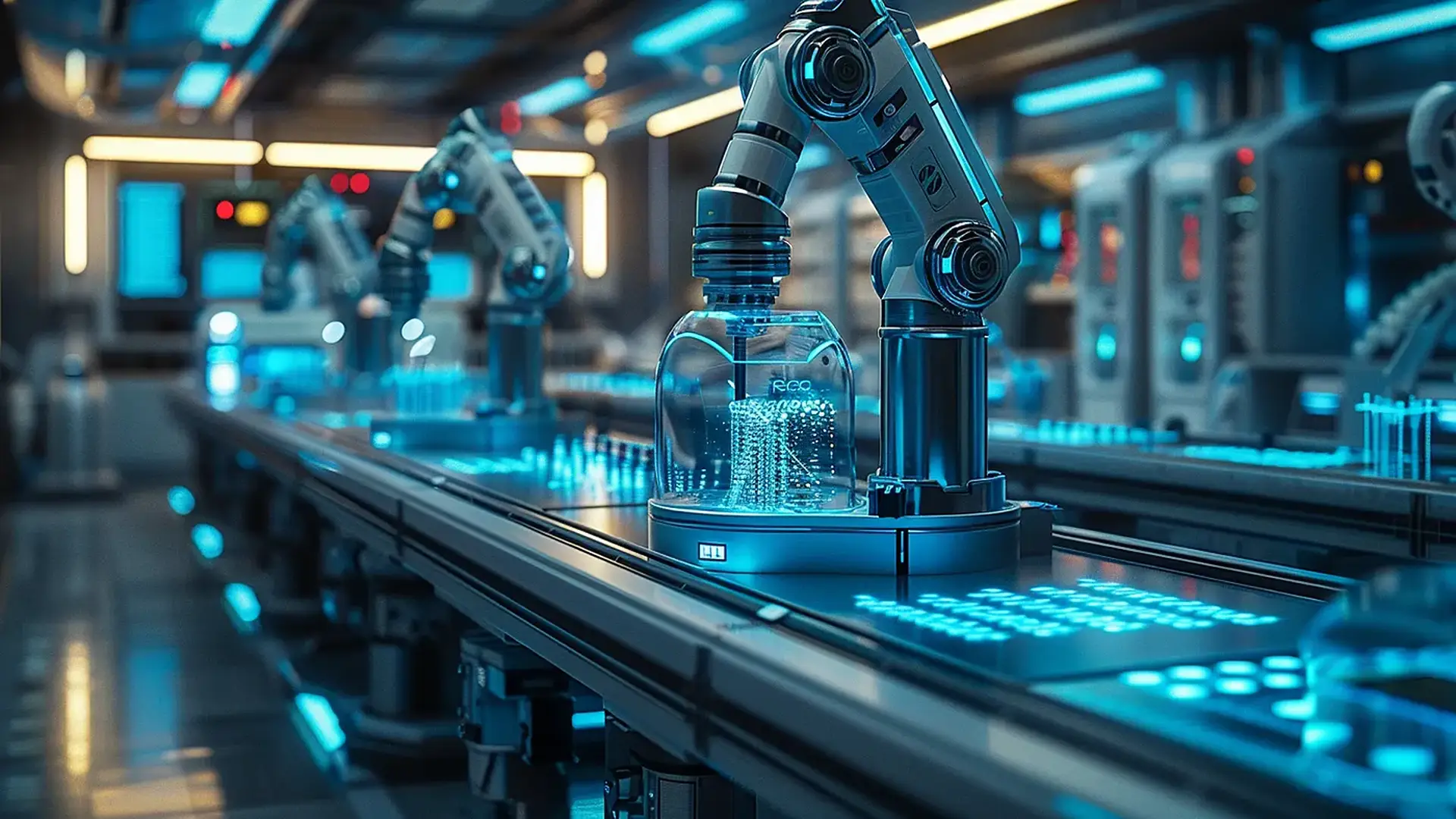
At its most basic, BiotechBiotech uses cellular and biomolecular processes to create products that harness natural microbial biological processes. Biotechnology spans various fields, including genetics, biochemistry, and molecular biology. Some common applications are in healthcare, medicine, agriculture, industrial processes, environmental science, etc.Artificial intelligence (AI) is becoming increasingly integral to biotechnology, enhancing research capabilities, efficiency, and innovation across various domains.
AI algorithms can predict how different chemicals will interact with biological systems, speeding up drug development and reducing the need for costly and time-consuming laboratory experiments. As a renowned AI Expert, Eric Topol aptly states, "AI has the potential to revolutionise medicine by transforming how we understand and treat diseases."
In the pharma industry, AI has solved the longstanding protein folding problem.AI algorithms can predict how different chemicals will interact with biological systems, speeding up drug development and reducing the need for costly and time-consuming laboratory experiments. It helps identify potential drug candidates, predict their efficacy, and optimise their molecular structures. These tools analyse vast genetic data to uncover disease patterns and associations, which includes identifying genetic mutations that could lead to diseases and predicting how genetic diseases might respond to treatments. AI also leverages individual genetic, environmental, and lifestyle data to tailor medical treatments to individual patients. This customisation increases the effectiveness of treatments and reduces adverse effects. Models like DeepMind’s AlphaFold can accurately predict protein structures based on their amino acid sequences. This is crucial for understanding disease mechanisms and developing targeted therapies. For instance, determining protein structures traditionally requires time-consuming and costly experimental methods like X-ray crystallography or cryo-electron microscopy. AlphaFold can provide these structures in a fraction of the time, potentially speeding up the pace of scientific discovery.
Patients may now access over 250 biotechnology-based medical goods and vaccinations, many for previously incurable diseases.
AI enhances the capabilities of diagnostic tools, from interpreting complex medical imaging to developing diagnostic tests that can predict disease presence or risk with high accuracy. These applications improve the efficiency and effectiveness of biotechnological processes and open new avenues for exploration and innovation in the field. Insulin for diabetes treatment is now commonly produced using recombinant DNA technology.
Agricultural biotechnology is used by more than 13.3 million farmers worldwide to boost yields, minimise environmental harm from pests and insects, and improve crop productivity. Crop data collected by drones and sensors are analysed to manage farm practices, predict crop yields, optimise resource use, and monitor the health of crops and soil. AI models predict microbial interactions and optimise the production of biofuels, pharmaceuticals, and other valuable chemicals in fermentation processes. Techniques like CRISPR (Clustered regularly interspaced short palindromic repeats) and gene therapy can correct genetic defects and treat diseases like cystic fibrosis and sickle cell disease.
Furthermore, more than fifty biorefineries are being constructed in North America to test and improve processes for turning renewable biomass into chemicals and biofuels that can lower greenhouse gas emissions.
AI and BiotechBiotech join Battle.
Research has indicated that approximately 86 per cent of deaths on the battlefield happen within the first thirty minutes following an injury. Evacuating injured soldiers from an active combat zone expeditiously has been a principal focus of most modern armies since the Crimean War (1854-1856), which showed how even minor wounds could quickly get infected and turn gangrenous and lead to loss of limbs and, worse, lives.
AI can enhance medical care on the battlefield by providing diagnostic support, remote monitoring of soldiers' health, and personalised treatment plans based on real-time data. The most crucial step involves accurate assessment and initial diagnosis, which guide the decision to provide first aid. Drawing on its experiences from the global war on terror, the U.S. Army is developing the Algorithms for Care and Treatment (iACT) program. This initiative will incorporate artificial intelligence algorithms to providesoldiers and medics with indications, warnings, and suggestions. The goal is to enhance their capabilities in monitoring, diagnosing, triaging, and treating their fellow service members.
AI-driven systems can also manage and analyse health data in challenging environments, ensuring timely medical interventions. AI aids genetic research focusing on understanding how genes influence military personnel performance, health, and resilience. Such research could lead to the development of genetic enhancements aimed at improving endurance, stress resistance, or recovery rates.
In military logistics, AI embedded BiotechBiotech can accelerate the design and creation of genetically engineered organisms or biological systems that can produce materials useful for the military, such as biofuels, novel materials, or substances that can degrade environmental contaminants. The home-grown technology developed by CSIR-IIP Dehradun for producing bio-jet fuel has received formal approval for use in military aircraft of the Indian Air Force (IAF). In biotechnological supplies and medical logistics, AI can optimise the storage, distribution, and management of biological materials and medical supplies across various environments.
Scientists want to create the ultimate super soldier for the futuristic battlefield, tinkering with human capacities. AI is integrated into neurotechnology to develop interfaces that enhance cognitive abilities, such as improved reaction times, memory, or decision-making under stress. Neuralink, founded by Elon Musk, is at the forefront of developing brain-computer interfaces (BCIs) to merge human cognition with artificial intelligence. However, its primary use cases, such as Parkinson’s disease, epilepsy, and spinal cord injuries by restoring motor functions or mitigating undesirable symptoms. Its definitive use in the military is still in manifestation. This includes research into brain-computer interfaces that could enable direct communication between humans and machines.
AI-driven simulations and virtual environments are used for training, providing realistic and adaptive scenarios that help soldiers prepare for biological threats or medical emergencies.
The Dark Side
Since ancient times, ruthless military commanders have had little compunction in resorting to the unethical use of bioagents to achieve military objectives; history is replete with such ugly examples. One of the recorded use of biowarfare goes as far back as 1347 when Mongol hordes routinely hurled plague-infested corpses into besieged walled cities along the Black Sea coast in the Crimean Peninsula. The British fighting the American Indians in 1763 knowingly allowed smallpox-infected blankets to circulate amongst the tribes that, debilitated their ranks. The German army was the first to use weapons of mass destruction, both biological and chemical, during the First World War, although their attacks with biological weapons were on a rather small scale and were not particularly successful: covert operations using both anthrax and glanders attempted to infect animals directly or to contaminate animal feed in several of their enemy countries.
Japan's bioweapon programme during the Second World War was spearheaded by its Unit 731 in the remote environs of the Japanese Kwantung Army, brutally enforcing its writ in occupied Manchuria. At its height, more than 5,000 people were involved in killing as many as 600 prisoners a year in human experiments in just one of its 26 centres. The Japanese tested at least 25 different disease-causing agents on prisoners and unsuspecting civilians. During the war, the Japanese army poisoned more than 1,000 water wells in Chinese villages to study cholera and typhus outbreaks. Japanese planes dropped plague-infested fleas over Chinese cities or distributed them through saboteurs in rice fields and along roads. Certain biological agents might cause genetic mutations, leading to congenital disabilities and genetic disorders in future generations. Some of the epidemics they caused persisted for years and continued to kill more than 30,000 people in 1947, long after the Japanese had surrendered.
In modern times, while the direct militarised use of AI in biotechnology to cause harm or violence remains shrouded from public view, there is enough technical evidence that dual use can give rise to serious mass casualties.
As artificial intelligence advances biological engineering capabilities, there's a heightened risk that malicious actors could misuse these technologies. Groups with harmful intentions, similar to the Japanese cult 'Aum Shinrikyo' in 1990, could potentially exploit these tools to execute bioterrorist acts, significantly increasing the risks associated with biotechnology.
In the case of weaponised biotechnology and AI-enabled misuse by state and non-state actors, there is one example of university students using OpenAI’s Chat GPT to gather information on replicating pandemic-potential pathogens at home.
Even the militarised use of BCI technology raises significant ethical questions, including concerns about privacy (e.g., unauthorised access to one's thoughts), consent, and the long-term impacts on human identity and societal norms.
The use of AI in designing or modifying biological systems could be misused to create harmful biological agents. The ease and speed at which AI can generate novel organisms or compounds might outpace the ability of regulatory bodies to oversee and control such activities. Developing specialised AI biological design tools, like AlphaFold2 and RFdiffusion, is advancing our capabilities in creating complex biological entities, such as therapeutic antibodies and novel proteins. These tools are designed to tackle significant biological challenges and are trained on extensive biological data, including genetic sequences. While they hold promise for medical breakthroughs, they also raise concerns about the potential misuse to create biological agents with enhanced harmful properties, possibly circumventing natural evolutionary trade-offs between transmissibility and lethality.
Biological warfare involves using bacteria, viruses, or other pathogens as biological weapons against humans, animals, or plants to hinder or incapacitate or destroy. It can also include the use of toxins produced by organisms. The use of biological agents is highly regulated under international law, specifically the Biological Weapons Convention (BWC), which prohibits the development, production, and stockpiling of biological and toxin weapons. Now the convention will have to take into its embrace the role of AI also.
Two international treaties outlawed biological weapons in 1925 and 1972, but they have largely failed to stop countries from conducting offensive weapons research and large-scale production of biological weapons. Biological and Toxin Weapons Convention (BTWC) in 1972, an improvement on the 1925 Geneva Protocol. Although the latter disallowed only the use of chemical or biological weapons, the BTWC also prohibits research on biological weapons.
Bio-Security Measures
Biosecurity involves measures to prevent, respond to, and recover from biological threats and incidents, whether naturally, accidentally, or deliberately. The 2022 U.S. National Biodefence Strategy and Implementation Plan provides a suitable template for other countries to emulate. It highlights biosecurity as essential for American national security, economic innovation, and scientific empowerment. Over the past two decades, American leaders have made significant investments across the political spectrum to enhance biosecurity measures and the pandemic only accelerated this effort.
AI can positively promote biosecurity through its extra-human capacities. For instance, BlueDot's AI-driven platform leverages AI to monitor global infectious diseases, providing outbreak alerts, risk assessments, and forecasting models. Its proven track record includes early alerts for significant outbreaks like Ebola and COVID-19.
India's approach to biosecurity involves various measures to manage and prevent biological threats that affect agriculture, health, and the environment. The country's biosecurity framework includes legislation such as the Destructive Insects and Pests (DIP) Act, initially established in 1914 and continually updated to address new challenges. This act is pivotal in regulating the import of plants and other materials to prevent the entry of invasive species and pests.
However, India faces significant challenges in enforcing these regulations effectively. Issues include inadequate surveillance systems for forest pests, which hinder early detection and rapid response to invasive alien species. Moreover, the 2013 Agricultural Biosecurity Bill, which proposed the creation of an Agricultural Biosecurity Authority to integrate and strengthen biosecurity across various sectors, has yet to be enacted. This bill aims to provide a more unified and comprehensive approach to handling biosecurity threats but is still pending approval .
The challenges are compounded by the lack of a cohesive national biosecurity policy, which leads to fragmented efforts across different government bodies. This fragmentation is evident in the division of responsibilities among agencies like the Indian Council of Medical Research (ICMR), the Council of Scientific and Industrial Research (CSIR), and the Defence Research and Development Organization (DRDO), which manage biosecurity issues related to health, agriculture, and national security respectively.
Key Takeaways
In this era, technological progress outpaces the development of necessary protective measures. AI technologies used in drug discovery can be misused to design lethal or incapacitating biotechnological weapons. Strengthening biosecurity measures is essential to protect the nation's agriculture, biodiversity, and public health from natural and artificial biological threats.
AI can positively contribute to biosecurity through real-time epidemic detection, trend forecasting, and developing countermeasures and countermeasures.
AI-enabled biosecurity risks increase with globalisation. For India, the need for a robust biosecurity system is urgent due to the increased risks from global trade, climate change, and the potential for bioterrorism.