
THE ECONOMICS OF ELECTIONS
The most expensive elections in the world throw up a plethora of issues, and the economic one is topping the list.
This year is rightly being hailed as ‘the Mega Election Year.’Across the globe, we will witness a historic turnout of the world’s populace exercising their voting rights, with elections slated across over 60 nations. “Elections will, therefore, be an important, if not the most important, macro story in 2024,” predicts Goldman Sachs’ economist Joseph Briggs. As per the World Economic Forum, more than 2 billion voters will head to the polls in countries including the United States, India, Mexico and South Africa.
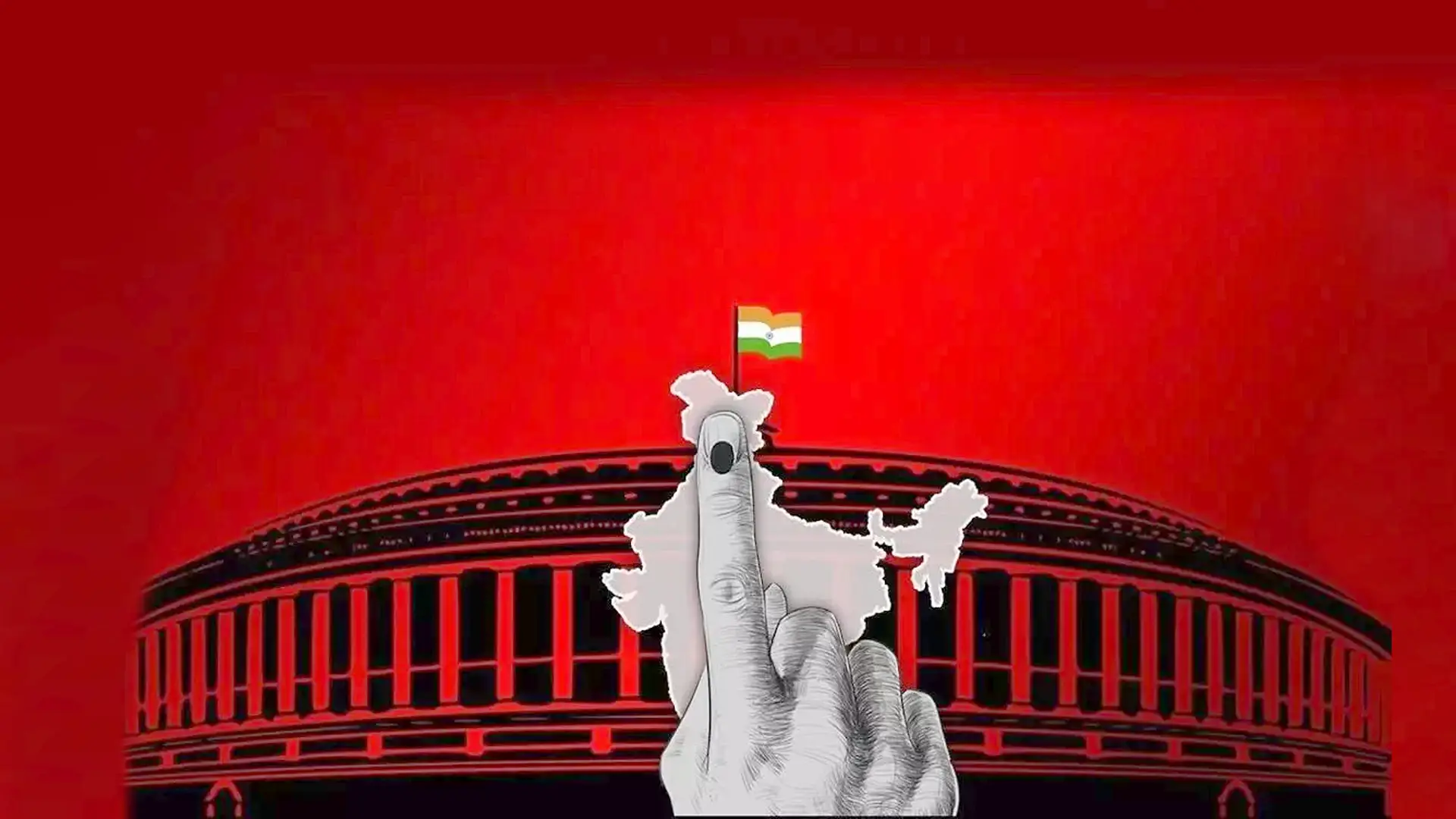
India tops the chart with almost a billion individuals eligible to vote in its general election, marking it as the largest democratic endeavour to date.But this comes with a hefty price tag- almost 1.35 trillion rupees ($16 billion), as projected by the Centre for Media Studies (CMS), an Indian non-profit organization. This expenditure would surpass twice the amount spent during the previous election in 2019 and even eclipse the funds allocated for America's presidential election in 2020.
Putting a Price Tag
India's upcoming election is poised to be the most expensive, but the reasons behind this go beyond just the sheer size of the electorate.
One such factor is the proliferation of candidates. In Indian elections, constituencies often feature numerous contenders. For instance, in 2019, an average of 15 candidates vied for each seat, a trend likely to persist in the current election. Such crowded fields lead to intense and costly campaigning efforts.According to estimates by the Centre for Media Studies (CMS), over half of party and candidate spending in 2019 went towards advertisements, party workers’ wages, and transport. With India's expanding economy, voters are targeted through increasingly sophisticated and expensive methods, including a significant rise in digital marketing expenditures.
Another crucial aspect is the expenditure on incentives for voters, often undisclosed. CMS approximated that around a quarter of political spending in 2019 was directed towards voters through gifts, ranging from alcohol to electronics to cash bribes.However, this lavish spending is unlawful. The Election Commission seized assets worth 47 billion rupees just before voting commenced to ensure fair competition. Although there are caps on individual candidates' campaign spending, enforcement is lax, and parties face little or no restrictions on their expenditures on the actual election trail.
The exorbitant costs of campaigning also shape the profile of elected representatives. Successful candidates tend to be affluent, with the median wealth of winners in 2019 being 40 million rupees, significantly higher than their competitors. Moreover, due to the prevalence of illicit spending, elected officials are more likely to have criminal backgrounds.
India is not alone in suffering these maladies of the democratic process; cash-for-votes practices are common in other developing democracies. Indian authorities have long grappled with reducing the nexus between money and politics. In 2018, the government introduced an "electoral bonds" scheme to curb the flow of undeclared funds into politics, but the initiative lacked transparency and was declared unconstitutional by the Supreme Court in February this year.
Election Economy
Elections in India are characterized by significant spending, a hallmark of its political process. Economic transformation has reshaped traditional Indian occupations, notably agriculture, introducing a new layer of uncertainty. Job security is no longer guaranteed, prompting workers to explore alternative career paths amid heightened aspirations. However, this pursuit often pushes individuals to operate on the edge of their financial means, leaving little room for setbacks.
In times of crisis, those at the bottom of the socio–economic pyramid look to the state for support.The blend of economic uncertainty and heightened aspirations has expanded the scope of support families seek, ranging from education expenses to medical bills. Politicians who extend such assistance, often from personal coffers, must navigate the challenge of raising funds, even resorting to illegal means. Furthermore, they must provide aid and showcase their capacity to do so, contributing to ostentatious lifestyles. These expenses are typically offset upon attaining power.The rise of numerous such politicians has reshaped the dynamics of political parties, which now strive to attract individuals capable of mobilizing sizable support bases.
In elections dominated by a central political issue, parties align themselves with winning themes to sway public opinion. This necessitates significant investment in shaping narratives across various platforms, including social media and entertainment. This gives rise to a booming business opportunity for media platforms, social media handlers and evenmore mundane ways of spreading the parties’ manifesto through printed posters, handouts, giant cut-outs and loudspeakers carried in rikshaws and taxis. In fact, elections create their own peculiar economy during the course of an extended campaigning period typical of the U.S. and India.
Adding complexity, parties must stash funds overseas between elections. They must master the art of fundraising, concealing assets abroad, and repatriating them during election cycles. The substantial sums often lead parties to turn a blind eye to corruption if not actively endorsed. However, the risk of exposure carries severe political repercussions, prompting innovative strategies to raise, conceal, and retrieve funds within legal boundaries.
Economy as a Plank for Success
Increasingly, the economy has become a critical plank upon which competing political parties anchor their case for being voted into power. In India, too, any incumbent government has always highlighted its economic gains as proof of its efficient governance. India's GDP reportedly surged by over 8 per cent in the last quarter, potentially bolstering the prospects of the incumbent government in the forthcoming elections. Nonetheless, certain economists caution that the GDP upticks are often transitory and mask underlying challenges.
V Anantha Nageswaran, India's chief economic advisor, asserts that robust domestic demand and private investments will sustain growth momentum. However, other economists advocate for a more nuanced evaluation of India's economic vitality.They highlight that the elevated GDP figures may not accurately depict comprehensive growth, pointing to a decline in agriculture, uneven patterns in private consumption, and heightened dependence on public capital expenditure.
Lekha Chakraborty, a professor and chair at the National Institute of Public Finance and Policy, a research institute, commented that high GDP growth "does not ensure high human development, and there is a need to investigate other human development indicators, which are crucial to fine-tuning public policy."
Economist Arun Kumar said that the GDP figures are based on the organized sector and are used to gauge the unorganized portion of India's economy, but the unorganized sector represents a huge chunk of the Indian labour force."This washes out the decline in the unorganized sector, and the economy appears to be doing well," says Kumar.
A common complaint among voters has always been that the growthprojected has not translated into jobs.
Election Freebies
In the recent state elections, parties dangled pledges such as farm loan waivers and government employment to free education, increased cooking gas subsidies, financial assistance for women, college-going students receiving laptops, and reverting to the Old Pension Scheme (OPS).
Under pressure from the opposition's promises of goodies, the government established a committee to review the New Pension Scheme (NPS) for government employees and extended the free food grain subsidy scheme for another five years, with an estimated cost of Rs 11.8 lakh crore, as part of the Union Budget 2023-24.
Yet, the line between welfare measures and giveaways blurs, leaving the question of who ultimately bears the cost. Do the promises of freebies add to the overall cost to the country's growth prospects once the winners have to translate their promises into action? Concerns have been raised over such generosity at the cost of the public exchequer while the central and state governments struggle for fiscal prudence. Undoubtedly, it is the tax-paying public that will ultimately have to bear the burden of higher taxes.
Experts caution that the full fiscal impact of these promises on taxpayers may only manifest 12-18 months after a government takes office, once the schemes are fully implemented. Although estimating the exact cost of these promises can be challenging, a recent SBI Ecowrap report on the Karnataka Budget's Arithmetic suggested an annual expenditure of nearly Rs 60,000 crore to fulfil the ruling dispensation's five pre-election commitments.The report further outlines that an estimated Rs 35,000-40,000 crore for the current fiscal year is necessary to honour these commitments. Consequently, the subsidy has risen by Rs 14,500 crore in FY24 compared to the FY23 Revised Estimate, primarily due to enhanced energy and food supply subsidies.
Furthermore, the issue has reached the courts, with several cases pending before the Supreme Court. Notably, in October of last year, the Supreme Court issued notices to the governments of Madhya Pradesh and Rajasthan, the central government, and the Election Commission in response to a plea seeking comprehensive guidelines to prevent political parties from distributing cash and other freebies at the taxpayers' expense.
Elections & Global Economies
Goldman Sachs Research has uncovered that as election day approaches, government spending tends to rise, central banking policies relax, and economic uncertainty escalates.Economists emphasize a substantial body of academic research indicating the occurrence of predictable policy shifts known as "political business cycles." These cycles typically yield short-term increases in output and reductions in unemployment.
In a comprehensive analysis spanning over 1,100 elections across 152 developed and emerging markets, Goldman Sachs Research reveals that primary fiscal balances, as a percentage of GDP, typically decline by approximately 0.4 percentage points in election years. This decline reflects both heightened spending and diminished revenue. Moreover, these effects tend to persist partially into the year following the election before gradually fading over the subsequent two years. The report goes on to say that "The most direct way politicians could try to steer election outcomes is by easing fiscal policy to provide a boost to the economy in the runup to the election.”
Monetary policy also typically relaxes during election years. However, the extent of this easing largely hinges on the strength and independence of the policymaking institutions. Central banks vary in terms of their autonomy, mandate, organizational structure, and leadership appointment process. Consequently, the potential for political influence in shaping monetary policy differs significantly across countries.
Despite politicians generally minimizing policy adjustments leading up to elections, the resulting uncertainty about future policies can influence economic decision-making. The Economic Policy Uncertainty Index, which considers factors such as media coverage, expiring fiscal policies, and discrepancies among economic forecasters, indicates a broad-based increase in policy uncertainty during U.S. presidential election years.
“Taken together, our estimates suggest that elections have a predictable but modest impact on economic growth, with a moderate easing in fiscal policy and modest easing in monetary policy being partially offset by a modest growth drag from increased policy uncertainty,” reports the Goldman Sachs Research.
Assessment
2024 marks a crucial year for global democracy through elections in major countries across the globe.
Research indicates that government expenditure typically increases, central banking policies tend to ease, and economic uncertainty rises before an election.
For the man on the street, it translates into a higher cost of living and rising inflation.
India’s election has caught global headlines
as it is poised to be the most expensive, with many candidates, wooing strategies, and
money wars waged across the country.
As the country primes up for
speeches, manifestoes and promises, this election promises to witness spending at a level not seen before and incomparable across the globe.
But it cannot be denied that whatever the cost of conducting elections at the scale being undertaken in India, if in the end they are free, fair, and truly strengthen democracy, the price is worth bearing, even by the millions of poorer Indians.