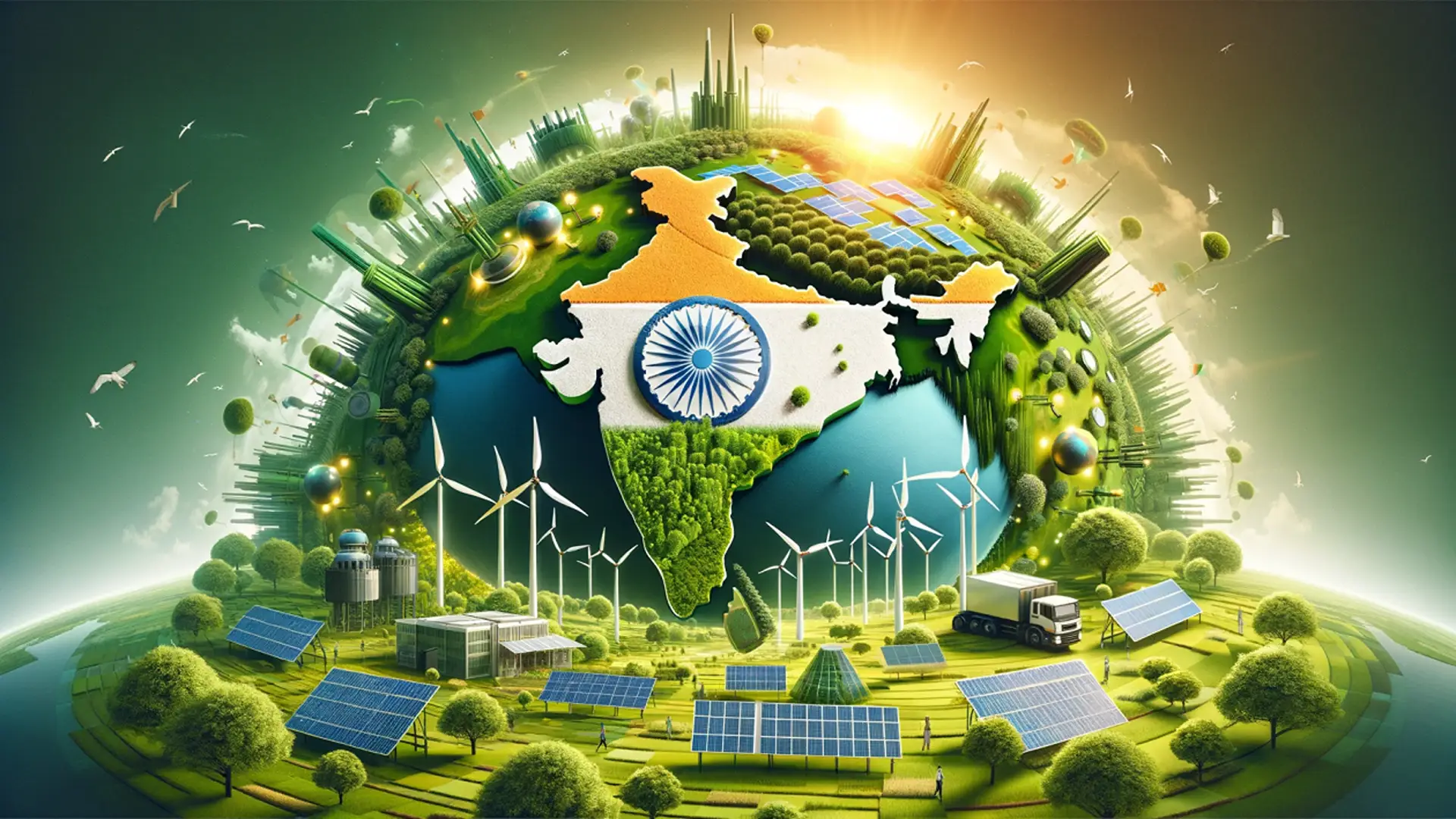

To make its goal of green energy security a reality, India must accelerate the domestic manufacturing of its essential sub-systems.
The U.S. Trade Administration, in a web article, very succinctly defined the vast canvas of India’s energy scene. It says that India is the third-largest consumer of energy in the world, the third-largest consumer and fourth-largest importer of liquefied natural gas (LNG), and the world’s third-largest net importer of crude oil and petroleum products.
According to the Indian Ministry of Power, the country’s peak demand reached a record high of 223 gigawatts (GW) in June 2023, a rise of 3.4 per cent from the highest level in 2022, and consumption is projected to continue rising. Over the past decade, India has achieved an installed capacity exceeding 400 GW, supported by industrial growth, urbanisation, government policies, and favourable geopolitics. The Indian power sector employs a wide range of fuel sources, including traditional sources such as coal, oil, and gas, alongside environmentally sustainable sources such as solar, wind, biomass, industrial waste, and both large and small hydro plants. With a population of approximately 1.4 billion and one of the world’s fastest major growing economies, India’s energy demand matches pace.
However, all this growth has come with a price for carbon emissions. As per Statista, India has seen its share of global greenhouse gas (GHG) emissions rise to more than seven per cent, making it the world's third-largest GHG polluter, behind the United States and China. Nevertheless, India has the lowest per capita emissions in the G20, at just 1.9 tCO₂ per person, or roughly an eighth of what the average American emits yearly. Its contribution to historical cumulative CO₂ emissions is also far lower than that of other major polluters, at just three per cent.
At the current rates, conservative estimates suggest that India's emissions will reach between 0.56 and 1.0 billion tons of CO2 by 2070.
Is Indian Oil Secure?
The question arises of whether such a transformational change to its energy policy is optional or if India has little choice. Faced with the daunting possibility of a severe crunch in its fossil energy supplies, India must seek alternative sources.
The signs are clear that the energy market will be tightly calibrated by oil producers who would like to milk it to its maximum until the bottom finally falls off the fossil fuel market.The formation of the OPEC Plus and shifting global dynamic currents reflecton energy demand and supply. The price fluctuations play havoc with carefully crafted domestic budgets. While oil may be the most popular news item, traditional formats such as coal and natural gas are also not immune to market forces.We have seen that despite all talks of strategic oil reserves and growth of renewables, recent supply disruptions like the Ukraine war and the Gaza have had detrimental effects on the economy, globally and nationally, impacting the lives of individuals.
With the world’s oil consumption hitting record highs, calls for a green transition in economies through renewable energy sources are gathering pace. While dependence on mainstream energy sources is predicted to decline, oil demand is estimated to peak before the end of the decade.
India has successfully negotiated unstable oil markets by carefully regulating oil imports and investing in the refining industry. Geopolitical instability has sometimes favoured India, such as the Russia-Ukraine conflict. This has allowed India to overcome a lack of strategic oil storage availability. India has built a sizable oil industry through strategic planning and investments in the refining sector despite the country's small oil reserves. With 5.33 million metric tonnes of strategic petroleum reserves, the nation can meet its net oil import needs for 9.5 days. As the 23rd Standing Committee Report recommends, India is looking into other options to increase its strategic petroleum reserves, such as constructing modest, ground-level storage tanks at state-run refineries.
India’s Green Energy Trajectory
India recognises that global efforts to control GHG are doomed to fail without its participation. Therefore, it was welcomed globally when the Prime Minister announced the "Panchamrit", the five-point agenda to fight global change at the 2021 COP26 Climate Summit in Glasgow.The five ‘nectar’ elements presented by the Indian government included:
Increasing non-fossil fuel capacity by 500GW by 2030.
Fifty per cent of its energy requirements will come from renewable energy by 2030.
The total projected carbon emissions will be reduced by one billion tonnes from now to 2030.
Reduction of the carbon intensity of the economy by 45 per cent by 2030, over 2005 levels.
Achieving the target of net zero emissions by 2070.
However, this necessitates the comprehensive development of numerous technologies in India’s Energy basket. Coal is expected to remain the primary fuel source of the energy sector for the next two decades. Therefore, achieving net zero by 2070 will require significant nuclear power and large-scale renewable energy production; decarbonisationwill become paramount well before 2070.
India cannot afford to lose sight of the fact that energy security for the nation is essential, particularly affordability for its masses. However, there is a silver lining, too—by lowering reliance on fossil fuels, the green transition is anticipated to have a net beneficial impact on energy security.India is projected to become dependent on imports for 41 per cent of gas, 84 per cent of oil, 60 per cent of coal, and 55 per cent of its energy supply by 2047, posing geopolitical risks.
India is focusing on sustainable development through green energy systems. The primary mechanism includes solar, green hydrogen, and windmill repowering to gain net zero emissions by 2070. However, the crux lies in boosting domestic manufacturing capacity, education, and technical assistance. The country encourages manufacturing by enforcing solar rooftop regulations and decentralising power generation. Clean, green energy may be realised with the help of ProClime, the largest private climate initiative in India.
The transition will not come cheap, and if the developed world wants India to succeed in its Panchamrit strategy, it must loosen its purse strings to help India achieve it. Even if Western governments set aside $100 billion a year to aid disadvantaged nations, their budgetary constraints keep them from supporting climate transitions. On its part, the Reserve Bank of India has advised setting aside 2.5 per cent of the GDP annually to renewable energy projects.
The solution lies in using public-private partnerships and blended finance and creating local supply chains for renewable energy sources like solar power and green hydrogen. This will help fill funding gaps and reduce dependency on borrowed finances from international investors/ donors. India might become a green superpower if it implements a comprehensive climate plan, uses renewable energy sources, and maximises access to affordable capital for green energy projects.
India has tried sincerely to implement the principles it has laid down for itself in Panchamrit. Some practical steps taken include electrifying our vast railway network and phasing out diesel locomotives, the International Solar Alliance, and a massive pan-India LED bulb campaign that has reduced emissions by over 40 million tons annually.
Enablers of Decarbonization
Coal remains a primary fuel, accounting for more than 40 per cent of energy-related emissions, despite renewable energy's significant growth in India's power industry. Accelerating renewal bids, guaranteeing quicker site allocation and clearance, and boosting India's national manufacturing capacity will aid India's green transition. The government might lift trade restrictions until a domestic supply chain is in place. For India's net-zero goals to be achieved, India might have to import more hydropower from Bhutan and Nepal.
India’s green transition relies primarily on industrial decarbonisation if we have to 30 per cent of energy-related emissions. Steel, cement, aluminium, and fertiliser are major contributors to these emissions. Different strategies are available for each sector, depending on scalability, economics, and technical viability.
There is a 10-15 per cent reduction potential in energy efficiency measures. Companies are shifting to renewable energy for sustainability and cost advantages. Green Hydrogen has found its purpose in multiple industries such as fertilisers, refining steel production, and transport. India's manufacturing sector contributes 27 per cent of value addition and employment, but 74 per cent of emissions.
Policy initiatives must highlight electricity cost reductions, developing ecosystems, and adoption of innovative funding.
Is Nuclear a Green Option?
If India intends to achieve 200 per cent electrification to reduce carbon emissions, nuclear-powered electricity generation may have to take the lead in its energy mix. Studies reflect that the contribution of nuclear power to climate change is very limited, avoiding only 2-3% of global greenhouse gases. However, Chornobyl and Fukushima have their own stories to tell!
Nuclear power is viable only when more energy is produced than is required for mining and enrichment. Public opinion does not favour or support nuclear power development in India; however, increasing grid outages coupled with awareness might boost support.
France’s extensive dependence on nuclear power plants would be a successful case study to replicate in India but toned down to Indian conditions.
Essentials of a Green Energy Strategy
Several factors contribute to India's green energy security–economic growth, accessibility, availability, affordability, and supply and demand. A multi-dimensional strategic green energy security approach will avoid India’s dependence on coal and environmental concerns.
Integrated Approach: India’s state-dominated planning will ensure that the state has its best interest in mind while considering effective green energy strategies. The current five-year plans have not yielded the best results. A clear vision and division of labour will ensure India's improved green energy management approach.
Altering Energy Mix: Hydrocarbons with private investments, overseas assets, oil diplomacy, and transnational pipeline projects must be prioritised. Natural gas should certainly be preferred, and a differentiated sourcing plan should be implemented.
Self-Sufficiency: The Indian political discourse on self-sufficiency could be applied to the oil industry. Green energy independence is vital for a secure Indian future. A breakthrough in solar and nuclear energy, along with foreign participation, will lead to self-sufficiency.
Restructuring, Rationalisation, and Reform: A restructured and liberalised energy structure is paramount. The private sector should consider greater investments. Privatising public ventures and undertakings like ports and pipelines to access capital, technology, and skills could be a start.
‘Atmanirbhar’ in Green Energy
Building on battery storage capacity and improving local manufacturing is vital for India to develop its renewable green energy security.
Manufacturing industries provide high-wage jobs to skilled and unskilled workers, further enabling economic growth. This growth is required in the green energy sector, especially to influence more investment. Good policies for manufacturing industries can create jobs that will eventually improve the living standards of many citizens.
Improving local manufacturing can reduce carbon emissions, especially for fossil fuel imports and exports, further allowing for a smooth green energy transition. Policies that promote domestic manufacturing of solar panels, lithium storage batteries, wind turbines, etc., will contribute to achieving sustainable development despite scepticism from the general public.
Synergia Take Aways
The initiative needs collaborative efforts from central governments, state governments, industry experts, and key players to implement a swift green energy transition.
The manufacturing industry has to be encouraged through initiatives like the
Production Linked Incentive scheme to promote manufacturing and adoption of renewable energy
. The government must take measures to
enhanc
e
India's manufacturing capabilities and exports, increasing green jobs overall.
India must actively campaign to attract funding from international investors/ donors. Towards this end, the Climate Finance Leadership Initiative launched by India and the United Kingdom to generate more resources for climate and green energy projects is a good template to emulate.
References
https://www.sciencedirect.com/science/article/pii/S0301421521002330
https://energsustainsoc.biomedcentral.com/articles/10.1186/s13705-019-0232-1
https://spgindia.org/2010/137.pdf
https://www.researchgate.net/publication/361865012_Energy_Security_In_India
References
https://etinsights.et-edge.com/why-india-needs-to-transition-to-green-energy/
https://www.ceew.in/publications/sustainable-manufacturing-indias-low-carbon-transition