
Expert Comments
|
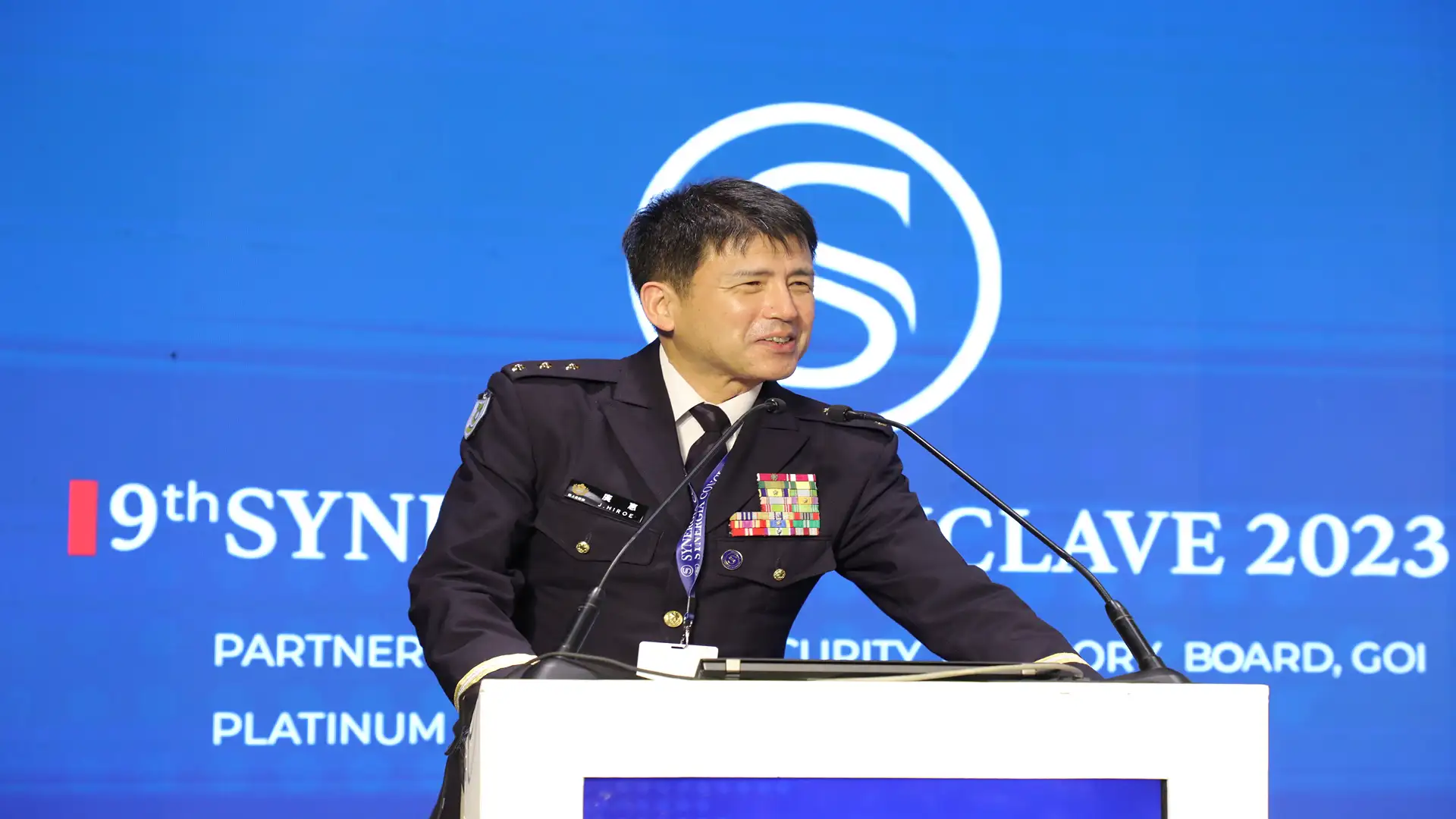
NEW DOMAINS AND LAND OPERATIONS In all future wars, electromagnetic spectrum, cyber, and space superiority will be the keys to the next battlefield. Lieutenant General Hiroe Jiro, Commanding General TERCOM, Japan Almost every army in the world is trying to realise the multi-domain operation, which in Japan is called the cross-domain operation. In France, it is called a multi-military operation. The U.S. Army has five domains: land, air, maritime, cyberspace and space. In addition to the five domains, Japan recognises the electromagnetic spectrum as a separate domain. In all future wars, electromagnetic spectrum, cyber, and space superiority will be the keys to the next battlefield. Cross-Domain Warfare in Ukraine In July 2014, in an operation conducted in Ukraine, all indigenous radios of the Ukrainian army were jammed by Russian EW equipment. The Ukrainian forces used their private phone, and the microwaves emitted from those phones were traced by the Russian EW equipment called the Rorandzit. Surprisingly, this equipment can identify the individuals of the Ukrainian forces. Furthermore, this information will be useful to find out their families, fathers and mothers. So, the Russian EW units started sending messages directly to the families’ cell phones. For example, your son died. The concerned families tried to call their sons, which increased cell phone traffic and revealed the location of Ukrainian forces. Two Ukrainian platoons were destroyed in this operation. The Ukrainian forces also used satellite communication, but the Russian UAV, called R-110, also detected this communication and that data was transferred to the EWPQ called Rail 3. Then Rail 3 found the location of the Ukrainian forces, and the Russian forces used field artillery to attack the Ukraine forces. This is an excellent example of the combination of three domains-space, land and EW. The Russians also mixed psychological warfare with their EW attacks, sending SMS messages to Ukrainian soldiers that they were surrounded and must, therefore, escape from the area, sowing a loss of morale. Future Operational Concepts Based on those examples, future operations can be divided into two categories: non-kinetic operations andkinetic operations. For non-kinetic operations, the target can be the adversary command post or the platoons in the cyber domain. Laser beams or conventional firepower can be grouped with other domain weapons for the kinetic domains. For example, while attacking a naval platform, EW jammers can reduce its radar coverage thus allowing missiles to slip through its defences to strike it. This would be a combination of the EW domain, sea domain, land domain, etc. For conducting artillery operations, the location data of the adversary forces is needed. Usually, you can take those data by binoculars, satellite images or even the EW equipment. However, there is yet to be a capability worldwide to take the location data through cyber operations. We heavily depend on civilian technology in the cyber domain, making it necessary to cooperate with the civilian industries. Furthermore, the cyber domain can connect all over the world. That means we need to enhance cooperation, not only with the civilian industry but also worldwide. |