
SUSHI AND SPICES: UNPACKING INDO-JAPAN PARTNERSHIP
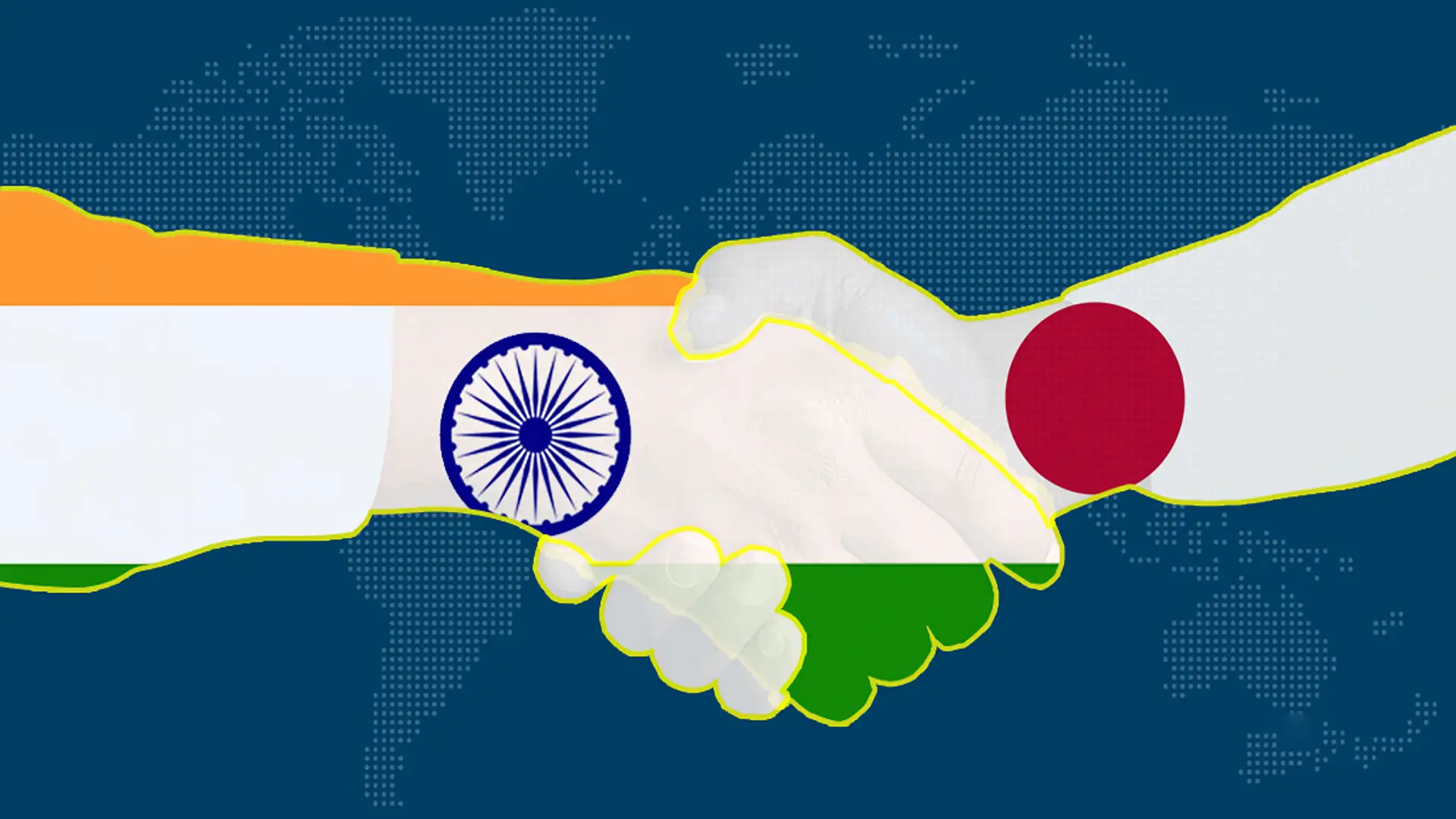
The India-Japan partnership extends beyond bilateral ties, finding expression in trilateral arrangements and the Quad framework.
By Sambratha Shetty, Synergia Foundation, who recently visited Japan as part of the Quad framework.
The evolving dynamics of the Japan-India relationship have been shaped by a combination of historical ties, economic complementarity, and shared concerns over regional security, particularly in light of China's growing influence. To better understand this important relationship, one must undertake a journey into its history, economic angle and strategic partnership with a focus on the Quad framework.
Historical Context
Japan and India share a long history of cultural exchange dating back to ancient times. Most striking is Buddhism, which originated in India and spread to Japan around the 6th century, fostering a deep cultural connection. The 8th-century work, "The Nihon Shoki," mentions Japanese envoys visiting India, laying the foundation for diplomatic engagements. Large number of Japanese make a pilgrimage to Bodh Gaya in Bihar, where Gautama Buddha (Prince Siddhartha) attained enlightenment and became the Buddha.
During World War II, thousands of Indians serving with the British Indian Army fell into the hands of the Imperial Japanese Army in Singapore, Malaya and later in Burma. The narrative of their treatment at the hands of their capturers is a horrendous story. However, those who volunteered to join the rebel Indian National Army created by Japan fared much better. Post-World War II, Japan and India found themselves on a path of recovery and development. The 1952 Peace Treaty marked a turning point, ending hostilities and establishing diplomatic relations between the two nations.However, during the Cold War, geopolitical alignments and economic vision differences kept the two nations at a guarded distance.
The post-Cold War era saw a significant shift, driven by economic complementarity and shared concerns over China's regional influence. India's "Look East Policy", initiated by Prime Minister P. V. Narasimha Rao in 1993, marked a turning point, opening avenues for increased engagement with successful Asian economies. The relationship weathered a brief setback in 1998 following India's nuclear tests, but by 2018, under the leadership of Prime Ministers Modi and Abe, it was elevated to a "special strategic and global partnership."
Economic Collaboration
Economic ties between Japan and India have flourished, with Japan playing a pivotal role in India's infrastructure development. The Comprehensive Economic Partnership Agreement (CEPA), signed in 2011, further facilitated trade and economic cooperation.
Notable projects, such as the Delhi Metro and Mumbai-Ahmedabad High-Speed Rail, highlight Japan's contributions. In 2021, Japan International Cooperation Agency (JICA) signed an agreement with the Government of India to provide Japanese (ODA) loan amounting to Japanese Yen 52,036 million (approximately Rs 3,717 Crore) for the development of Phase 2 of 'R6 (Nagawara– Gottigere, approx. 22.0 km), 2A (Silk Board K RPuram, approx.20.0 km) and 2B ((K R Puram Kempegowda International Airport Terminal, approx.38. 0 km).
The systemic shift in Japan's national security posture away from pacifism and India's rising Indo-Pacific profile created opportunities for deeper collaboration. Economic cooperation now focuses on capacity building, with Foreign Direct Investment (FDI) and Japan's Overseas Development Assistance (ODA) program supporting infrastructure development in India's Northeast region.
Strategic Partnership:
The strategic dimension of the Japan-India relationship has gained prominence, driven by shared apprehensions over China's activities in the region. The Galwan clashes in July 2020marked a turning point, prompting India to strengthen ties with friendly powers like Japan to bolster its strategic deterrence against Beijing. Joint military exercises, training programs,and defence equipment and technology transfers underscore the rapid progress in security cooperation.
Japan's support for India's entry into prestigious international forums, such as the Nuclear Suppliers Group, and policy coordination in regional and Indo-Pacific institutions contribute to the non-material aspects of India's global status. The recent announcement by the Kishida government to expand its ODA program with a focus on enhancing "security and deterrence capabilities" aligns with India's strategic objectives.
Trilaterals and the Quad
The India-Japan partnership extends beyond bilateral ties, finding expression in trilateral arrangements and the Quad framework. The India-Japan-US and India-Japan-Australia trilateral dialogues, initiated in 2011 and 2015, respectively, serve as stepping stones to the Quad. These arrangements allow for better coordination and alignment on regional issues, offering a platform for like-minded nations to work together.
The Quad, consisting of India, Japan, the United States, and Australia, has emerged as a key player in the Indo-Pacific region. All four members share a common goal of managing an assertive China and upholding the "rules-based order." While not an Asian NATO, the Quad provides a loose-knit network for defence cooperation, intelligence-sharing, and logistics support. Ideational elements, such as promoting the Free and Open Indo-Pacific (FOIP) strategy, underline the non-military aspects of the Quad.
Looking Ahead
The India-Japan partnership has become indispensable in navigating the complexities of the changing global order. With a shared commitment to democratic values, economic growth, and regional stability, both nations are likely to continue their positive trajectory. While challenges exist, such as economic and bureaucratic hurdles, the benefits of collaboration far outweigh the obstacles.
As the Quad strengthens its position in the Indo-Pacific, the India-Japan partnership plays a pivotal role in advancing regional security and stability. The ongoing collaboration in various sectors, coupled with diplomatic initiatives, cultural exchanges, and trilateral engagements, positions the relationship for continued growth. The future of the Japan-India partnership looks promising, grounded in a shared vision for a free, open, and prosperous Indo-Pacific region.