
GLOBAL GROWTH RATES 2035: AN ASIAN DOMINANCE
An Asian century, which is still a way off, will require the cooperation of both China and India.
Prof Lawrence Lau, Chinese University, Hongkong
As per the database sampled by the late Angus Pedersen, a very distinguished economic historian, based on purchasing power parity internationally, in 1820, two centuries ago, China supposedly had accounted for more than 30 per cent of world GDP, and Indiaaccounted for perhaps between 20 and 25 percent of global GDP. The U.S., being a new country then, had less than 3 percent.
What has happened over the years is that by 1960, the U.S. accounted for over 30 per cent. And in the meantime, both China and India have declined. Around the 1960’s or 1970 's, both were at the bottom, fetching much less than 10 per cent. But there has been a turnaround; by 2015, China, in purchasing power parity terms, reached parity with the U.S. This is a finding confirmed by both the IMF and the World Bank. Indiaalso came up, but not by as much.
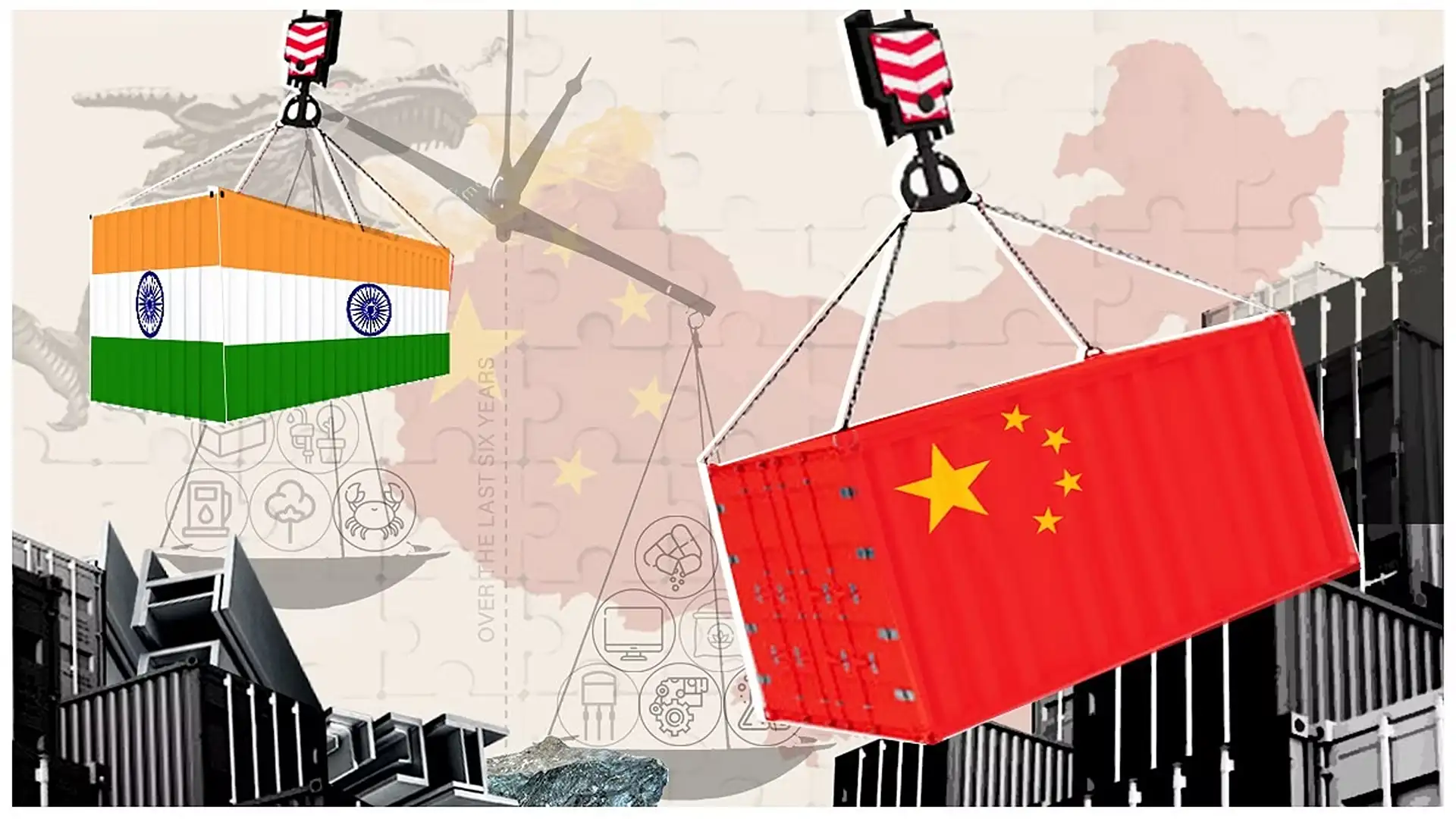
China and India
It would take until 2033before Chinese GDP, and market prices and market exchange rates, catch up to the U.S., even though China has been growing faster than the U.S. for about half a century.
India has also been doing well in terms of GDP growth, especially in the last decade or so. Indian growth rates in the last ten years were sometimes even higher than Chinese growth rates and it is assumed that India will continue to grow at 8.5 per cent. But even at these rates, it will not come too close to the Chinese or U.S. GDP.
In terms of per capita, the gap is big even for China. Even when China reached parity with U.S. GDP, for per capita, China was only one quarter that of US GDP, and it would take at least until the end of this century, if at all, for Chinese GDP per capita to surpass that of U.S. GDP.India, there's a similar story, just a little bit further displaced in terms of time.India will become a huge economyprobably sometime around 2060, maybe 2070.
While the U.S. share of the global GDP has been steadily declining even though it is about 50 per cent today, the Chinese has been going up along with India. Japan peaked at about 18 per cent of the global GDP in the early 1990s and has since been coming down. Indiais rising, although not enough to make a difference right now.
East Asia is higher than the USA now. In 2070, China and India would have a GDP of perhaps half of the world'sGDP. India has very fine economic fundamentals–no shortage of primary inputs, tangible capital, labour and human capital.The Indian savings rate is quite healthy, around 30 per cent. India has enough savings with finances and investments.
India
Labour supply in India should not be a problem. India is now the world's largest population and has a younger population than China. It has a highly educated labour force and an ample supply of engineers and scientists. And like China, India enjoys tremendous economies of scale. And because of its large population, it has a very large number of very smart people.India needs to construct an infrastructure to link the whole country together to realize its economies of scale. It should, therefore, invest in developing leadinginfrastructure that will create its own demand. India should also have a strong export promotion strategy. ASIndia expands its manufacturing, it will create employment and boost trade.India does not have a single unified language, but it can rely on English for communication.
Corruption per se should not be an obstacle in itself. As you read about it in papers, corrupt senior officials are uncovered in China almost every day. So, even when people complain about possible corruption in India, that alone should not be an obstacle to growth.
South Asia
A South Asian Free Trade Zone can be very positive for India and South Asia. Taking India, Pakistan, Bhutan, Sri Lanka, Nepal, and Bangladesh together would amount to a population of around 1.9 billion, a quarter of the world population. And if SAFTA is created, a mini form of economic globalisation will benefit every member of the world.SAFTA will be able to do the same for South Asia as the European common market did for post-World War 2 Western Europe. That is, maintain peace and prosper together. For instance, Germany fought three wars in the nineteenth and twentieth centuries. The common market provided the bond that tied them together; economic interdependence is a great way to prevent conflict between nations.
Geopolitical Factors
Peace in South Asia is positive; lack of peace is negative. Peace in Taiwan's straits is positive;the lack of it is negative. China-U.S. strategic competition is negative, and it continues. Despite what Graham Addison said, there will not be any war between China and the U.S. because there will not be any winners. Both countries will be losers. The former Soviet Union and the U.S. came to the same realisation and never went to war in the last century. They even had strategic arms control treaties.The same would eventually happen between China and the U.S.
The Bretton Woods system of settlement of international transactions in each country's national currencies will be revived. Globalisation, decoupling, and de-risking will all be initially difficult but ultimately possible because of increased competition among supply chains; competition will lower prices for all.
There will be an Asian century, which is still a way off and will require the cooperation of both China and India.