
GLOBAL FUTURE SECURITY CHALLENGES
“In the next 12 years, that is till 2035, we may find more geopolitical surprises packed in a 12-year period than what we have witnessed, say, in the past 120 years.,” Gen Anil Chauhan
|
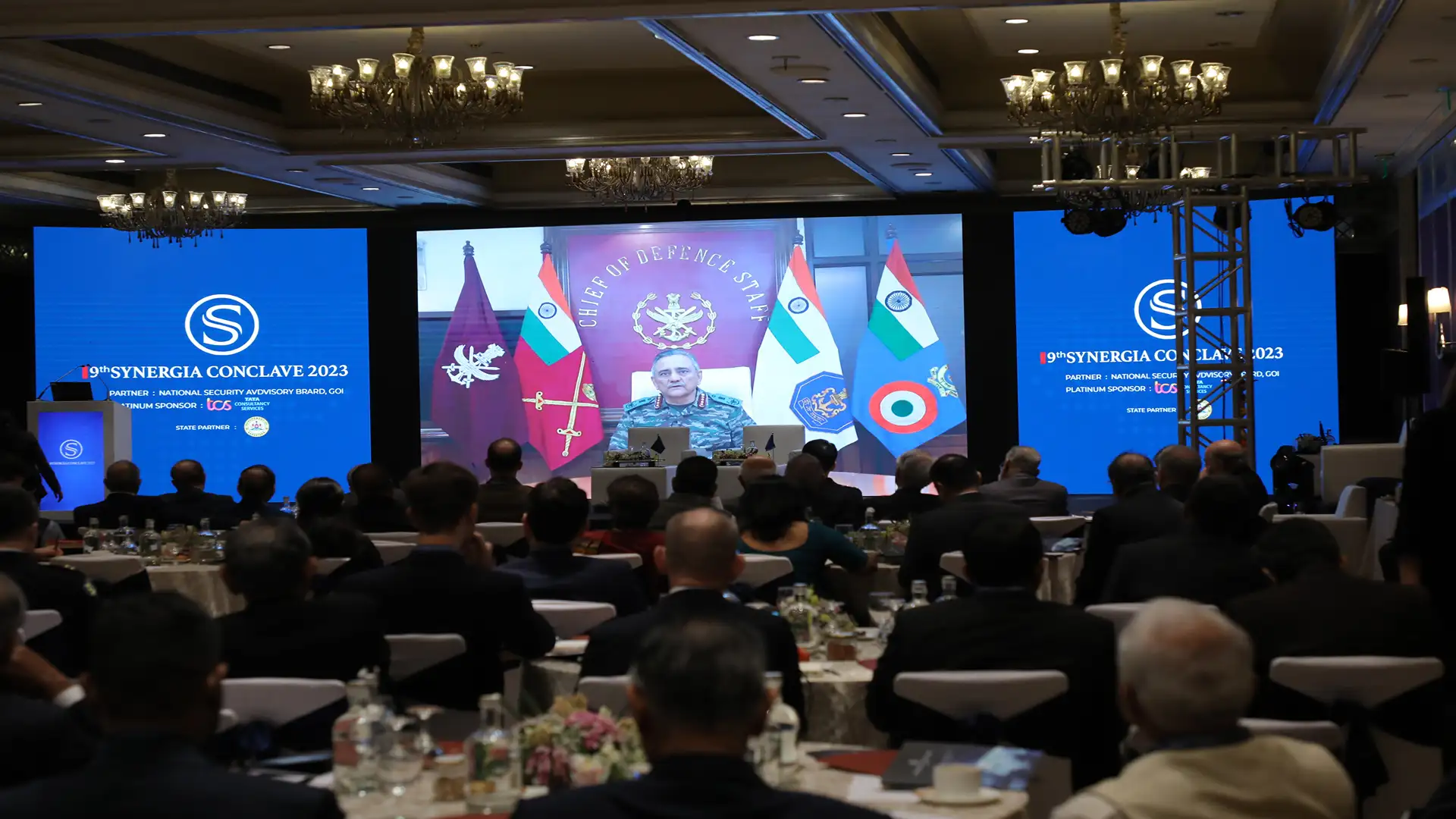
This article is based on the talk delivered by Gen Anil Chauhan, Chief of the Defence Staff, India, during the 9th Synergia Conclave. |
“The past is the beginning of the beginning and all that is and has been but the twilight of the dawn.”HGWells
Trying to know what the future holds has been one of the oldest obsessions of the human mind. Most of us have grown up reading H.G. Wells, Julius Verne, and Aldous Huxley. Some writings about the future, like nuclear weapons, aircraft, tanks, and submarines, have come true, while others, like the Martian invasion or time machine, have not. Clearly, predicting the future accurately is not easy.
In India, Vedic astrology, to a large extent, was driven by the motivation to visualise or predict the future; the future is motivated by change. We all have to adapt to change and adopt it, lest we are subject to what another futurologist, Alvin Toffler, prophesied as Future Shocks.
Over the past few years, change has gathered exponential momentum; it is increasing in geometric proportions. It is outpacing the present and the past to prematurely bring the future to our doorsteps. Some aspects of the future are easy to forecastbased on studying past data, examining existing patterns and scientific modelling.
Demographics is one such area where the ageing of populations in developed countries and imbalance in population growth will lead to shifts in economic activity, migration and urbanisation. All these factors will contribute to inter and intrastate tensions in the future.
Climate change is another area where issues like rise in global temperature, extreme weather, rise in sea levels, and melting of polar ice caps may induce changes in cropping patterns, leading to food and water scarcity.
Advances in technology and economic growth also, by and large, follow a linear progression. Both have the potential to alter existing power equations. Interstate relations are difficult to predict. They may not follow a linear progression and are influenced by unforeseen events, which we normally sometimes call as Wild Cards.
Future Security Challenges
Two things will drive future security challenges. Firstly, the trajectory of the ongoing unprecedented change in global geopolitics. And secondly, technology that is changing the nature and character of conflict. Changes induced by geopolitics, geopolitical development or those ushered in by technology have two things in common. Both induce behavioural changes; geopolitics in the behaviour of nation states whereas technology affects social behaviour commencing at the individual level.
As the name suggests, world order is designed to maintain global peace. However, geopolitical competition may induce tension and conflict. Geopolitics and conflict have more than a common causal connection.
The interplay of geography, political power and strategic considerations interact to shape the behaviour of nation-states. Geopolitical events also have the potential to shape national ideologies and influence their ideological narratives. Geopolitical events also affect geoeconomics. In fact, the current flux in the global geo-economic order can be attributed directly to the volatile, uncertain, complex, ambiguous (VUCA) environment, ushered by what can be called a global disorder. Old rules and maxims of diplomacy are fading away. New ones are emerging. Events are unfolding at a speed and pace that exceeds decision-makers' ability to react effectively.
To visualise Global Futures 2035, one can take help of the current trends to extrapolate the future with the hope that some of these will act as a reference point. A multipolar global order with polycentric and polyconic competition and cooperation will likely emerge. It will induce stability as the new poles can balance out each other.This may, however, encourage low-intensity conflict and proxy wars at the bottom of the pyramid.
The Face of Military Conflicts
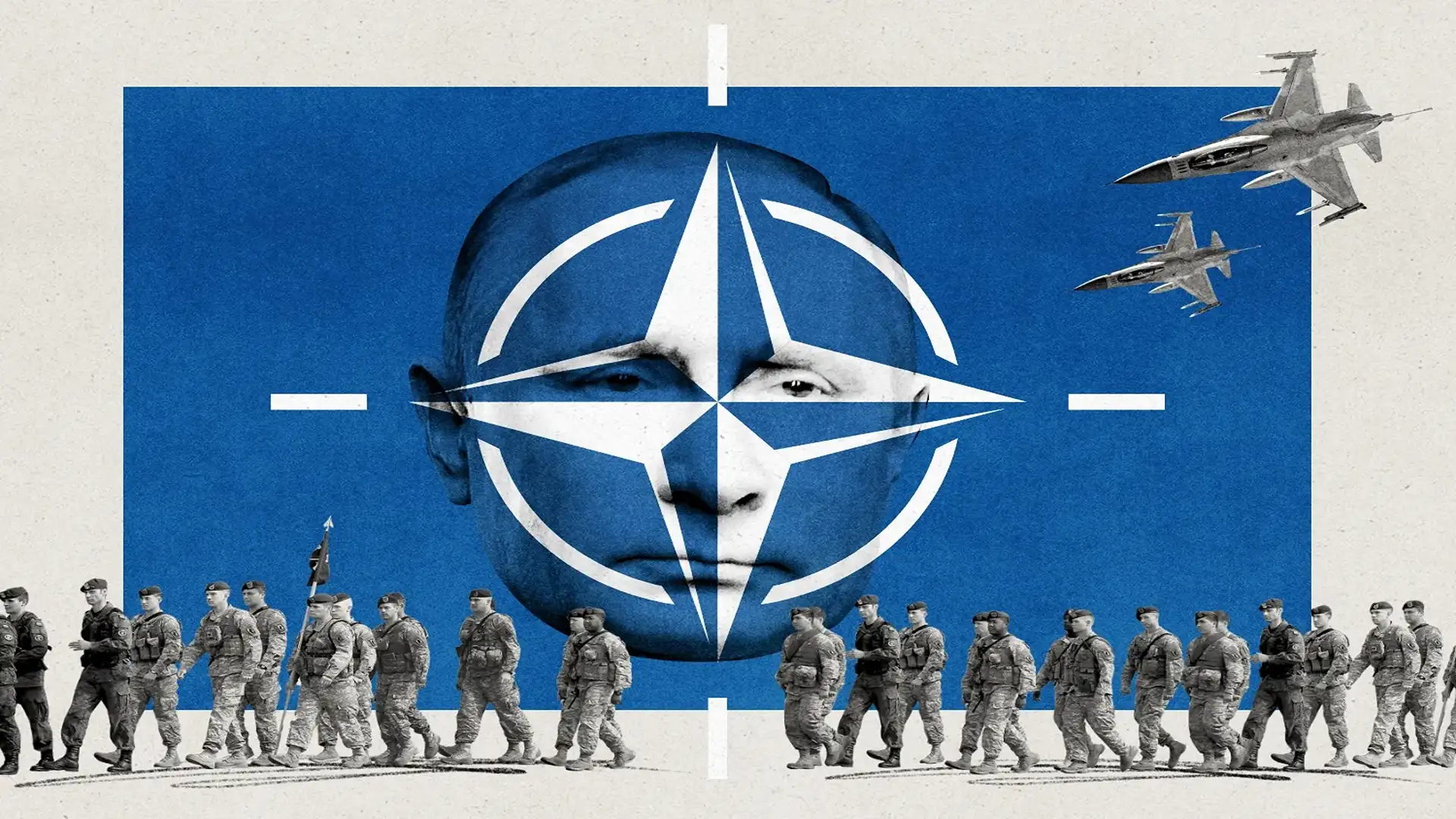
Nation-states find security and comfort in newer alliances and partnerships. They will be subjected to frequent realignments to meet the real or perceived challenges. The new redistribution of power has made the world flatter. It has increased the propensity of big powers to take risks.
And unlike the past, dominant powers do not hesitate to put their boots on the ground. There is an increasing propensity amongst nations to enter into conflicts to protect perceived national interests. However, in most cases, most big powers have entered into conflicts without a clear end state or an exit strategy. Afghanistan, Iran, and Ukraine are examples of it.
A prolonged simmering conflict with spikes of violence is another trend; Gaza is a clear example.The U.S. cannot simultaneously meet the Indo-Pacific, Europe and Asia commitments. It accordingly has shifted its focus from what they called a global war on terror (GWOT) conducted in the Middle East and Afghanistan towards the Indo-Pacific, which they call a grey zone conflict.
This trend will continue and is irreversible. There is also a growing perception that interstate wars are a thing of the past and have been replaced by intrastate conflicts and civil wars. This has been proved wrong. Interstate conflicts occur due to existing but latent disputes. Israel-Hamas, Armenian-Azerbaijan, and Russia-Ukraine are only examples of it. It is, hence, important to manage differences and resolve disputes. The Israel-Hamas conflict has the potential to polarise the world. It may usher in new geopolitical alignments. The Russian-Ukraine conflict is about to enter its third year. The wars in Europe and the Middle East havefuelled fresh tensions in the globe; it has accentuated levels of uncertainty even amongst nations that are not directly affected by this conflict.
Reviewing National Security Strategies
Increased tension and rising uncertainties have forced nations to review national security strategies. The trend is evident and uniform from Europe to Asia. The global supply chains that were to recover from the effects of the COVID-19 pandemic are under strain. Food, fertiliser, energy, medical equipment, and technologies like semiconductors, rare earth and critical metals are all in shortage.
There is also a new demand for military equipment, from ordinary ammunition to high-end systems. The current defence ecosystem is not geared to meet the surge in demands and supplies. This was evident in the recently concluded meeting of the defence and foreign ministers of the European Union in Brussels. Further, the challenges to national security may not result from interstate competition or uncertainty only.
Pandemics, biological threats, cyber threats, transnational terrorism and nuclear threats will continue to bedevil security planners. The pace of geopolitical eventsis outpacing decision-making abilities. In the next 12 years, that is till 2035, we may find more geopolitical surprises packed in a 12-year period than we have witnessed in the past 120 years.
Technology Drives Change
In this tapestry of time, technology emerges as the weaver of our shared future, intricately shaping the landscape of human existence. The seeds of technological disruption show fields of possibility, birthing new industries and transforming the very fabric of our economic reality. Unsurprisingly, technologywill also play a dominant role in shaping global futures.
The nexus of communication technologies has dissolved barriers and distance, fostering a global village where ideas traverse across continents in an instant. Our technological endeavours promise a future where healthcare is personalised, education democratised, and renewable energy sources sustain our planet. Technological advancements are providing nation-states with new options to secure themselves.
At the same time, it is also ushering in new ways of combat. Hypersonic missiles, subsonic drones and higher accuracy have increased the lethality, complexity of detection, and engagement efficacy. Multi-domain sensors and communications have provided improved battlefield transparency. The virtual domains of cyber and space uncover the lethal potential of kinetic and non-kinetic options and are causing an overarching effect on the physical domains.
Information is being weaponised through targeting of the cognitive domain. Technology is also emerging as a new currency of power. Technology denial regimes existed in the past, but now, we are witnessing a race to retain a technological edge. Technology provides the cutting-edge during combat and decides the outcome of most conflicts.
Technology introduces new ways to retain military edge over adversaries during such conflicts.
Advancements in technology are introducinga new revolution in military affairs. A revolution in military affairs occurs when technology is introduced in large numbers. It forces a change in tactics and concomitantly changes the organisation to support that technology and the new tactics. The world could be on the cusp of the next RMA, calledConvergence Warfare. It will convert the first RMA (ManoeuvreWarfare) and the second RMA (Network Centric Warfare) into the current one. It will integrate traditional domains of warfare with emerging domains like cyber and space. New technologies will converge to make the battle space more automated and autonomous, whereas battle space and time will expand and converge simultaneously.
The Indian Perspective
The Indian Armed Forces will have to operate in an environment rapidly being shaped and reshaped by the turn of geopolitical events and technological advancements. This will require flexibility in the organisational structures of the military as well as in its mindsets. India should be able to usher the third RMA along with other nations to remain ahead or at par with this transformative curve.
This will require changes ranging from organisational, structural, doctrinal, and conceptual to behavioural and cultural. The organisational structures must be capable of multi-domain operations. They must be capable of responding seamlessly in the continuum of crisis, confrontation, conflict and combat. They must be structured for integrated rapid response through a correct balance between contact, non-contact, kinetic, and non-kinetic options. They must be flexible and adaptive enough to absorb and harness niche, emerging and disruptive technologies.
There is a term that is used in management parlance: creative destruction. It's like an oxymoron. It means to create something new; one has to destroy the old. The destruction or discard has to be done in a manner that is creative and helps in the adoption of new processes and technologies. This is the type of change that will take place in the near future in the Indian Armed Forces. India is also in the Amrit Kal of its nationhood, and the path it takes today will decide where it will be in 2035 and beyond.
As The SamyuttaNikaya states, "According to the seed that’s sown,So is the fruit you reap there from,Doer of good will gather good,Doer of evil, evil reaps,Down is the seed and thou shalt tasteThe fruit thereof." The global events need to be viewed through this law-based on cause and effect.